
The Family Grocery Budget: How to Feed Four for Less Without Sacrificing Nutrition

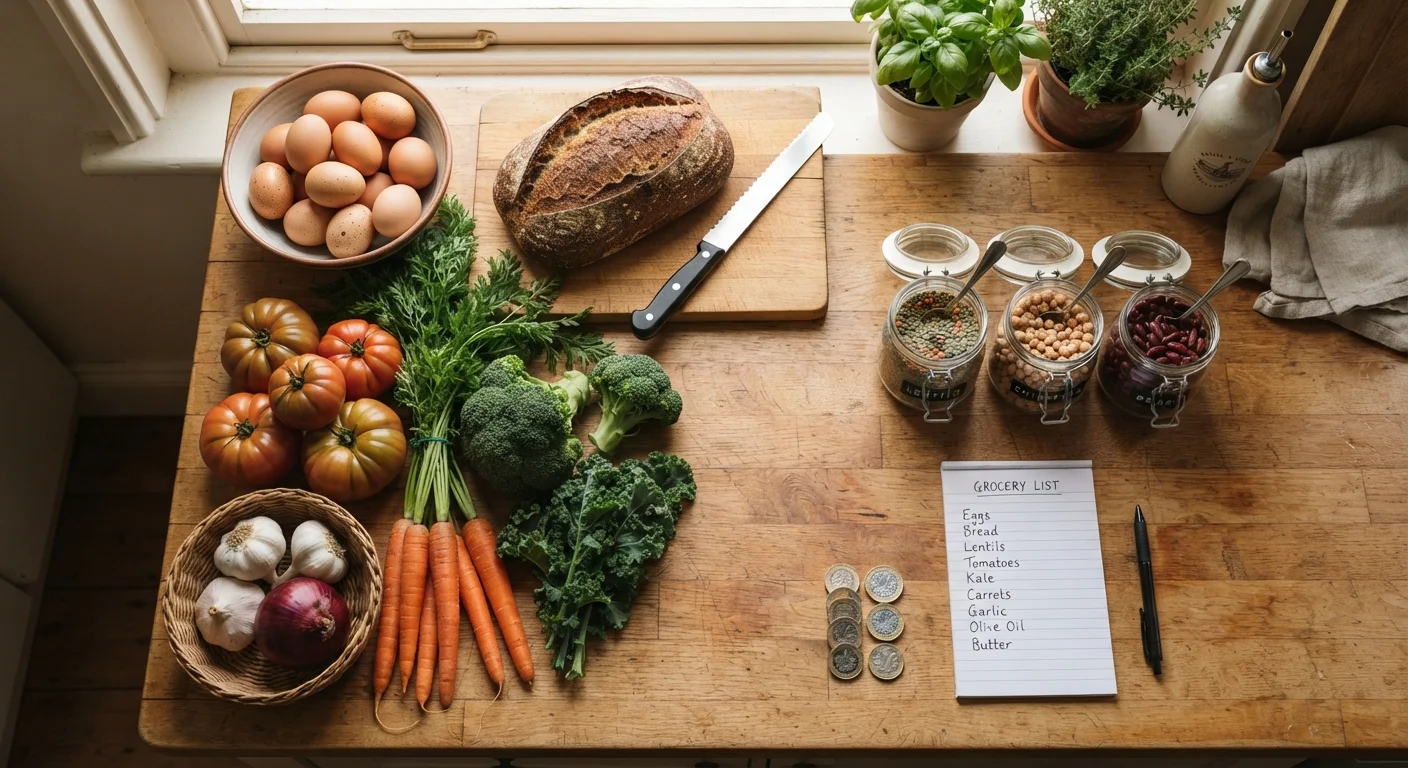
Photo: efficientlifeguide.net editorial
Key Takeaways
- Dried legumes, frozen vegetables, and whole grains consistently deliver more nutrition per dollar than most fresh convenience foods.
- Planning meals around weekly store sales rather than fixed recipes is one of the most effective ways to cut costs without changing nutrition quality.
- Batch cooking once or twice a week lowers the cost per serving and reduces the temptation to order takeout on busy nights.
- Food waste is a hidden budget leak: the average American household discards roughly 30 to 40 percent of the food it buys.
- Seasonal produce is generally cheaper and more nutritious than off-season imported alternatives.
Why the 'healthy eating is expensive' assumption is mostly wrong
Many families accept as fact that eating well costs more than eating poorly. The evidence does not fully support this. The cost gap between a processed, convenient diet and a whole-food diet narrows considerably once you compare cost per serving rather than cost per package. A bag of dried lentils, for instance, typically yields 10 or more servings at a fraction of the price of a single frozen entree.
The confusion often comes from comparing the wrong things. Fresh salmon versus instant noodles is not a useful comparison. Comparing a lentil soup with a drive-through value meal, on the other hand, shows the whole-food option is often cheaper and nutritionally superior.
Common beliefs about grocery costs are frequently shaped by marketing, not data. Families who audit their actual spending often find that packaged snacks, sugary drinks, and single-use convenience items drain the budget faster than any vegetable or protein staple.
The strategies in this guide apply to a family of four operating on a tight but realistic grocery budget. None of them require dramatic dietary changes or specialty stores.
The pantry staples that do the heaviest nutritional lifting
A small group of ingredients handles most of the nutritional work in a budget-conscious kitchen. Dried or canned beans and lentils supply protein, fiber, and iron at a cost that fresh meat cannot match. Oats, brown rice, and whole-grain pasta provide sustained energy and B vitamins. Frozen spinach, peas, and broccoli deliver micronutrients year-round without the spoilage risk of fresh produce.
Eggs are one of the most complete protein sources available and remain affordable in most U.S. markets. Canned fish such as tuna and sardines carry omega-3 fatty acids and protein at a low per-serving price. Cabbage, carrots, sweet potatoes, and onions have long shelf lives and appear on sale frequently.
These pantry staples form the foundation of dozens of satisfying meals without requiring complex technique. Stocking them consistently means the baseline cost of feeding four stays predictable even when other prices fluctuate.
When dried beans feel too time-consuming, keep canned beans as a backup. The nutrition is nearly identical, and a can that costs under $1.50 still delivers three to four servings of protein-rich food.
Buy a second freezer-safe container and freeze half of any large batch immediately, before the family can graze through it. Frozen portions remain available for weeks without spoiling.
How to build a weekly meal plan around what is on sale
Most families plan their meals first and then shop. Reversing that sequence, checking the weekly circular before writing the plan, produces lower bills with no nutritional penalty. If chicken thighs are marked down, the week's protein anchor is already chosen. If bell peppers are on sale, they appear in two or three meals that week.
This approach requires a flexible recipe framework rather than rigid recipes. A stir-fry, a grain bowl, a soup, and a sheet-pan dinner are all formats that accept whatever protein and vegetable happen to be affordable that week. Families who learn five or six of these formats can generate dozens of meal combinations without repeating the same dish for months.
A sale-driven meal planning framework also reduces the mental load of cooking. Instead of hunting for a recipe that requires eight specific ingredients, the cook starts with what is cheap and builds outward.
Buying produce in season reinforces this approach. In-season items are often on sale precisely because supply is high, and they tend to be more nutritious than produce shipped long distances out of season.
Reducing waste so every dollar reaches a plate
Food waste is a significant budget problem that families often overlook. The U.S. Department of Agriculture estimates that households discard between 30 and 40 percent of the food supply, much of it at home. For a family spending $200 a week on groceries, that could represent $60 to $80 in food that never gets eaten.
The fixes are straightforward. Store perishables at eye level in the refrigerator so they are visible. Use a first-in, first-out system: older items go to the front when new groceries arrive. Plan at least one meal per week that uses leftover proteins, vegetables, and grains, such as a fried rice, a frittata, or a soup built from whatever is left.
Vegetable scraps, including carrot tops, celery ends, and onion skins, can become a simple stock that adds flavor to soups and grains at no additional cost. Bread approaching the end of its useful life converts easily into breadcrumbs or croutons. These habits do not require extra time; they require a different reflex when opening the refrigerator.
Batch cooking and what it actually saves
Cooking a large quantity of one ingredient, such as a pot of beans, a tray of roasted vegetables, or several cups of cooked rice, once or twice a week changes the economics of home cooking. That single session produces components that assemble into multiple distinct meals without requiring a full cook from scratch each time.
The savings come from two directions. First, buying in larger quantities generally lowers the unit price. Second, having ready-to-use components in the refrigerator removes the friction that pushes tired families toward takeout, which typically costs four to six times more per serving than a home-cooked meal.
Batch cooking once or twice a week does not mean eating the same meal repeatedly. A batch of cooked lentils becomes a salad topping on Monday, a pasta sauce on Wednesday, and a taco filling on Friday. The technique is flexible; the savings are consistent.
Planning those batch sessions in advance is the step that makes them stick. Without a plan, the cooked batch sits unused and eventually gets discarded, which erases the benefit entirely.
Shopping habits that add up over time
Individual shopping decisions compound over weeks and months. A few habits produce consistent savings without requiring extreme couponing or hours of research.
- Compare unit prices rather than package prices. A larger package is not always cheaper per ounce; check the shelf tag's unit price column before assuming.
- Store-brand products for staples such as canned tomatoes, dried pasta, oats, and frozen vegetables are manufactured to the same food safety standards as name-brand equivalents and typically cost 20 to 30 percent less.
- Write a list organized by store section and stick to it. Studies on consumer behavior consistently show that unplanned purchases increase spending without improving the nutritional quality of the cart.
- Consider bulk purchasing carefully. Buying in bulk saves money only when the family will use the product before it expires and storage space is available.
Taken together, these habits can realistically reduce a family's weekly grocery spend by 15 to 25 percent without changing the nutritional profile of what they eat. That freed-up money can go toward building an emergency fund or other financial priorities, which matters just as much as any individual grocery run.
This article is for general informational purposes only. Consult a registered dietitian or qualified healthcare professional for personalized nutrition guidance specific to your family's health needs.
The content provided on our blog site traverses numerous categories, offering readers valuable and practical information. Readers can use the editorial team’s research and data to gain more insights into their topics of interest. However, they are requested not to treat the articles as conclusive. The website team cannot be held responsible for differences in data or inaccuracies found across other platforms. Please also note that the site might also miss out on various schemes and offers available that the readers may find more beneficial than the ones we cover.