
Seasonal Produce Guide: What to Buy Fresh Each Month to Spend Less

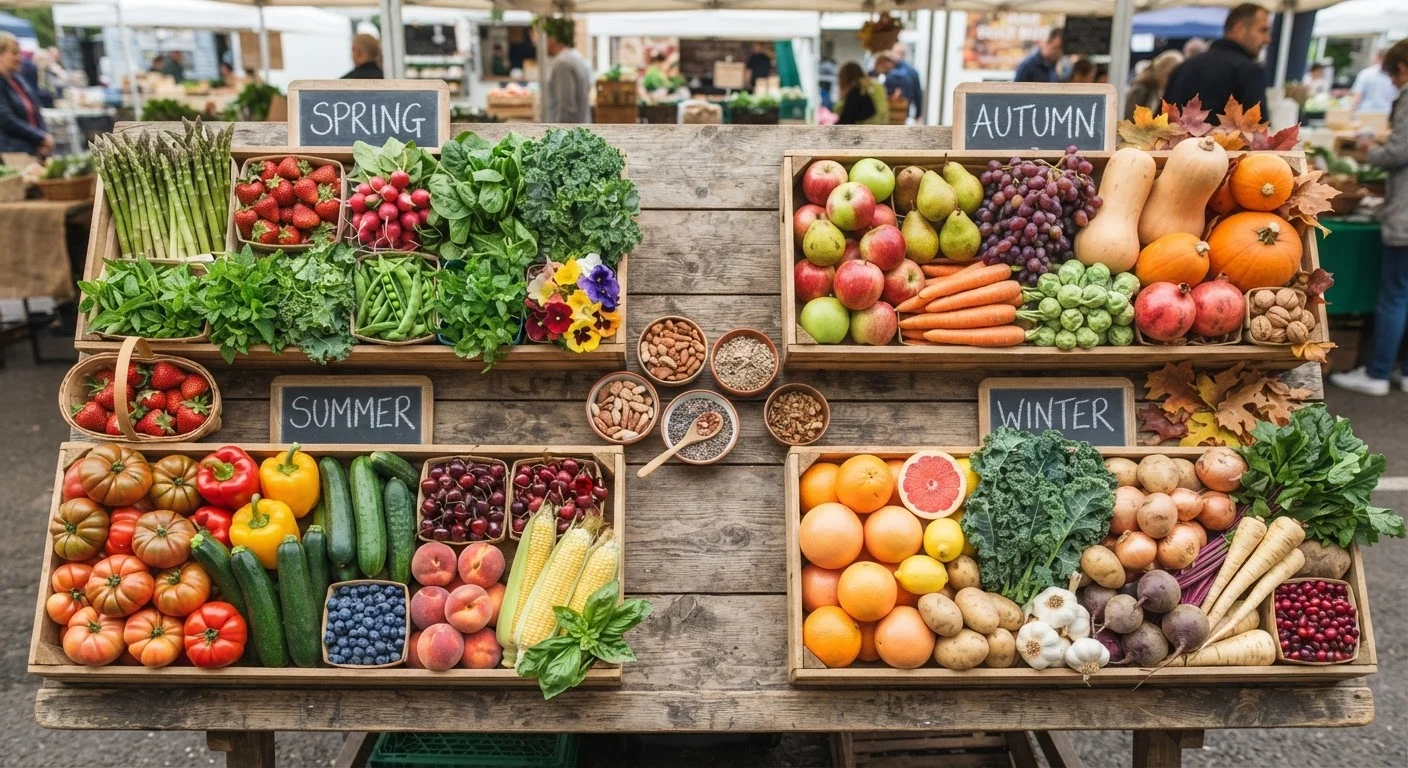
Photo: efficientlifeguide.net editorial
Why seasonal buying lowers costs
When a crop is harvested at its natural peak, supply rises and prices fall. Retailers receive larger volumes, storage and transport costs drop, and those savings reach the shelf. Out-of-season produce, by contrast, often travels from distant growing regions or comes from temperature-controlled storage, both of which add cost before the item reaches your cart.
Nutrition follows the same logic. Fresh produce picked at maturity retains more vitamins and minerals than fruit or vegetables harvested early for long-distance shipping. Buying in season therefore delivers more nutritional value per dollar, not just a lower sticker price.
Regional differences matter. A tomato is in season in July across much of the Midwest and Southeast but arrives in California markets earlier and in northern New England later. The month-by-month guide below reflects broad U.S. patterns; local farmers markets and grocery store flyers are the most reliable signal for your specific area. See also when grocery prices typically drop by category for a broader look at predictable pricing cycles.
Month-by-month produce reference
Winter months (January through March)
Root vegetables and citrus carry winter shopping. Navel oranges, grapefruit, clementines, and lemons are at peak availability and low cost. Stored crops from the fall harvest, including sweet potatoes, winter squash, carrots, parsnips, and turnips, remain affordable. Cabbage, kale, and collard greens grow well in cold weather and are typically inexpensive in these months.
Spring months (April through June)
Spring brings a transition from storage crops to fresh field produce. Asparagus arrives in April and prices usually drop by May as mid-Atlantic and Midwest harvests begin. Peas, spinach, and radishes follow. Strawberries move into season in May across much of the South and by June in northern states. Rhubarb, often overlooked, is abundant and inexpensive in May and June.
Summer months (July through August)
Summer is the widest window for affordable fresh produce. Corn, tomatoes, cucumbers, zucchini, bell peppers, blueberries, peaches, watermelon, and green beans are all in full production. Prices on these items are typically lower than at any other point in the year. Buying larger quantities and freezing or canning extras is practical during this window. For strategies on stretching that abundance further, see cutting your grocery bill without changing what you eat.
Fall months (September through November)
Fall harvests bring apples, pears, grapes, and figs alongside a second wave of greens as temperatures cool. Winter squash, pumpkins, broccoli, cauliflower, Brussels sprouts, and sweet potatoes reach their lowest prices during this period. Cranberries peak in October and November. Families building a monthly grocery budget for four can plan fall meal rotations heavily around these items.
December
December overlaps with late fall harvests and the start of citrus season. Pomegranates, persimmons, and kiwifruit are in season. Root vegetables remain affordable. Many families find December a good month to rely on a mix of frozen summer produce and fresh citrus and greens.
How to use this information at the store
Matching your weekly meal plan to whatever is cheapest this week takes about ten minutes of preparation. Check the produce section first and build meals around what is abundant rather than starting with a recipe and hunting for its ingredients regardless of price.
Frozen produce is a reliable backup. Most vegetables and fruits are frozen at peak ripeness, so nutrients are well preserved. When a fresh item is out of season and expensive, the frozen version is almost always the better value.
A brief conversation with a produce clerk or a visit to a local farmers market can tell you what is arriving that week before you commit to a menu. The evidence on healthy eating costs consistently shows that in-season fresh and frozen produce are among the most affordable nutrient-dense foods available. Working seasonal rhythms into your routine is a practical habit, not a complicated system.
The content provided on our blog site traverses numerous categories, offering readers valuable and practical information. Readers can use the editorial team’s research and data to gain more insights into their topics of interest. However, they are requested not to treat the articles as conclusive. The website team cannot be held responsible for differences in data or inaccuracies found across other platforms. Please also note that the site might also miss out on various schemes and offers available that the readers may find more beneficial than the ones we cover.