
Eating Healthy Is Expensive: Separating Myth from Reality at the Grocery Store

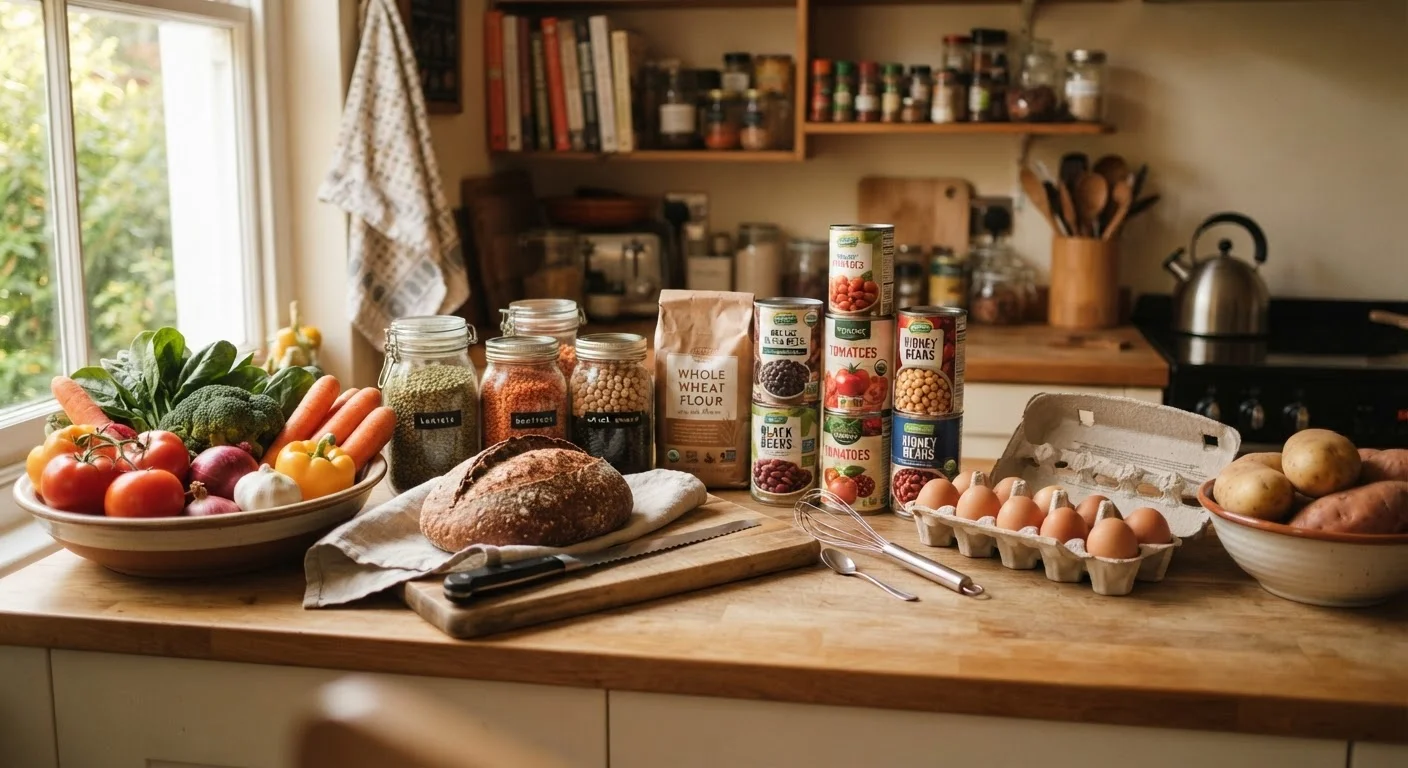
Photo: efficientlifeguide.net editorial
Key Takeaways
- Whole grains, legumes, and frozen vegetables often cost less per serving than processed convenience foods.
- Buying in bulk and cooking from scratch consistently reduces cost per meal for families.
- Organic labels and fresh produce are not requirements for eating a nutritious diet.
- Protein-rich foods like eggs, canned fish, and lentils deliver strong nutrition at low cost per serving.
- Seasonal and frozen produce match or exceed the nutritional value of out-of-season fresh items.
Where the "healthy food costs more" idea comes from
The belief that nutritious food is inherently expensive is widespread, and it is not entirely baseless. A pint of blueberries costs more than a bag of chips. A grass-fed steak costs more than a frozen burrito. When people compare these items directly, the math seems obvious.
The problem is that this comparison measures by package price rather than by serving or by nutritional value delivered per dollar. When researchers at the U.S. Department of Agriculture analyzed food costs by serving size and by edible weight, nutritious foods frequently came out cheaper than their processed counterparts. The framing of the comparison determines the conclusion.
Families operating on tight grocery budgets rarely have time to run these calculations at the shelf. The result is that a genuine but misleading pattern, premium health products costing more than junk food staples, gets generalized into an absolute rule that does not hold up across the full range of nutritious options. See our guide to feeding four for less for a practical look at how this plays out in a real weekly shop.
Myths that keep families overspending or under-eating
The myths below represent the most common beliefs that either push families toward unnecessary spending or discourage them from eating well at all. Each one has a measurable effect on how people shop.
Myth
Fresh, organic produce is necessary for a healthy diet, and that makes eating well expensive.
Fact
Frozen and conventionally grown produce are nutritionally comparable to organic fresh options and cost significantly less.
Frozen vegetables are harvested at peak ripeness and frozen quickly, which locks in most of their nutrients. Multiple analyses by nutrition researchers have found that frozen peas, spinach, broccoli, and corn are nutritionally comparable to their fresh counterparts. Organic certification addresses pesticide residue concerns but does not materially change macronutrient or micronutrient content. Families who choose frozen and conventional produce over organic fresh lose very little nutritional value while cutting produce costs substantially.
Myth
Healthy eating means spending more on specialty items like protein powders, superfoods, and fortified snacks.
Fact
No specialty product is nutritionally required. Eggs, lentils, canned sardines, oats, and dark leafy greens cover the same nutritional ground at far lower cost.
The market for functional foods and supplements is large, and marketing often implies that ordinary groceries fall short. Nutrition science does not support that conclusion. Dietary patterns built around affordable whole foods, legumes, eggs, oats, canned fish, and seasonal vegetables consistently appear in research on healthy eating across populations. Specialty products may be convenient, but they are not substitutes for foods that a budget-focused family cannot already obtain from a standard grocery store.
Myth
Cooking healthy meals from scratch takes too much time, so convenience food is the realistic option for busy families.
Fact
Many nutritious meals take 20 to 30 minutes to prepare, and batch cooking one or two days a week dramatically reduces daily kitchen time.
Dried lentil soup, scrambled eggs with frozen spinach, canned tuna over rice, and oatmeal with fruit each take under 30 minutes including cleanup. Batch-cooking a large pot of beans, a sheet pan of roasted vegetables, or a pot of whole grains once or twice a week means several weeknight meals require only reheating and assembly. The time cost of cooking nutritious food is real but smaller than the perception suggests, particularly when meal planning reduces daily decision-making.
Myth
Eating healthy is only realistic for families with higher incomes.
Fact
USDA data shows that nutritious dietary patterns are achievable at a range of spending levels, including budgets near the Thrifty Food Plan benchmark.
The USDA Thrifty Food Plan sets a cost benchmark for a nutritionally adequate diet and is used as a reference in federal nutrition assistance programs. Research analyzing diets built around legumes, whole grains, eggs, canned proteins, and produce within that spending range consistently finds that meeting most dietary guidelines is possible. The challenge is more often about knowledge, planning time, and access to stores with affordable staples than about income alone. Low-income households that have access to well-stocked grocery stores and a reliable cooking setup can and do eat nutritiously on tight budgets.
Myth
Buying in bulk always saves money and is only worth it for large families.
Fact
Bulk purchasing saves money on shelf-stable staples regardless of family size, provided storage is available and the item will be used before it spoils.
Dried beans, lentils, rolled oats, rice, pasta, and canned goods all have long shelf lives and cost less per unit in larger quantities at most grocery stores and warehouse clubs. Even a two-person household benefits from buying these staples in bulk because spoilage is not a risk and per-serving costs drop. The strategy fails only with perishables that a household cannot use in time, so the practical rule is to buy dry and canned staples in bulk and buy fresh perishables in quantities the family will use within a few days.
For a broader look at how widely repeated money-saving rules can backfire, the frugal living myths that cost more is worth reading alongside this one.
Building a nutritious cart without the premium price tag
Once the myths are cleared away, a practical pattern emerges. The foods that nutrition researchers consistently point to as beneficial, legumes, whole grains, eggs, canned fish, and frozen or seasonal vegetables, are among the cheapest items in any American grocery store. Whole grains, legumes, and frozen vegetables deliver protein, fiber, vitamins, and minerals at a fraction of what most shoppers assume quality nutrition costs.
The protein comparison across eggs, tofu, canned fish, and lentils makes clear that meeting daily protein targets for a family of four is achievable for well under two dollars per person when these sources anchor the meal plan. Buying dry lentils or dried beans rather than canned saves additional money with minimal extra effort.
Produce costs follow a seasonal pattern that is predictable enough to plan around. A month-by-month seasonal produce guide shows which fruits and vegetables are typically cheapest across U.S. regions at any given time. Pairing seasonal fresh produce with frozen alternatives for out-of-season items keeps nutrition high and spending low year-round.
$0.14
Cost per serving of dry lentils
USDA Economic Research Service data places the cost of a half-cup cooked serving of dry lentils at roughly 14 cents, making them one of the cheapest protein sources per gram in any grocery store.
~$0.25
Average cost per egg in the U.S.
USDA retail price surveys have historically placed conventional large eggs at approximately 20 to 30 cents each, delivering around 6 grams of protein per egg at a cost competitive with almost any other protein source.
3x
Nutrition cost advantage of frozen vs. out-of-season fresh
USDA Economic Research Service comparisons have found frozen vegetables can cost two to three times less per edible cup than out-of-season fresh equivalents while delivering comparable nutrient content.
Smarter shopping habits compound these savings further. The strategies in our grocery bill guide cover meal planning, storage, and shopping sequence techniques that preserve both variety and budget without requiring dietary changes. The pantry staples that quietly raise costs is also worth a scan to identify where current spending may be going to low-value items.
The content provided on our blog site traverses numerous categories, offering readers valuable and practical information. Readers can use the editorial team’s research and data to gain more insights into their topics of interest. However, they are requested not to treat the articles as conclusive. The website team cannot be held responsible for differences in data or inaccuracies found across other platforms. Please also note that the site might also miss out on various schemes and offers available that the readers may find more beneficial than the ones we cover.