
A Week of Nutritious Family Dinners Built Around Whatever Is on Sale

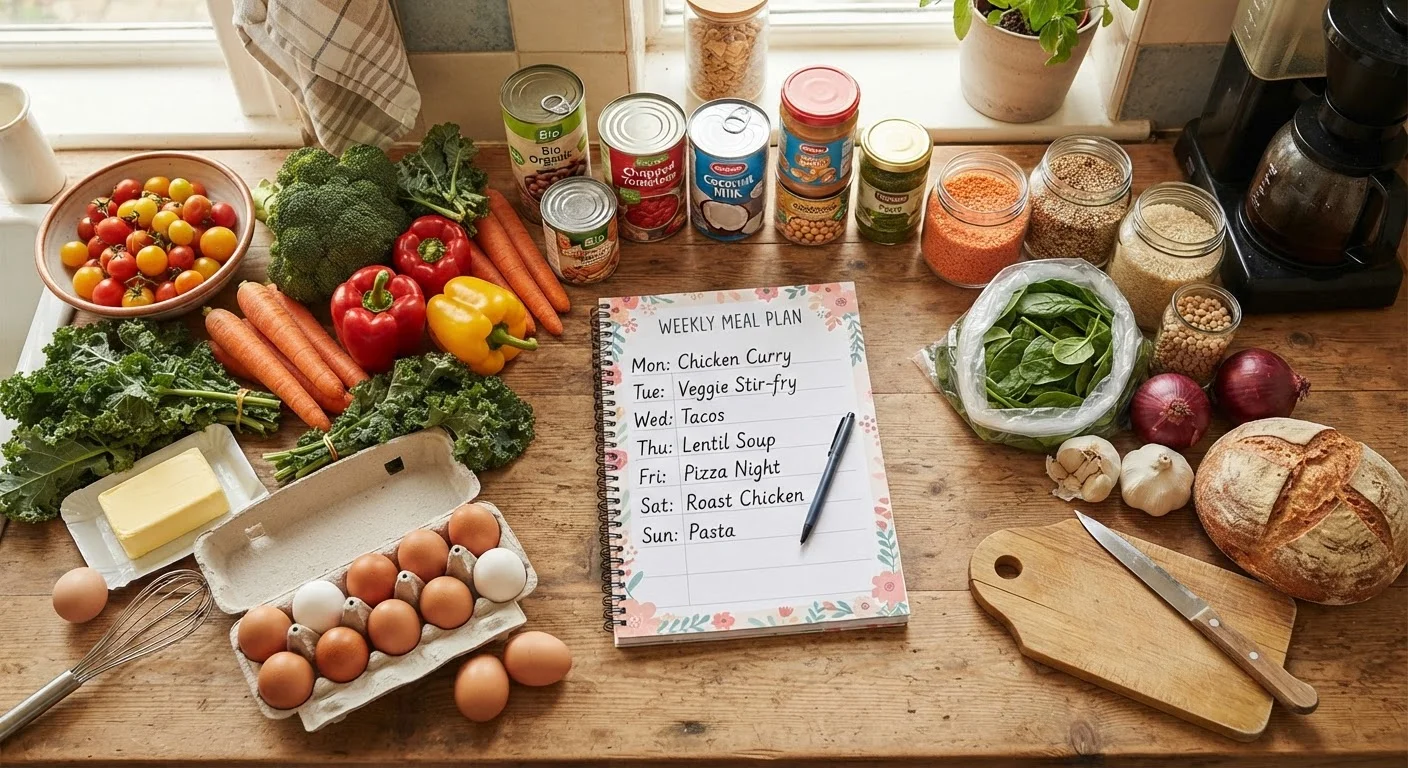
Photo: efficientlifeguide.net editorial
Key Takeaways
- Check store sales first, then build your weekly dinner plan around what is discounted.
- A pantry stocked with grains, legumes, and canned goods absorbs any protein or vegetable on sale.
- Rotating between animal and plant proteins across the week keeps nutrition balanced and costs low.
- One batch-cooking session midweek cuts daily cooking time and prevents expensive last-minute meals.
- Tracking cost per serving, not total receipt, gives a clearer picture of your true food budget.
Why sales, not recipes, should drive your weekly plan
Most families pick recipes first, then shop for ingredients. That habit works against the budget because it makes you a price-taker: whatever the store charges that week, you pay. Flipping the order, checking the weekly circular before writing a single meal idea, puts the store's discounts to work for you instead of against you.
This approach does require a mental shift. Instead of asking "What do we want to eat this week?", you ask "What protein and produce are marked down, and what can we build from those?" The answer is almost always several solid dinners. A whole chicken on sale becomes a roast on Monday and a soup on Wednesday. Discounted ground turkey becomes tacos and a baked pasta. Pork shoulder clearance turns into pulled pork rice bowls stretched across two nights.
Nutritional balance stays intact because the structure of each dinner plate does not change: roughly one-quarter protein, one-quarter whole grain or starchy vegetable, and half non-starchy vegetables. The ingredients rotate; the ratios hold. For a deeper look at how to set up that structure before you start, the beginner-friendly meal planning walkthrough covers pantry inventory and list-building from scratch.
What you need before you start
The system works only if your pantry can catch whatever lands on sale. Without a base layer of shelf-stable ingredients, every discounted protein or vegetable becomes a standalone purchase that still requires multiple trips or expensive add-ons.
What you will need
With these on hand, almost any sale item slots into a complete dinner without extra shopping. For a fuller picture of why these pantry staples matter nutritionally, see whole grains, legumes, and frozen vegetables compared.
How to build a week of dinners around this week's sales
Follow these steps each week before you shop. The first run-through takes about 30 to 45 minutes; by week three it typically takes under 20.
Scan this week's circular for protein and produce discounts
Open your store's weekly ad before writing anything else. Note every protein (meat, poultry, fish, eggs, tofu) and every fresh or frozen produce item that is marked down. Write them on a single line, not a list of meals yet.
Assign proteins to nights first
Count how many dinners you are planning (typically five or six). Assign your discounted proteins to specific nights, spacing animal proteins and plant proteins so no nutrient profile dominates the week. Write the protein next to each day: Monday chicken, Tuesday lentils, Wednesday chicken leftovers as soup, Thursday eggs, Friday canned tuna pasta, and so on.
Pair each protein with a grain and a vegetable
For each night, add a grain from your pantry and a vegetable from your freezer or the discounted fresh produce. Apply the plate rule: half vegetables, one-quarter protein, one-quarter grain. Write the complete three-part dinner next to each day. This takes about five minutes once the proteins are placed.
Write a consolidated shopping list organized by store section
Pull ingredients from your seven dinners and organize them by section: produce, meat and seafood, dairy and eggs, frozen, canned and dry goods. Cross off anything you already have. This single-pass list prevents duplicate buying and missed items, which are both budget killers.
Schedule one batch-cooking block midweek
Pick a day, typically Sunday or Wednesday, when you can cook a larger quantity of one grain and one protein. Cooked rice, a pot of lentils, or shredded chicken stored in the fridge covers two to three nights without full cooking sessions each evening. This is what keeps the plan realistic on busy weeknights.
Track cost per serving after the first week
After your first full week, divide your total dinner spend by the number of servings you produced. For a family of four eating five dinners, that is 20 servings. Compare this number week to week rather than comparing total receipts, which fluctuate with household size and special purchases. A downward trend in cost per serving confirms the system is working.
If you want to tighten the cost-per-serving math further, batch cooking for families explains how cooking in larger quantities on one or two days reduces both time and per-meal cost.
Keeping nutrition balanced when ingredients change weekly
The most common worry with a sale-driven plan is that the family will end up eating the same nutrients in cycles, or miss something important when a particular food group is not on sale. In practice, this is rarely a problem if you apply a few consistent rules.
First, frozen vegetables are nearly always cheaper than fresh and nutritionally comparable for most families' purposes. Keeping two or three bags of frozen spinach, broccoli, or mixed vegetables means the vegetable half of the plate is covered regardless of what fresh produce is marked down.
Second, rotate protein sources across the week rather than repeating the same sale item every night. If chicken is the deal this week, use it two nights, then fill the remaining nights with eggs, canned fish, or lentils. The comparison of budget protein sources breaks down cost, nutrition, and family appeal for each option.
Third, whole grains such as brown rice, oats, or barley provide fiber, B vitamins, and sustained energy at a very low cost per serving. They rarely go on dramatic sale, so buy them in larger quantities when the price dips even slightly, and you will always have the carbohydrate component of any plate covered.
For families watching the total grocery number, feeding four for less without sacrificing nutrition puts these individual tactics into a complete weekly budget framework.
Build variety through seasoning, not ingredients
The content provided on our blog site traverses numerous categories, offering readers valuable and practical information. Readers can use the editorial team’s research and data to gain more insights into their topics of interest. However, they are requested not to treat the articles as conclusive. The website team cannot be held responsible for differences in data or inaccuracies found across other platforms. Please also note that the site might also miss out on various schemes and offers available that the readers may find more beneficial than the ones we cover.