
Building a Healthy Family Meal Plan From Scratch When Money Is Tight

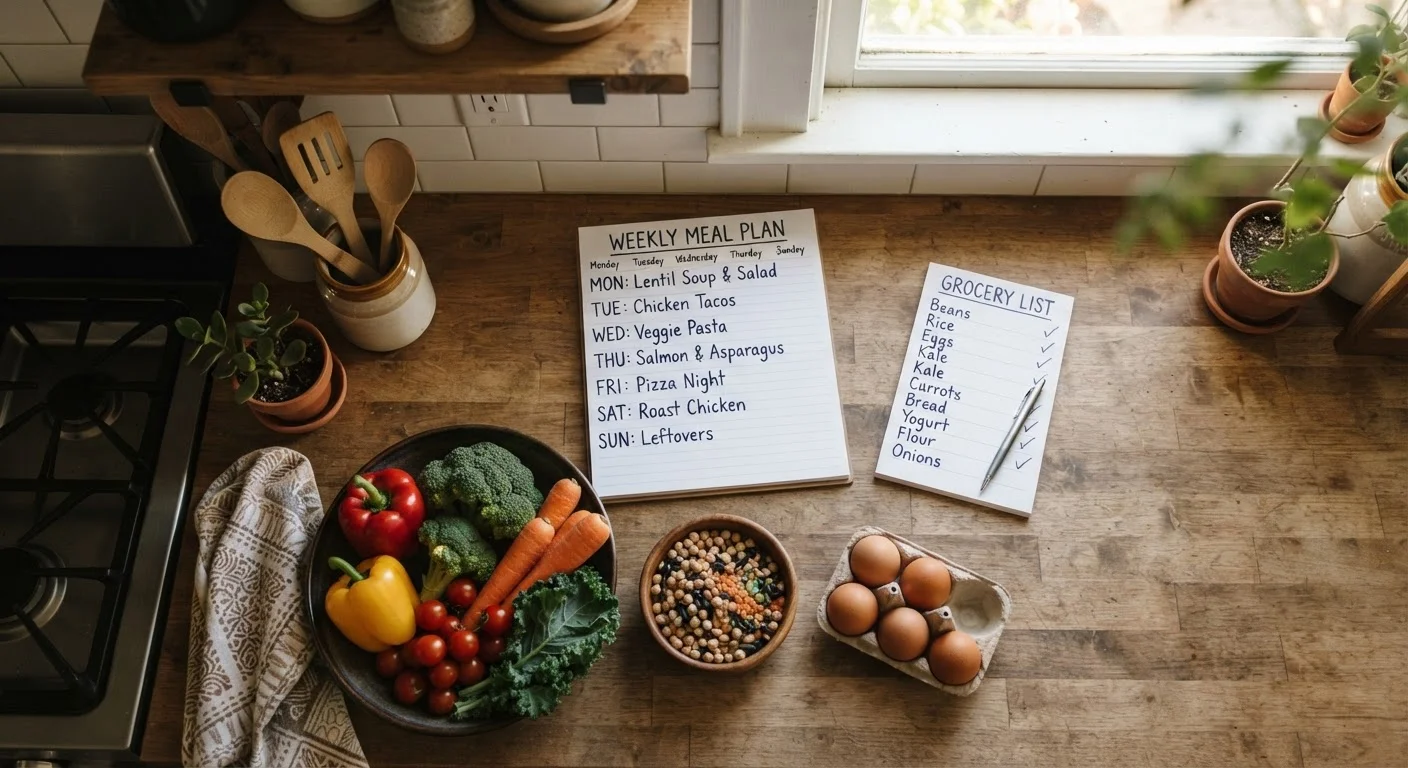
Photo: efficientlifeguide.net editorial
Key Takeaways
- A pantry inventory done before shopping prevents duplicate purchases and reveals meals you can already make.
- Anchoring meals to dried legumes, whole grains, and frozen vegetables cuts cost per serving significantly.
- Writing a shopping list derived from a finished meal plan reduces impulse spending at the store.
- Batch cooking two to three times a week lowers both food waste and the time spent cooking daily.
- Flexible planning that responds to sales keeps nutrition consistent without locking into expensive recipes.
Start with a pantry inventory
Before writing a single meal idea, open every cabinet, check the freezer, and pull out what is already there. This step alone prevents the most common budget-busting habit: buying ingredients that duplicate what you already own.
Group what you find into categories: grains and pasta, canned goods, dried legumes, oils and condiments, frozen proteins, frozen vegetables. Note quantities. A half-bag of red lentils, two cans of diced tomatoes, and a box of pasta is a dal or a pasta sauce waiting to happen.
Write down anything close to running out. These are your guaranteed shopping list items before you plan a single meal. Everything else on the list comes only from what the plan requires. This order of operations matters: inventory first, plan second, list third.
Pantry inventory
A list of every food item you already own at home, organized by category. Doing one before each shop prevents buying duplicates and helps you see what meals are already possible.
Cost per serving
The total cost of an ingredient or recipe divided by the number of portions it produces. Comparing cost per serving across ingredients is more useful than comparing package prices.
Batch cooking
Preparing large quantities of a food in one session so it can be used across multiple meals during the week. It cuts both daily cooking time and per-meal cost.
Staple ingredients
Basic, versatile foods such as oats, rice, lentils, and eggs that keep well, cost little, and form the base of many different meals.
Weekly circular
A grocery store's advertised sale list, usually published each week. Building a few meals around circular items reduces the total shopping bill without sacrificing variety.
Set a realistic weekly food budget
A budget that is too tight relative to your family's actual eating habits will fail by Wednesday. Start by tracking what you spent on food over the past two weeks, including any takeout. That number is your current baseline.
From there, identify one specific change you can make immediately without the family noticing much: switching from pre-cut vegetables to whole ones, buying oats instead of boxed cereal, or swapping canned fish for deli meat. Small swaps, made consistently, add up across a month. If you are also working on your overall household finances, the guide on building your first family budget explains how to fit grocery spending into a broader spending plan.
Divide your weekly food target into per-day and per-person amounts so you can check rough feasibility as you plan. A family of four spending $120 per week has about $4.29 per person per day across all meals and snacks, which is achievable if most meals are cooked at home from whole ingredients.
Build your meal structure around low-cost staples
A practical meal plan for a tight budget does not start with recipes. It starts with a handful of affordable base ingredients and then assembles meals from those. Dried beans, lentils, whole grains, eggs, frozen vegetables, and cabbage deliver the most nutrition per dollar of any grocery category. For a detailed breakdown of why these foods perform so well, see the article on whole grains, legumes, and frozen vegetables.
A workable weekly structure for a family of four might look like this:
- Two dinners built around a legume (lentil soup, bean tacos, chickpea stir-fry)
- Two dinners built around eggs or affordable protein such as canned fish (frittata, tuna pasta, fried rice)
- One dinner that uses up whatever is left from earlier in the week
- Breakfasts that rotate between oatmeal, eggs, and whole-grain toast
- Lunches made from dinner leftovers plus a piece of fruit and bread
Protein choices matter a lot to both cost and nutrition. The comparison in budget protein sources including eggs, tofu, canned fish, and lentils can help you decide which options fit your family's preferences and cooking habits.
Plan one 'use it up' meal per week
Write the shopping list from the plan, not the other way around
Once the week's meals are sketched out, go through each one and list every ingredient needed. Cross off anything already in the pantry from your inventory. What remains is your shopping list.
Organize the list by store section: produce, canned and dry goods, dairy and eggs, frozen. This cuts time in the store and reduces the chance of unplanned detours through high-cost aisles.
If you shop at a store that releases a weekly circular, check it before finalizing your plan. Building even two or three meals around that week's marked-down produce or protein, without abandoning your staple framework, can trim $10 to $20 from a weekly shop. The article on planning nutritious dinners around weekly sales lays out how to do this without losing nutritional balance. For more shopping habits that lower the bill without changing what the family eats, cutting your grocery bill without changing your diet covers practical tactics that complement any meal plan.
Reduce waste and stretch ingredients further
Food waste is one of the fastest ways a budget unravels. Vegetables wilt, bread goes stale, and leftovers get forgotten behind newer containers. A few habits reduce this without requiring more time.
Cook in larger batches two or three times a week instead of separate meals each night. A large pot of rice, a tray of roasted vegetables, and a batch of cooked lentils can be combined differently across three or four days. The article on batch cooking for families explains how this approach lowers cost per serving alongside the time savings.
Store cooked grains and legumes in clearly labeled containers at eye level in the fridge so they actually get used. Place items with shorter shelf life at the front of the produce drawer. When something is approaching the end of its usable life, it goes into the next meal, not the trash. A frittata, a grain bowl, a soup, or a stir-fry can absorb almost any combination of vegetables and cooked protein.
Beans are worth a specific note: dried beans cost considerably less per serving than canned, but they require overnight soaking and longer cooking. If time is genuinely short, canned beans work well and still fall within a tight budget. The dried beans vs. canned beans comparison covers the trade-offs in detail so you can pick the form that matches your routine.
Frequently Asked Questions
The content provided on our blog site traverses numerous categories, offering readers valuable and practical information. Readers can use the editorial team’s research and data to gain more insights into their topics of interest. However, they are requested not to treat the articles as conclusive. The website team cannot be held responsible for differences in data or inaccuracies found across other platforms. Please also note that the site might also miss out on various schemes and offers available that the readers may find more beneficial than the ones we cover.