
Whole Grains, Legumes, and Frozen Vegetables: The Unsung Heroes of Budget Nutrition

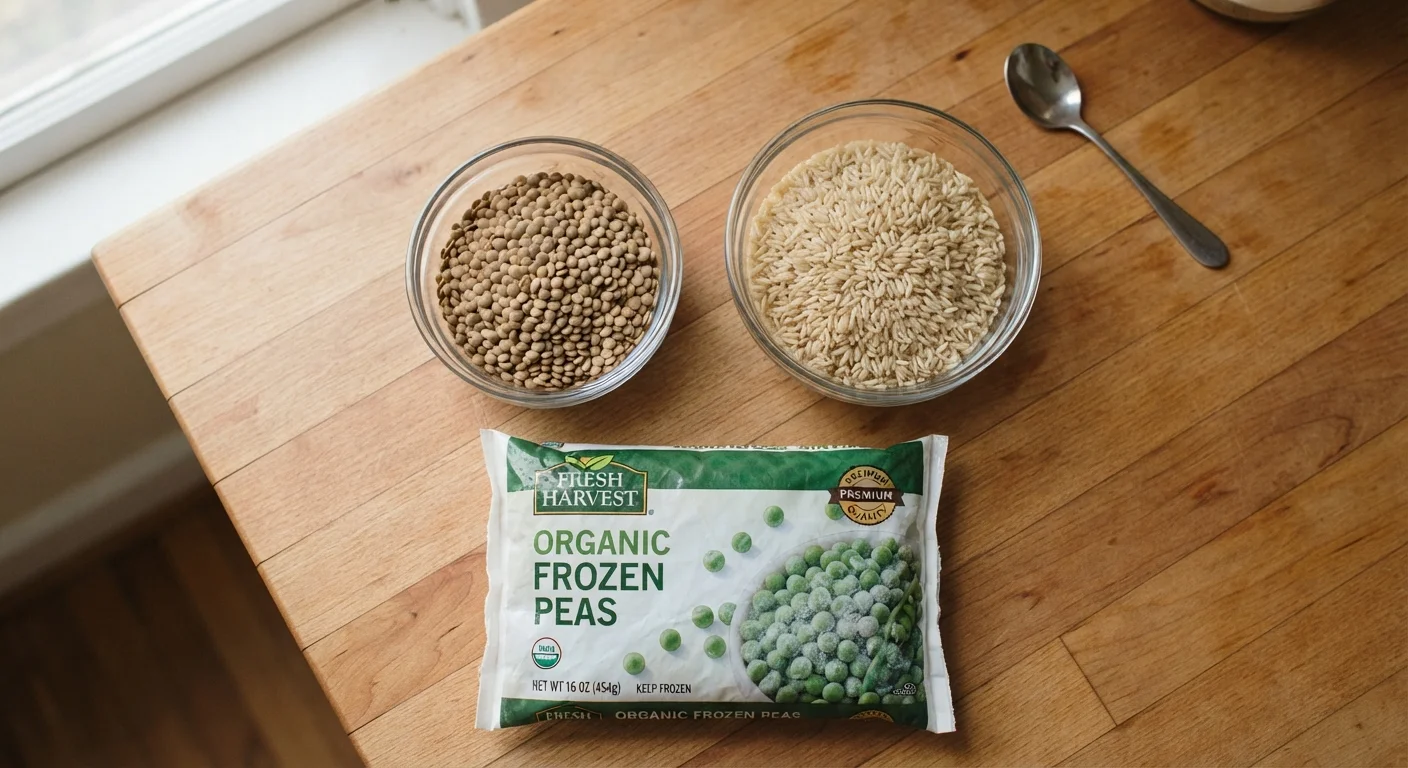
Photo: efficientlifeguide.net editorial
Key Takeaways
- Dried lentils and beans cost roughly 10 to 20 cents per cooked serving and supply protein and fiber comparable to more expensive foods.
- Frozen vegetables retain nearly the same nutrients as fresh because they are frozen shortly after harvest.
- Whole grains like oats and brown rice cost cents per serving and add fiber, B vitamins, and lasting fullness to meals.
- Combining legumes with whole grains at the same meal provides a complete amino acid profile without meat.
- These three categories work together as a flexible base for soups, grain bowls, stir-fries, and casseroles.
Why these three categories outperform everything else on a per-dollar basis
Most grocery budgets are squeezed from both ends: food prices have risen while wages have not kept pace for many households. The answer is not to buy less food but to understand which foods deliver the most nutrition per dollar spent.
Whole grains, legumes, and frozen vegetables consistently come out ahead because they are cheap to produce, have long shelf lives, and have not attracted the premium pricing that follows food trends. A pound of dried lentils yields roughly ten cooked half-cup servings. A pound of rolled oats yields around fourteen half-cup servings. A 12-ounce bag of frozen peas serves four people as a side dish. None of these costs much, yet together they cover fiber, protein, complex carbohydrates, and a range of vitamins and minerals that many American families fall short on.
For more on how these staples fit into a complete grocery strategy, see our breakdown of the real cost of healthy eating.
~$0.15
Cost per serving of cooked dried lentils
Based on typical US retail pricing for a 1-pound bag of dried lentils yielding approximately 10 half-cup cooked servings.
~$0.25
Cost per serving of frozen vegetables (family bag)
Based on typical retail pricing for a 16-ounce frozen vegetable bag providing four servings for a family of four.
16g
Fiber in one cup of cooked lentils
According to USDA FoodData Central nutritional data for cooked lentils, covering more than half the daily adequate intake for adults.
Whole grains: more than just a cheap filler
Whole grains are the intact version of cereal grains, meaning the bran, germ, and endosperm are all present. Refined grains like white rice and white flour have had the bran and germ removed, which strips out most of the fiber, B vitamins, and trace minerals.
Brown rice, rolled oats, barley, bulgur, and whole wheat pasta are the most widely available and least expensive options in US stores. Oats are worth singling out because they also supply beta-glucan, a soluble fiber that has been studied in relation to cholesterol levels. The FDA allows a qualified health claim for oat products on this basis, though results vary by individual and eating context.
From a cooking standpoint, whole grains absorb flavors well and add substance to meals, which helps people feel full longer. That satiety effect matters for families trying to avoid expensive between-meal snacking.
Legumes: the most underused protein in American kitchens
Legumes include dried beans, lentils, chickpeas, split peas, and edamame. They supply protein, soluble and insoluble fiber, iron, folate, magnesium, and potassium. On a per-gram-of-protein basis, dried lentils and black beans cost a fraction of chicken breast.
A cup of cooked lentils contains roughly 18 grams of protein and 16 grams of fiber. Legumes are not complete proteins on their own because they are low in methionine, but pairing them with any grain (rice, oats, corn) over the course of the day covers all essential amino acids. You do not need to combine them at every single meal.
Compare lentils against other affordable protein sources if you want a side-by-side nutritional breakdown. Canned versions cost more per serving than dried but still undercut most animal proteins, and they save significant prep time.
Boost flavor without adding cost
Frozen vegetables: the practical choice for most families
Fresh vegetables are ideal when they are genuinely in season and locally grown. Outside those conditions, frozen is often the smarter choice, both for cost and for nutritional consistency.
Vegetables destined for freezing are harvested at peak ripeness and processed within hours. That timing preserves water-soluble vitamins like vitamin C and folate reasonably well. Fresh produce that has traveled across the country in refrigerated trucks for several days has had more time for those same vitamins to degrade.
Frozen broccoli, peas, corn, spinach, edamame, and mixed vegetables are available year-round at stable prices. A family of four can add a full vegetable serving to dinner for under a dollar. There is no washing, trimming, or spoilage to deal with, which reduces food waste, one of the quieter budget leaks in most households.
To see how frozen vegetables fit into a full weekly plan, visit a flexible dinner framework built around what is on sale.
Putting all three to work in actual meals
The real advantage of these three categories is how naturally they work together. A pot of lentil soup with barley and frozen spinach takes about 35 minutes and costs under $1.50 for a family of four. A grain bowl with brown rice, canned chickpeas, and frozen broccoli roasted from frozen is a 20-minute weeknight meal.
Batch cooking amplifies the savings further. Cook a large pot of brown rice and a pot of beans on Sunday, portion them, and use both across several meals during the week. The per-serving cost drops each time you scale up the batch.
For families new to planning this way, building a meal plan from scratch is a practical starting point that walks through the whole process. And if you want to see where your current grocery spending may be leaking out, check which pantry staples quietly raise your bill.
A family of four replaces one weekly takeout meal with a lentil and brown rice dinner using frozen spinach and canned tomatoes. Total ingredient cost is about $3.00.
A parent buys a 5-pound bag of rolled oats and uses it for breakfasts for two weeks across a household of four.
A family adds a 12-ounce bag of frozen edamame to pasta night instead of buying fresh vegetables that are out of season.
Frequently Asked Questions
The content provided on our blog site traverses numerous categories, offering readers valuable and practical information. Readers can use the editorial team’s research and data to gain more insights into their topics of interest. However, they are requested not to treat the articles as conclusive. The website team cannot be held responsible for differences in data or inaccuracies found across other platforms. Please also note that the site might also miss out on various schemes and offers available that the readers may find more beneficial than the ones we cover.