
Batch Cooking for Families: Less Time in the Kitchen, Lower Cost Per Meal

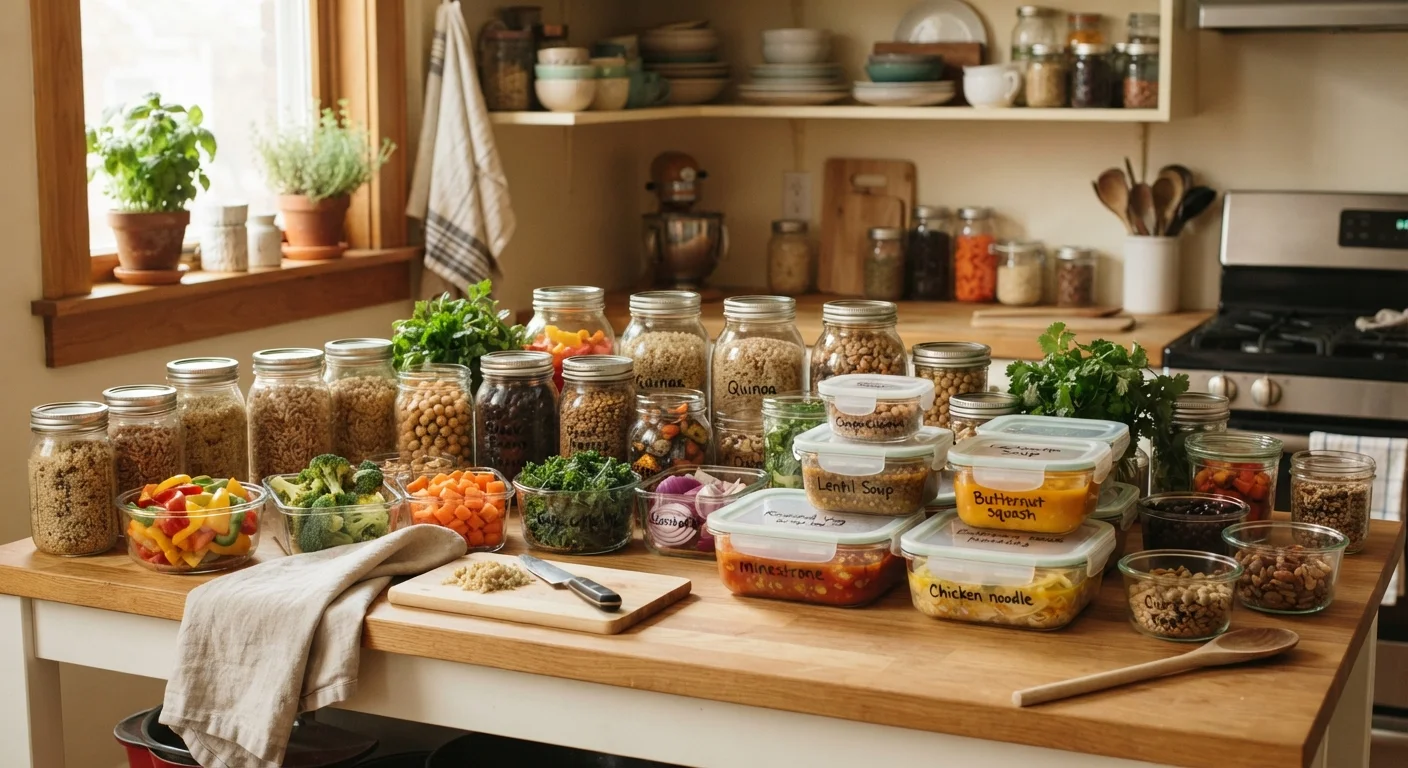
Photo: efficientlifeguide.net editorial
Key Takeaways
- Cooking large quantities at once lowers the cost per serving compared to preparing single meals daily.
- Batch cooking reduces impulse spending on takeout by keeping ready-made food in the fridge.
- Versatile base ingredients like grains, beans, and roasted vegetables stretch across multiple meals.
- Proper storage planning is the difference between useful prepped food and wasted food.
- Two focused cooking sessions per week are enough for most families to cover dinners and lunches.
Why batch cooking changes the math on home cooking
Every time a family cooks a single meal from scratch, fixed costs apply: the stove runs, prep time is spent, and partial packages of ingredients sit in the fridge waiting to be used before they spoil. Batch cooking changes that equation by spreading those costs across many servings at once.
Buying a 5-pound bag of dried pinto beans costs far less per pound than buying a single can. Roasting a full sheet pan of vegetables uses the same oven energy as roasting one cup. The more servings you produce in a single session, the lower the cost of each one. That is the core financial logic behind batch cooking, and it holds whether your grocery budget is $400 a month or $800.
The secondary benefit is behavioral. When cooked food is already in the fridge, the answer to "what's for dinner" is a reheating problem, not a cooking problem. Families with ready food available are less likely to order takeout on a tired Tuesday night. That alone can save $30 to $60 per week for a family of four in many US cities.
For a broader look at spending patterns, see our guide to feeding four for less.
Best practices for building an efficient batch cooking routine
Plan your batch session around two or three anchor ingredients that work across multiple meals.
Shop for batch ingredients using unit price, not package price.
Schedule a fixed batch cooking session once or twice a week and protect that time.
Use your oven fully by roasting multiple items on different racks simultaneously.
Batch cook foods that hold their texture and flavor after reheating.
Pairing these practices with smart ingredient choices amplifies the savings. Whole grains, legumes, and frozen vegetables are the most cost-effective batch cooking ingredients available, and they hold well in storage.
Storage and food safety: the part most families skip
Batch cooking only saves money if the food actually gets eaten. Poor storage is the fastest way to turn a productive cooking session into a refrigerator full of waste.
Cooked grains and beans stay safe in the refrigerator for up to five days in airtight containers. Soups and stews last about the same time, though most freeze well for up to three months. Cooked proteins like ground beef or shredded chicken should be used within three to four days or frozen promptly. Roasted vegetables are best eaten within four days; they do not freeze as well due to texture changes.
Label every container with the date it was made. A piece of masking tape and a marker takes ten seconds and eliminates the guesswork that leads to throwing food out. Arrange containers so the oldest items sit at the front of the fridge.
Freezer capacity matters here. Families who want to batch cook proteins or soups in quantity benefit from a small chest freezer, though a well-organized standard freezer works for most. See our bulk buying guide for more on how storage capacity affects whether stocking up actually saves money.
Label before you store, every time
Turning batch components into different meals
The real value of batch cooking comes from treating prepped food as components, not finished meals. A pot of cooked brown rice made on Sunday can become a grain bowl on Monday, fried rice on Wednesday, and a side with beans on Thursday. The same batch of roasted sweet potatoes can go into tacos, top a salad, or be served alongside eggs at breakfast.
This approach also prevents the fatigue of eating the same meal repeatedly. Children are more likely to eat without complaint when the same ingredients appear in different formats. Planning three or four base components that mix and match across the week is more flexible than batch cooking complete dishes.
Planning meals around weekly sales works naturally alongside this system. When chicken thighs are on sale, batch cook a large quantity and cycle them through several formats across the week. The choice between dried and canned beans also affects your batch cooking workflow, since dried beans require advance planning but cost significantly less per serving.
The content provided on our blog site traverses numerous categories, offering readers valuable and practical information. Readers can use the editorial team’s research and data to gain more insights into their topics of interest. However, they are requested not to treat the articles as conclusive. The website team cannot be held responsible for differences in data or inaccuracies found across other platforms. Please also note that the site might also miss out on various schemes and offers available that the readers may find more beneficial than the ones we cover.