
Pantry Staples That Quietly Run Up Your Grocery Bill

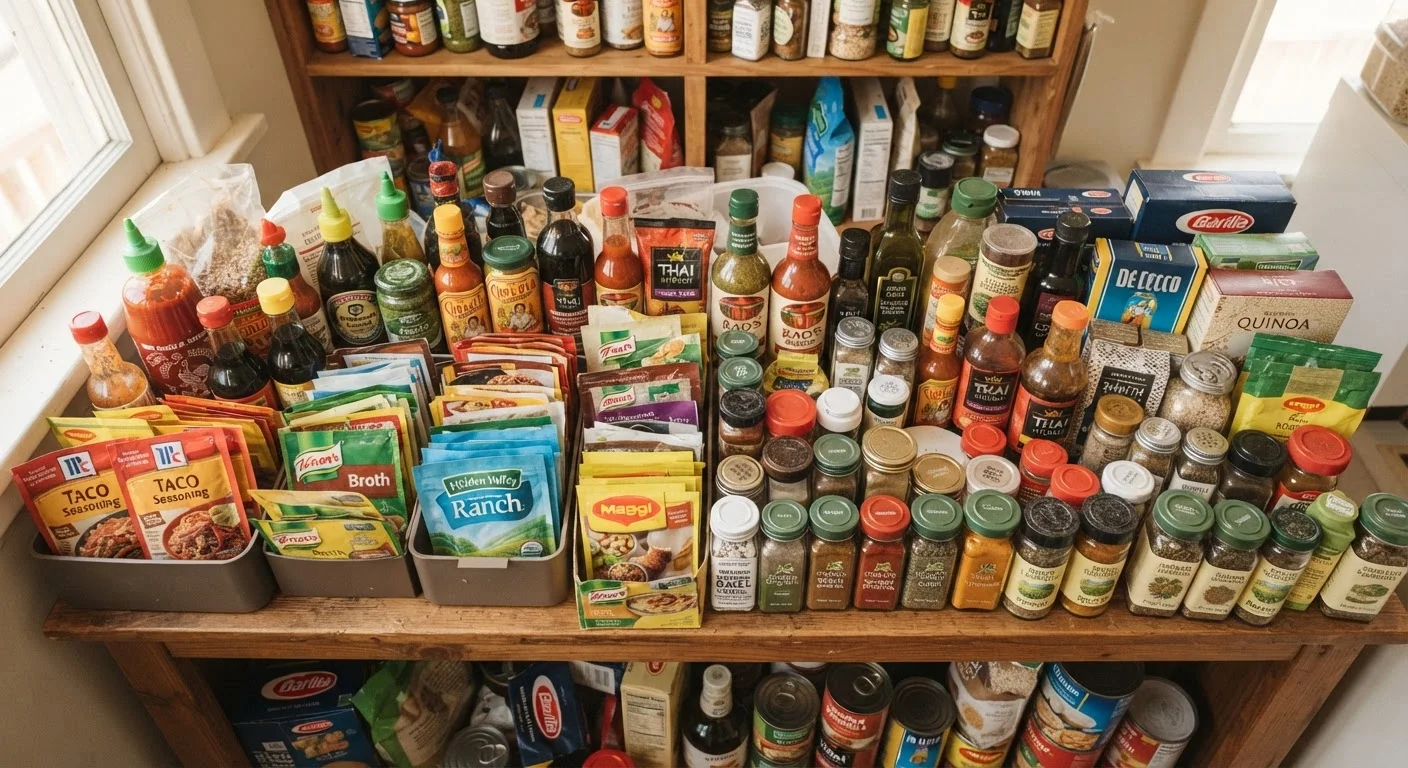
Photo: efficientlifeguide.net editorial
Key Takeaways
- Pre-seasoned and single-use items often cost three to five times more than their plain equivalents.
- Convenience packaging adds significant per-serving cost without adding nutritional value.
- A few pantry swaps can reduce weekly grocery spending by $15 to $30 for an average family.
- Whole dried ingredients typically deliver more servings per dollar than their canned or boxed counterparts.
- Paying attention to cost-per-serving rather than sticker price exposes the real spending leaks.
Why pantry staples become spending traps
Grocery budgets rarely blow out on obvious splurges. They erode through items that feel like sensible staples: a bottle of pre-made sauce here, a box of flavored rice there. Because each item costs only a few dollars, the pattern stays invisible until you look at a month of receipts. Families dealing with tight food budgets often find that the problem is not what they are eating but how those ingredients are packaged and priced.
The purchases described below are common, habitual, and genuinely convenient in the short term. The issue is that the convenience premium compounds across dozens of shopping trips. Identifying which items carry that hidden markup is the first step to trimming spending without changing what lands on the table. For broader context on how nutritious eating and low spending can coexist, see our breakdown of healthy eating costs.
Buying pre-mixed spice blends instead of individual spices.
Choosing single-serve or snack-size packaging over standard sizes.
Relying on bottled sauces and marinades as a weekly pantry staple.
Purchasing flavored instant oatmeal packets instead of plain rolled oats.
Buying bottled salad dressing every week rather than making a simple vinaigrette.
Keeping flavored rice or pasta side-dish pouches as a regular staple.
Making the swap without disrupting meals
Switching to plain, whole ingredients does not mean cooking everything from scratch every night. It means keeping a short list of versatile base ingredients, like dried lentils, plain canned tomatoes, bulk oats, and a small collection of individual spices, that replace a wide range of branded convenience products. Whole grains, legumes, and frozen vegetables cover a remarkable share of a family's weekly nutrition at a fraction of the per-serving cost of pre-packaged alternatives.
The practical approach is to swap one category at a time rather than overhauling the pantry in a single shopping trip. Replace the flavored rice pouches this week, the bottled salad dressing next week. Each swap builds confidence and, more usefully, demonstrates real dollar savings on the receipt. For shopping habits that reinforce these swaps without requiring dietary changes, cutting your grocery bill without changing what you eat covers the mechanics in detail.
3-5x
Price premium on pre-mixed spice blends vs. individual spices
Unit price comparisons across common grocery store spice sections show blends consistently cost more per teaspoon than buying the component spices separately.
40-60%
Extra cost of single-serve packaging per serving
Consumer unit price analyses of nuts, crackers, and dried fruit consistently show single-serve packs carry a substantial markup over standard-size containers.
$15-$30
Estimated weekly savings from swapping convenience pantry items
Household budget tracking exercises by personal finance educators suggest families of four can see this range of weekly savings by replacing pre-packaged staples with plain equivalents.
The content provided on our blog site traverses numerous categories, offering readers valuable and practical information. Readers can use the editorial team’s research and data to gain more insights into their topics of interest. However, they are requested not to treat the articles as conclusive. The website team cannot be held responsible for differences in data or inaccuracies found across other platforms. Please also note that the site might also miss out on various schemes and offers available that the readers may find more beneficial than the ones we cover.