
Protein on a Budget: Eggs, Tofu, Canned Fish, and Lentils Compared

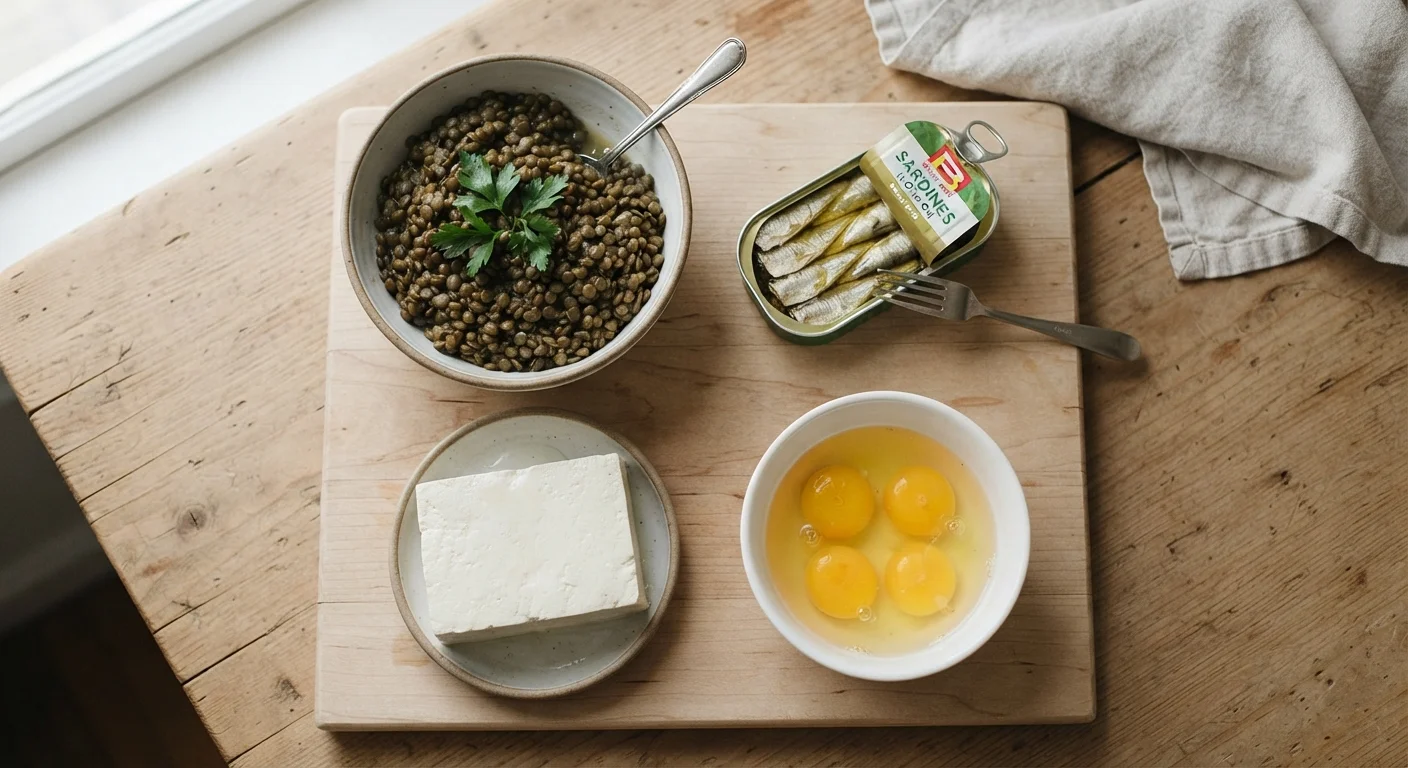
Photo: efficientlifeguide.net editorial
Key Takeaways
- Lentils cost the least per gram of protein but require planning and cooking time.
- Eggs offer the most versatility and are accepted by most family members across ages.
- Canned fish delivers the highest protein density and requires zero cooking.
- Tofu fits vegetarian households but needs seasoning and technique to win over picky eaters.
- Rotating all four across the week covers different amino acid profiles and prevents meal fatigue.
Why these four proteins belong in your weekly rotation
Protein is the macronutrient most families feel pressure to get enough of, and it also tends to drive grocery costs up the fastest when the default choice is meat. Eggs, tofu, canned fish, and lentils each solve that problem in a different way. Together they cover nearly every cooking style, dietary restriction, and schedule constraint a family might have.
For a fuller picture of how protein fits into a broader grocery strategy, see our guide to feeding a family of four for less. This article focuses specifically on how these four sources compare so you can decide where to put your grocery dollars.
Cost per serving: the numbers that matter
Prices vary by region and store, but general national averages give useful ballpark figures. A dozen large eggs typically runs between $2 and $4, yielding roughly 12 two-egg servings at about $0.25 to $0.65 each. A 15-ounce can of light tuna or sardines costs $1.50 to $3.00 and provides two to three servings at $0.60 to $1.25 each. A 14-ounce block of firm tofu runs $2.00 to $3.50 and serves three to four people at $0.50 to $1.15 per serving. Dried lentils are the clear winner here: a one-pound bag at roughly $1.50 cooks to about six half-cup servings for around $0.25 each.
These figures shift with store choice, sales, and regional pricing. The evidence on eating well affordably shows that cost-per-serving calculations often reveal plant and pantry proteins as far cheaper than their fresh-meat counterparts, even after accounting for prep time.
| Eggs | Tofu | Canned fish | Lentils | |
|---|---|---|---|---|
| Approx. cost per serving | $0.25 to $0.65 | $0.50 to $1.15 | $0.60 to $1.25 | $0.20 to $0.30 |
| Protein per serving | ~12g (2 eggs) | ~9g (1/2 cup) | ~20g (3 oz) | ~18g (1 cup cooked) |
| Complete protein | Yes | Yes | Yes | No (pair with grains) |
| Prep time | 5 to 10 minutes | 10 to 20 minutes | Zero (ready to eat) | 25 to 30 minutes |
| Shelf life | 3 to 5 weeks (fridge) | 1 to 2 weeks (fridge) | 2 to 5 years (pantry) | 1 to 2 years (dry) |
| Vegan-friendly | No | Yes | No | Yes |
| Family acceptance (general) | Very high | Moderate | Moderate to high | High when blended in dishes |
Nutrition: protein, micronutrients, and what each source brings
Two large eggs supply about 12 grams of protein along with vitamins B12 and D, choline, and selenium. They are one of the few foods that contain all nine essential amino acids in useful amounts. Firm tofu delivers roughly 8 to 10 grams of protein per half-cup and supplies calcium (when made with calcium sulfate), iron, and manganese. Because soy protein is also a complete protein, tofu is a reliable meat replacement for vegetarian families.
Canned light tuna provides around 20 to 22 grams of protein per 3-ounce portion and is high in vitamin B12, niacin, and selenium. Canned sardines add omega-3 fatty acids and, when eaten with the soft bones, a meaningful dose of calcium. Lentils offer about 18 grams of protein per cooked cup alongside folate, iron, potassium, and a high fiber load that supports satiety. Their iron is non-heme iron, which the body absorbs less efficiently than iron from animal sources, but pairing lentils with a vitamin C-rich food (tomatoes, bell peppers) improves absorption. For more on how legumes fit into a balanced budget diet, see our article on whole grains, legumes, and frozen vegetables as budget nutrition staples.
Versatility and family acceptance
Eggs are the most adaptable of the four. Scrambled, hard-boiled, fried, baked into frittatas, or stirred into fried rice, they transition between breakfast, lunch, and dinner without resistance from most family members, including young children. Tofu needs more work: it absorbs surrounding flavors well when marinated and pressed, but plain tofu will not win over skeptical eaters. Crumbled into tacos or stir-fried with soy sauce and garlic, it becomes far more acceptable.
Canned fish is convenient but polarizing. Tuna in sandwiches and pasta dishes is widely accepted across age groups. Sardines and mackerel have stronger flavors that some family members may refuse. Starting with milder fish in familiar formats (tuna melts, tuna noodle casserole) is a practical way to build acceptance. Lentils blend into soups, stews, and meat sauces without standing out, which makes them useful for picky eaters who might object to visible legumes on the plate.
Mix textures to stretch each protein further
Pairing any of these proteins with grains, vegetables, or sauces already familiar to your family reduces resistance. The sale-driven weekly dinner framework shows how to build meals around what is already cheap and accepted.
Practical considerations: prep time, shelf life, and special diets
Canned fish and eggs require minimal prep and have long shelf lives. Eggs keep for three to five weeks refrigerated; canned fish stays good for two to five years in the pantry. Tofu must be refrigerated after opening and used within a few days. Dried lentils last a year or more in a sealed container and need no soaking, though they do require 20 to 30 minutes of simmering.
Households with egg allergies, fish allergies, or those following vegan diets will need to rule out one or more of these sources. Tofu and lentils together cover vegan protein needs well, and combining them across meals gives a broader amino acid spread. Families managing sodium intake should check canned fish labels and rinse lentils that come from canned versions. For a full walkthrough of building a budget meal plan around dietary constraints, see our beginner guide to family meal planning on a tight budget. Also worth reading: our comparison of dried beans versus canned beans, which applies similar logic to another affordable protein category.
This article is for general informational purposes only and is not medical or dietary advice. Consult a registered dietitian or healthcare professional for guidance specific to your family's health needs.
The content provided on our blog site traverses numerous categories, offering readers valuable and practical information. Readers can use the editorial team’s research and data to gain more insights into their topics of interest. However, they are requested not to treat the articles as conclusive. The website team cannot be held responsible for differences in data or inaccuracies found across other platforms. Please also note that the site might also miss out on various schemes and offers available that the readers may find more beneficial than the ones we cover.