
Dried Beans vs. Canned Beans: Which Makes More Sense for a Busy Family?

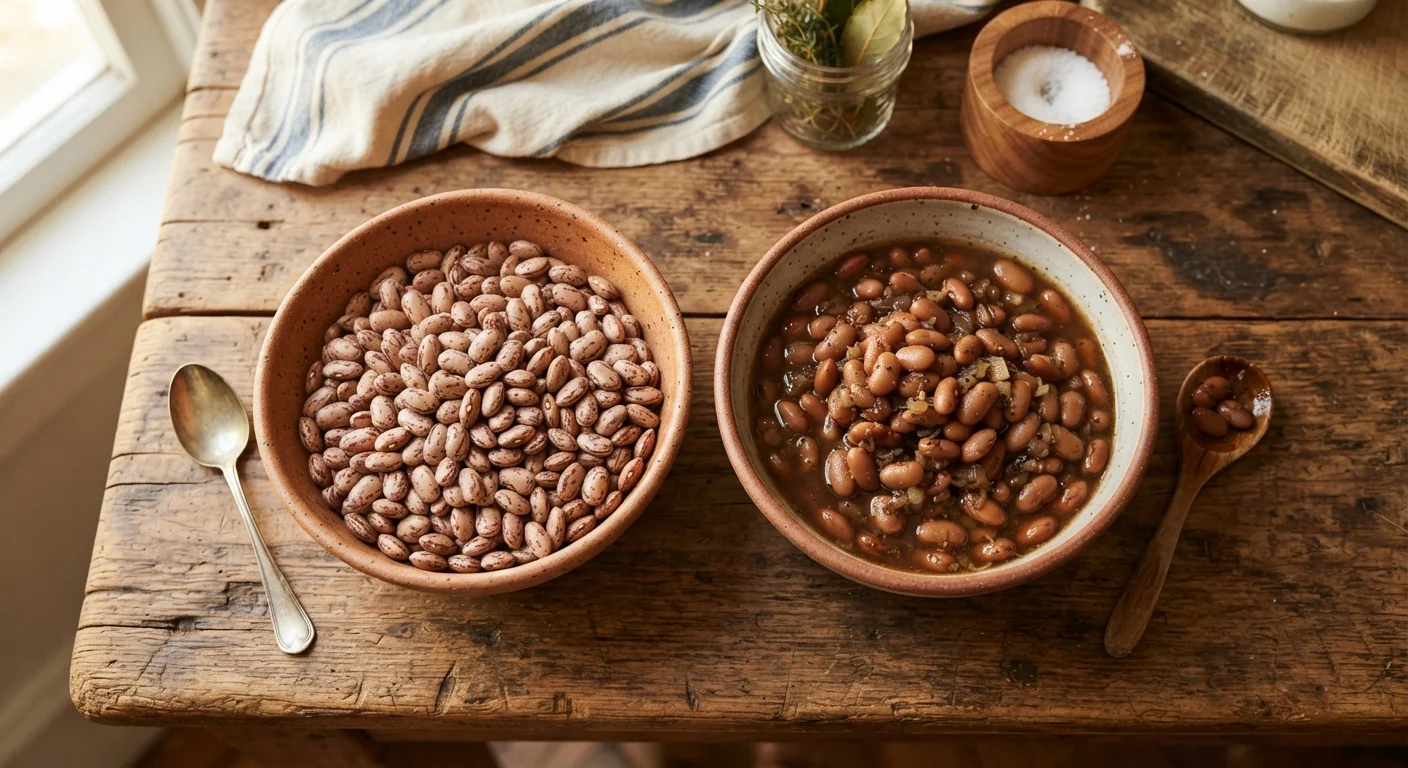
Photo: efficientlifeguide.net editorial
Key Takeaways
- Dried beans cost roughly 3 to 4 times less per serving than canned beans at typical US grocery prices.
- Canned beans require no soaking or long cooking, making them faster for weeknight meals.
- Both forms deliver comparable protein, fiber, and micronutrients when prepared properly.
- Sodium in canned beans can be reduced by up to 40 percent by rinsing before use.
- Dried beans suit batch cooking well; canned beans reduce waste for small or variable portions.
- Using a mix of both forms is a practical strategy for most family budgets and schedules.
The real cost difference
At a typical US grocery store, a 1-pound bag of dried black or pinto beans costs around $1.50 and yields approximately 6 cups of cooked beans, which works out to about 12 half-cup servings at roughly $0.12 each. A standard 15-ounce can of the same beans costs $0.80 to $1.10 and contains about 3.5 half-cup servings, putting the cost per serving at $0.23 to $0.31. Over a year, for a family eating beans three times a week, that gap adds up to a meaningful difference in the grocery bill.
The cost advantage of dried beans grows further if you buy them in bulk. Buying in larger quantities can cut the per-pound price by 20 to 30 percent at warehouse stores or co-ops, but that only makes sense if you have storage space and will actually cook them before they get too old to hydrate properly.
| Criterion | Dried beans | Canned beans |
|---|---|---|
| Cost per serving | ~$0.10 to $0.15 | ~$0.23 to $0.31 |
| Prep time | Soak 6-8 hrs + cook 45-90 min | Under 5 minutes |
| Sodium content | Near zero | 300-500 mg per serving (reducible by rinsing) |
| Shelf life | 1 to 2 years stored dry | 2 to 5 years unopened |
| Yield per purchase unit | 1 lb yields ~12 servings | 1 can yields ~3.5 servings |
| Freezer-friendly | Yes, after cooking | Yes, after draining and rinsing |
| Best use case | Batch cooking, soups, planned meals | Quick weeknight dinners, small portions |
Time and preparation realities
Dried beans need soaking (typically 6 to 8 hours or overnight) and then 45 to 90 minutes of simmering on the stovetop, or about 25 to 35 minutes in a pressure cooker. That is not a barrier for families who plan meals a day ahead or batch cook on Sundays, but it is a real obstacle on a Tuesday evening when dinner needs to happen fast.
Canned beans require opening, rinsing, and heating, which takes under 5 minutes. For families using batch cooking strategies, dried beans fit naturally into a cook-once, eat-all-week system. For everyone else, canned beans remove a genuine friction point that can mean the difference between a home-cooked meal and takeout.
One practical middle ground: cook a large batch of dried beans on the weekend, portion them into 1.5-cup amounts (equivalent to one can), and freeze them. Frozen cooked beans thaw quickly and perform identically to canned in most recipes.
Nutrition: closer than you might expect
Dried and canned beans are nutritionally similar in protein, fiber, iron, folate, and potassium. The main variable is sodium. Canned beans typically contain 300 to 500 mg of sodium per half-cup serving, compared to near zero in home-cooked dried beans. Rinsing canned beans under cold water for 30 seconds removes roughly 40 percent of that sodium, which brings the difference to a manageable level for most families without hypertension concerns.
Beans in either form are among the most nutrient-dense foods per dollar available at the grocery store. Legumes as a category deliver protein and fiber at a cost that most animal proteins cannot match. For families building meals around budget nutrition, both forms belong in the pantry.
This article is for general informational purposes only. Consult a registered dietitian or healthcare provider for guidance on dietary choices specific to your health situation.
Which format fits your household
The most honest answer is that most families benefit from keeping both on hand. Dried beans handle the heavy lifting for planned meals, soups, stews, and meal planning frameworks built around a weekly budget. Canned beans cover the gaps: fast lunches, last-minute dinners, and recipes where you need a precise amount without generating leftovers.
If you currently buy only canned beans and want to reduce costs, start by substituting dried beans in one or two weekly meals where you can plan ahead. A slow cooker makes this easier since dried beans can simmer unattended for 6 to 8 hours on low. If you currently buy only dried beans and find yourself skipping meals or ordering out because prep takes too long, a few cans in the pantry act as a cost-effective safety net. Both affordable protein options and beans of either form work best when they fit realistically into how your family actually cooks during the week.
The content provided on our blog site traverses numerous categories, offering readers valuable and practical information. Readers can use the editorial team’s research and data to gain more insights into their topics of interest. However, they are requested not to treat the articles as conclusive. The website team cannot be held responsible for differences in data or inaccuracies found across other platforms. Please also note that the site might also miss out on various schemes and offers available that the readers may find more beneficial than the ones we cover.