
Stacking Discounts: How Combining Coupons, Rebates, and Sales Works

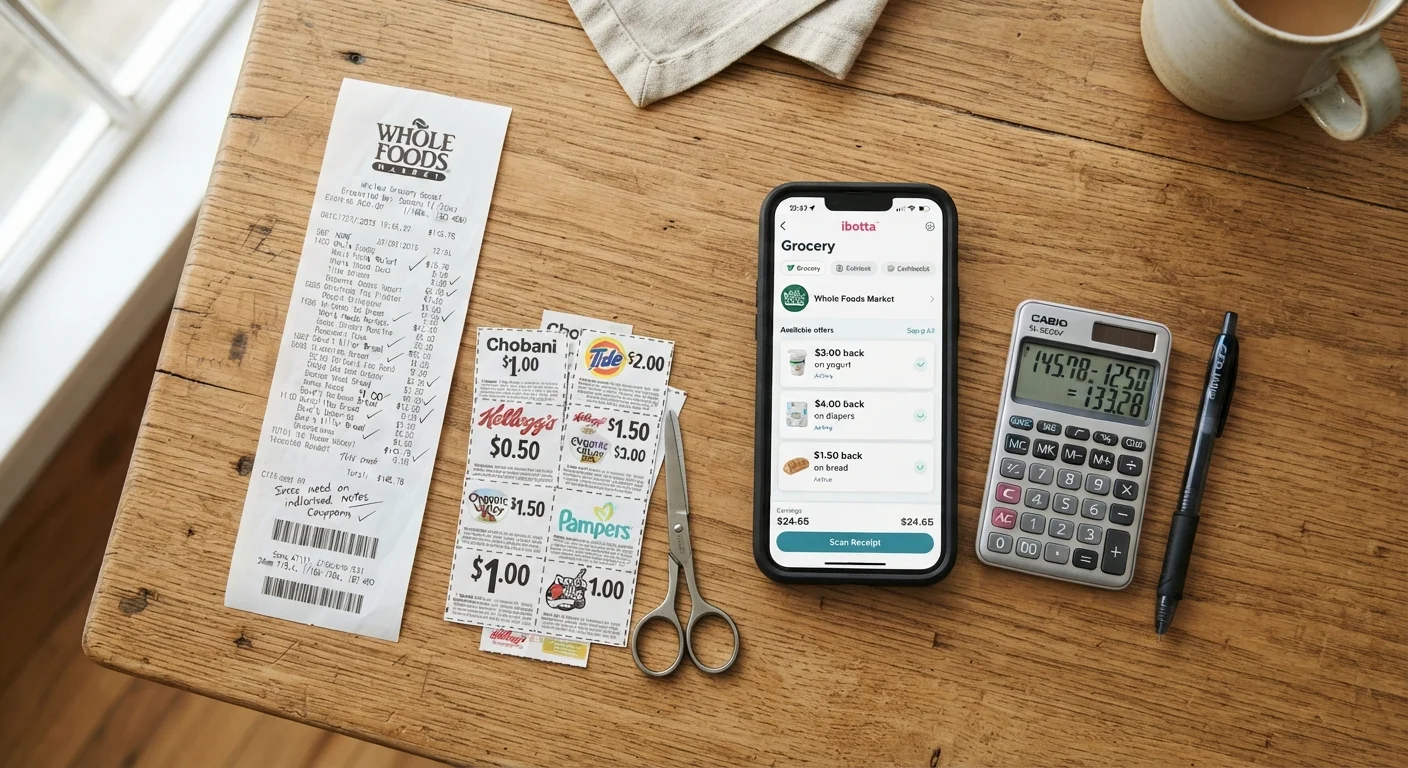
Photo: efficientlifeguide.net editorial
Key Takeaways
- Deal stacking means applying more than one discount type to a single purchase, such as a sale price plus a coupon plus a rebate.
- Store policies on stacking vary widely; reading them before checkout prevents rejected coupons and frustration.
- Rebates work after purchase, so they can often be applied on top of in-store discounts without conflict.
- Cashback portals and store loyalty programs frequently stack with manufacturer coupons, creating a multi-layer savings structure.
- Tracking which combinations are allowed at your regular stores is a one-time effort that pays off repeatedly.
What deal stacking actually means
Deal stacking is the practice of applying two or more separate discount mechanisms to a single transaction. A common example: a grocery item is already marked down for the week, a manufacturer coupon reduces the price further, and a rebate app returns a percentage after the purchase posts. Each layer is independent, but together they compound.
The mechanics matter because not all discount types conflict with each other. A sale price is set by the retailer. A manufacturer coupon is funded by the product maker. A rebate is a post-purchase reimbursement from a third party or the manufacturer. These three come from different sources, which is why they can often coexist. Understanding which discounts originate where is the first step to stacking them legally and effectively. For a grounding in what each discount type actually is, see this breakdown of coupons, sales, and rebates.
Store policies: the rules that determine what stacks
Every retailer sets its own coupon policy, and those policies govern whether stacking is permitted. Common restrictions include limits on the number of like coupons per transaction, prohibitions on combining a store coupon with another store coupon on the same item, and rules about whether digital and paper coupons can apply simultaneously.
Most major grocery and drug chains allow one manufacturer coupon and one store coupon per item. That combination alone can mean 20 to 40 percent off a single product before a rebate is added. Hardware and general merchandise retailers tend to have stricter rules, and warehouse clubs usually do not accept manufacturer coupons at all.
The reliable way to know what a store allows is to read its published coupon policy, which most chains post on their website. Policies change, so checking once per quarter is reasonable for stores you shop regularly. Cashiers and customer service desks can also clarify edge cases, and asking before checkout avoids the awkward moment of a rejected stack at the register.
Building a practical stacking sequence
A workable stacking order for most grocery purchases goes: start with a sale price, apply a store coupon, apply a manufacturer coupon, pay, then submit a rebate. This sequence respects the typical policy structure and captures savings at every stage.
Cashback portals add another potential layer for online purchases. If a retailer has an online storefront, activating a cashback portal before shopping can return one to fifteen percent depending on the portal and the retailer. Cashback portals and coupon codes work differently, and not every portal allows a promo code to be entered alongside cashback tracking. How cashback portals differ from coupon sites explains the distinction in detail so you can decide which tool fits a specific purchase.
Keeping the habit sustainable
Stacking works best as a repeatable routine rather than a one-time effort. Families that build it into their existing shopping workflow, rather than treating each deal as a project, see the most consistent results. That means checking a store's weekly ad before writing a shopping list, loading digital coupons at the start of the week, and submitting rebates the same evening as the shopping trip while receipts are easy to find.
The habit also requires a filter: not every stacking opportunity is worth pursuing. If combining discounts on an item you would not otherwise buy is the goal, the savings are effectively zero. Stacking is most valuable on products already on the regular shopping list. Deal-finding habits that hold up over time covers how to keep these routines from becoming burdensome. For those just starting out, a beginner's guide to deal hunting walks through the core tools without the overwhelm.
Bulk purchases interact with stacking in a specific way: when a high-value stack lines up on a non-perishable item, buying more than one unit can multiply the savings. Whether that makes sense depends on storage space and the item's shelf life. When bulk buying saves versus wastes money gives a framework for that calculation. More general family budget strategies and frugal home living tips can help put stacking into a broader spending plan.
The content provided on our blog site traverses numerous categories, offering readers valuable and practical information. Readers can use the editorial team’s research and data to gain more insights into their topics of interest. However, they are requested not to treat the articles as conclusive. The website team cannot be held responsible for differences in data or inaccuracies found across other platforms. Please also note that the site might also miss out on various schemes and offers available that the readers may find more beneficial than the ones we cover.