
Heating and Cooling Your Home on Less: The Thermostat Is Just the Start

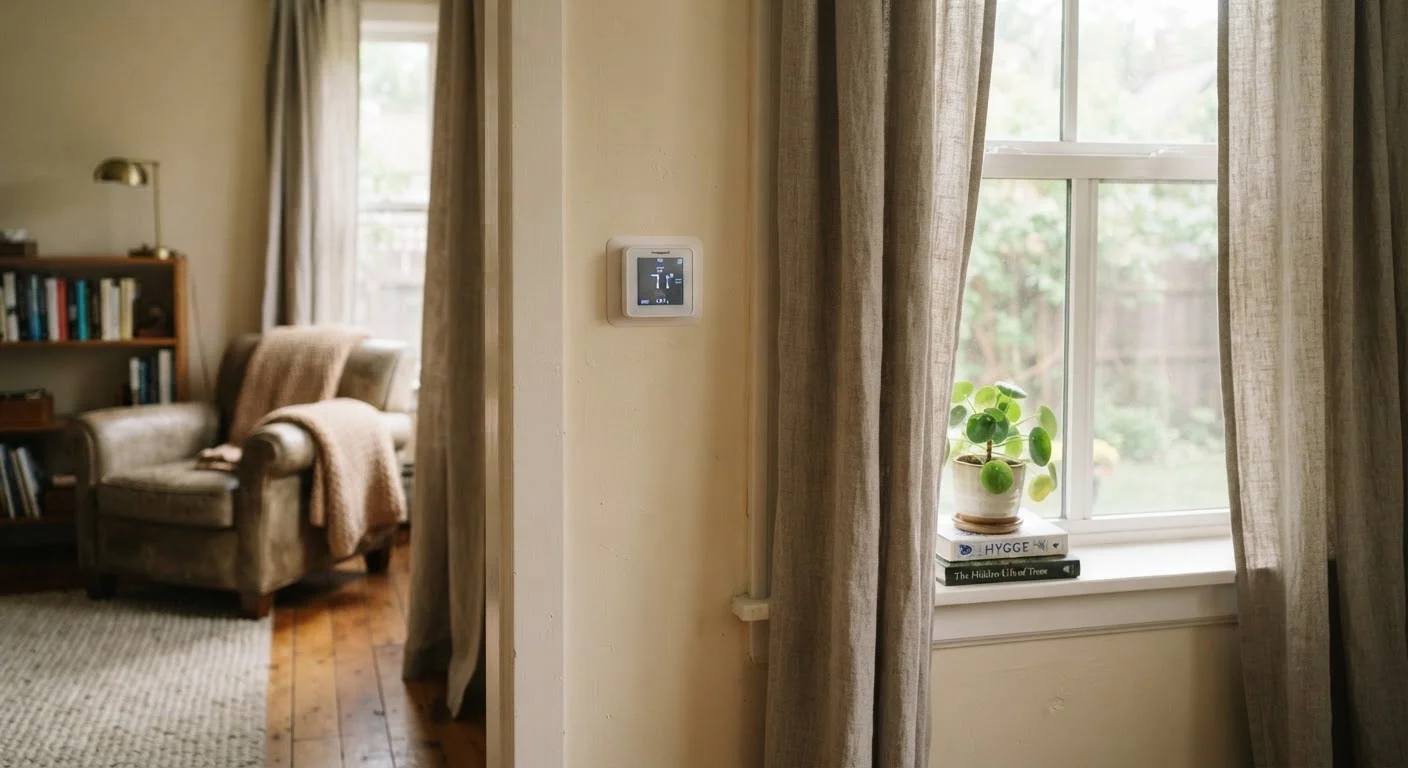
Photo: efficientlifeguide.net editorial
Key Takeaways
- Air sealing is typically the highest-return, lowest-cost action a homeowner can take to cut HVAC bills.
- Attic insulation often delivers more savings than upgrading to a smart thermostat alone.
- Window coverings and glazing film can meaningfully reduce solar heat gain without replacing windows.
- Ceiling fan direction, exhaust fan habits, and strategic ventilation reduce how hard your HVAC system works.
- Annual HVAC filter changes and coil cleaning protect efficiency and prevent costly repairs.
Why the thermostat alone falls short
A programmable or smart thermostat is worth having, but it only tells your heating and cooling system when to run. It does nothing about how well your home holds the temperature once the system shuts off. If conditioned air escapes through gaps in the walls, ceiling, or around windows, the system turns back on sooner than it should, and the bill climbs regardless of how cleverly the schedule is programmed.
Heating and cooling typically make up 40 to 50 percent of a household energy bill, according to the U.S. Department of Energy. That share is large enough that even modest improvements to the building itself, before touching equipment or controls, can produce noticeable savings. This guide covers the physical changes that change that equation.
For context on where HVAC sits within your total home spending, see the room-by-room household budget breakdown we put together.
Before buying any insulation or weatherstripping, schedule a home energy audit. Many utility companies offer them free or at low cost, and an auditor's blower-door test will show exactly where your air leaks are, so you spend money where it matters.
When caulking around windows and doors, press the caulk into the gap first with a finger or tool before smoothing the surface. A caulk line sitting on top of the gap rather than seated inside it fails within one or two seasons.
Seal air leaks before buying anything
Air sealing is the step most homeowners skip because it sounds too simple. It is also the step that most often delivers the fastest payback. Common leak points include the gaps around electrical outlets on exterior walls, the joint where the wall meets the floor (called the sill plate), recessed light fixtures that penetrate the ceiling into the attic, plumbing and wiring penetrations, and the weatherstripping around doors.
A lit incense stick or a damp hand moved slowly around these areas on a windy day will reveal drafts. Caulk handles stationary gaps. Foam backer rod plus caulk handles larger gaps around pipes. Weatherstripping handles moving parts like door frames. These materials cost a few dollars at any hardware store, and the labor is within reach for most adults with no prior experience.
Attic hatch covers are a frequently missed spot. An uninsulated attic hatch acts like a hole in the ceiling. A fitted rigid foam cover, cut to size and attached with hook-and-loop fastener strips, adds real resistance for under ten dollars in materials.
Insulation: where heat and cool air actually escape
Insulation slows the movement of heat through walls, ceilings, and floors. It does not stop air movement on its own (that is what sealing does), but it dramatically reduces how fast the temperature inside a room changes once conditioned air has been introduced.
Attic insulation is the most cost-effective place to start in most homes. Heat rises, so an under-insulated attic lets warmth pour out in winter and radiate downward in summer. The recommended insulation level for most U.S. climate zones is R-38 to R-60 in the attic floor. Many older homes fall well short of that. Blown-in fiberglass or cellulose insulation can be added on top of existing material in most attics without professional help, though hiring a contractor is reasonable for large attics or homes with complicated framing.
Walls and floors over unheated spaces (like a garage or crawl space) also matter. Crawl space insulation and an air barrier or vapor retarder underneath a home can have a large impact in colder climates. This type of work often surfaces other issues, so it is worth reviewing the home maintenance calendar to fold these checks into a regular inspection routine.
Window treatments and glass performance
Windows are thin. Even a double-pane window has a much lower resistance to heat flow than an insulated wall. Replacing windows is expensive and carries a long payback period, so the practical approach for most families is to manage what comes through existing glass with treatments and low-cost film.
In summer, exterior shading (awnings, exterior shutters, or deciduous trees planted on the south and west sides) blocks solar heat before it reaches the glass. Interior cellular shades (sometimes called honeycomb shades) trap a layer of still air against the glass in winter, which reduces heat loss compared to bare glass. Heavy drapes closed on winter nights accomplish something similar.
Low-emissivity (low-e) window film is a self-adhesive product applied directly to glass. It reflects a portion of infrared radiation while remaining largely transparent to visible light. It costs far less than window replacement and can reduce solar heat gain in summer by a meaningful amount, though exact performance varies by product and orientation. Always verify compatibility with your specific glass type before applying, since some films can cause thermal stress cracking in certain sealed double-pane units.
Ventilation habits that reduce HVAC load
How and when you move air through your home changes how much mechanical heating and cooling you need. Ceiling fans are the most accessible tool. In summer, a counterclockwise rotation (when viewed from below) pushes air downward and creates a wind-chill effect, which allows a higher thermostat setting without a loss of comfort. In winter, clockwise rotation on low speed pulls cool air up along the walls and pushes warm air down from the ceiling without creating a draft.
Kitchen and bathroom exhaust fans remove moisture and heat from the spaces where they are generated. Running them during and briefly after cooking or showering reduces the load on air conditioning in summer. In winter, however, running them for long periods pulls conditioned air out of the house, so moderation matters.
In mild weather, opening windows on opposite sides of the house in the evening creates cross-ventilation that can cool rooms without any mechanical equipment. The key is to close windows before the outside temperature rises above the indoor temperature each morning, locking cooler air inside.
These approaches connect directly to the larger picture of rising utility costs covered in our guide to why utility bills keep climbing.
HVAC maintenance that keeps efficiency up
A system running with a clogged filter or dirty coils works harder and longer to reach the same temperature. Replacing the air filter every one to three months (depending on filter type and household conditions such as pets or dust) is the single easiest maintenance task and one of the most impactful.
The outdoor condenser coil on a central air conditioner accumulates debris over a season. Hosing it down gently each spring, after cutting power to the unit, removes buildup that would otherwise force the compressor to run longer. The indoor evaporator coil and blower assembly benefit from a professional cleaning every few years.
Duct leakage is a hidden loss that many homeowners never investigate. Ducts running through unconditioned attics or crawl spaces that have gaps at joints deliver less conditioned air to living spaces and more to the outdoors. Sealing duct joints with mastic sealant (a paste product, not standard duct tape, which fails quickly) is a DIY task in accessible areas. Professional duct testing can identify how significant the problem is before you commit to repairs.
These maintenance habits also protect against the larger, unexpected repair bills that catch many families off guard when HVAC systems fail prematurely from neglect.
This article provides general home management information. Energy savings vary by home, climate, and existing conditions. Consult a licensed HVAC technician or energy auditor for guidance specific to your home.
The content provided on our blog site traverses numerous categories, offering readers valuable and practical information. Readers can use the editorial team’s research and data to gain more insights into their topics of interest. However, they are requested not to treat the articles as conclusive. The website team cannot be held responsible for differences in data or inaccuracies found across other platforms. Please also note that the site might also miss out on various schemes and offers available that the readers may find more beneficial than the ones we cover.