
Making a Home Maintenance Calendar That Actually Prevents Costly Surprises

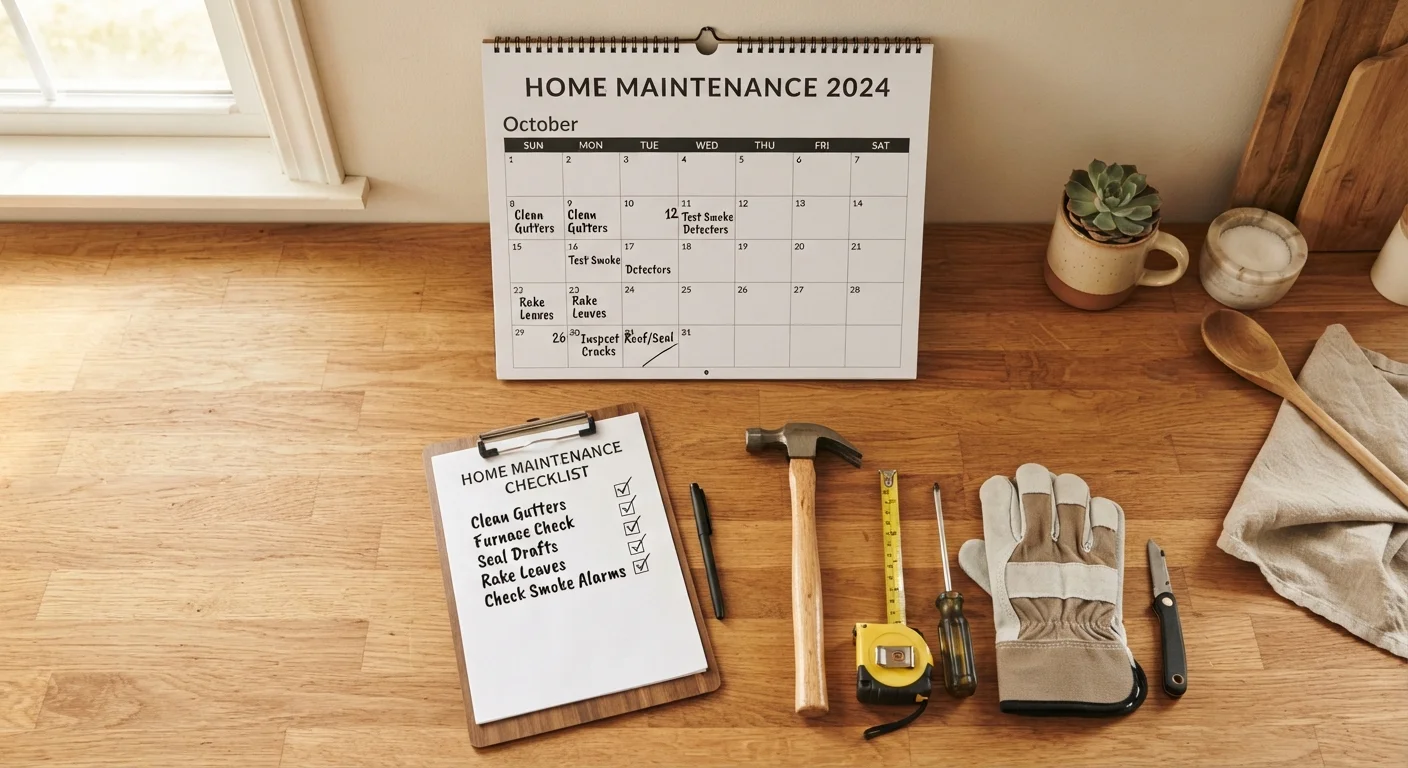
Photo: efficientlifeguide.net editorial
Key Takeaways
- Scheduling small inspections each season costs far less than emergency repairs triggered by neglect.
- Most routine maintenance tasks take under two hours and require no specialized tools.
- A written calendar removes the guesswork and stops tasks from slipping through for years.
- Pairing your maintenance calendar with a household budget review catches cost surprises early.
- Some jobs are safe DIY territory; others need a licensed professional to avoid making things worse.
Why a maintenance calendar pays for itself
A water heater flush takes about 30 minutes once a year. Replacing a failed water heater costs anywhere from $900 to $2,500 installed, depending on size and fuel type. That gap is what a home maintenance calendar is built to close.
Without a schedule, most households operate reactively: something breaks, then they fix it at whatever the emergency price happens to be. A written calendar shifts that pattern. Tasks get done before a small issue compounds. Labor costs drop because a contractor called on a non-urgent basis charges less than one called at 9 p.m. on a Friday.
A calendar also makes it easier to fold maintenance costs into a household budget. If you know the furnace filter needs replacing every three months, you can buy filters in a multipack and record the expense as a fixed line. The monthly budget audit checklist is a good companion tool for tracking those recurring home costs alongside other spending categories.
Do not skip the hard-to-reach checks
You do not need a complicated system. A basic month-by-month list on paper, a shared digital calendar, or a free spreadsheet all work fine. The format matters less than the consistency of actually checking it.
What to put on your calendar
Group tasks by season because that is how most home systems actually behave. Heating equipment matters most in fall, roof drainage in spring, cooling equipment in late spring, and pest entry points in summer. Below is the full checklist organized by season and category.
Spring (March to May)
Summer (June to August)
Fall (September to November)
Winter (December to February)
Year-round (monthly or as needed)
A few tasks are truly year-round: checking smoke and carbon monoxide detector batteries monthly, looking for signs of pest activity, and keeping gutters clear after any major storm. Build those into a recurring monthly reminder rather than a seasonal one.
For tasks involving electrical panels, gas lines, structural framing, or anything inside finished walls, see the guide on DIY versus professional repairs before deciding whether to proceed yourself.
Tools and records you need before you start
The checklist is only useful if you can actually complete the items on it. A few tools and documents make each inspection faster and more reliable.
Flashlight or headlamp
Inspect attics, crawl spaces, and cabinet interiors where overhead lighting is poor.
Outlet tester
Verify GFCI outlets are wired correctly and trip and reset as intended.
Digital moisture meter
Detect elevated moisture in walls, floors, or framing before visible mold or rot develops.
Appliance manuals and warranty documents
Confirm manufacturer-recommended maintenance intervals for water heaters, HVAC units, and major appliances.
Maintenance log (paper or digital)
Record every completed task with date, findings, and cost so you have a reliable history for insurance or resale.
Keep a simple maintenance log alongside the calendar. Record the date each task was done, what you found, and any money spent. That record becomes useful when selling the home, filing an insurance claim, or deciding whether a repair has already been attempted recently.
Timing your calendar to save money, not just stay organized
Maintenance timing affects cost in ways that go beyond just preventing failure. HVAC tune-ups booked in early spring or early fall (before peak season demand) tend to cost less than the same service booked in July or January. Roofing contractors are easier to schedule and sometimes less expensive in late summer before storm season. Plumbers are most backed up after hard freezes.
The seasonal discount calendar covers when prices on appliances and materials tend to drop, which is worth checking before you buy a replacement rather than after.
Energy-related maintenance also compounds savings. Sealing drafts, replacing HVAC filters on schedule, and keeping refrigerator coils clean all reduce utility bills month to month. The energy savings guide beyond the thermostat goes deeper on those specific steps.
If maintenance costs are putting pressure on your overall household budget, it helps to look at where else money is leaving the house. Recurring subscriptions are a common area where spending accumulates without much notice, and the subscription creep article walks through how to audit them systematically.
This article is for general informational purposes only. For repairs involving structural, electrical, or gas systems, consult a licensed professional before proceeding.
The content provided on our blog site traverses numerous categories, offering readers valuable and practical information. Readers can use the editorial team’s research and data to gain more insights into their topics of interest. However, they are requested not to treat the articles as conclusive. The website team cannot be held responsible for differences in data or inaccuracies found across other platforms. Please also note that the site might also miss out on various schemes and offers available that the readers may find more beneficial than the ones we cover.