
Free Family Fun: What Public Libraries Actually Offer Beyond Books

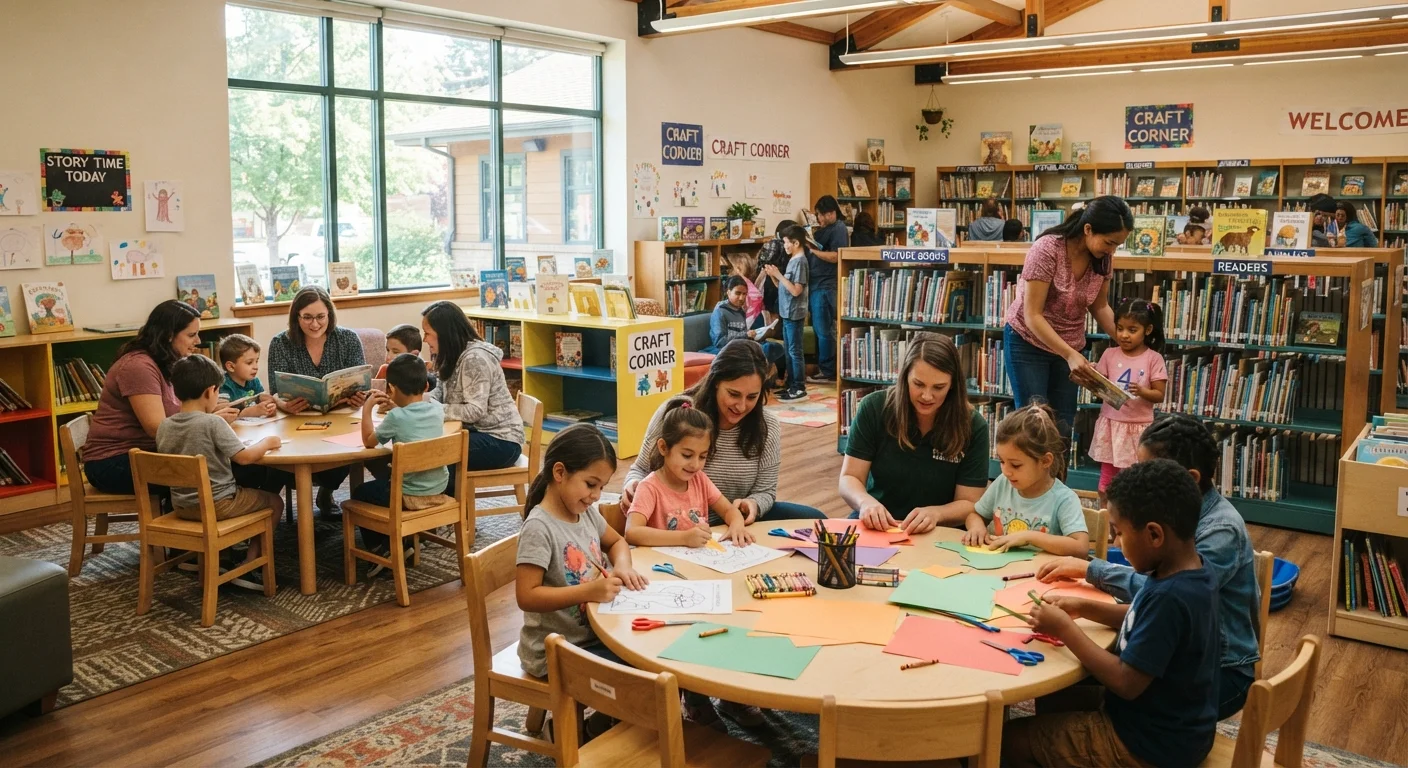
Photo: efficientlifeguide.net editorial
Key Takeaways
- Public library cards are free to residents and unlock far more than books.
- Many libraries lend museum passes, tools, board games, and even seeds.
- Free weekly programs for children and teens run year-round at most branches.
- Libraries often provide free access to streaming services, learning platforms, and digital magazines.
- Checking your library's events calendar monthly can replace paid weekend activities.
What most families miss about their library card
A library card is one of the few genuinely free memberships most American families already qualify for, yet many households use it only for the occasional book. That gap between what a card unlocks and what families actually use is worth closing, because the offerings at modern public libraries have grown well beyond shelves of fiction and nonfiction.
Think of the library less as a quiet reading room and more as a community resource center. Staff curate programs, negotiate partnerships with local institutions, and manage lending collections that go far outside traditional media. Families who treat the library as a regular destination, rather than a last resort, tend to find it one of the most cost-effective tools in their budget. For a broader look at stretching family dollars, see the family budget tips hub.
Programs and events that run all year
Children's programming is the most visible non-book offering at most branches. Storytime sessions for toddlers, STEM craft hours, science experiments, and author visits happen weekly at the majority of public library systems. These are free, require no supplies from parents, and often keep children occupied for an hour or more.
Teen programming has expanded considerably at many systems. Gaming tournaments, photography workshops, 3D printing labs, and college application help sessions are common. Summer Reading Programs are available for all ages and typically include reading logs, prizes, and community events spread across June, July, and August.
Adult and family-wide events include movie screenings, gardening workshops, cooking demonstrations, cultural celebrations, and free concerts. Checking your branch's online events calendar monthly means you rarely need to spend money on a weekend activity. For more ways to find free local activities, see how to find free local family events.
Check the calendar before the weekend
Museum passes and community partnerships
One of the most underused library benefits is the museum pass program. Many library systems partner with local museums, zoos, aquariums, nature centers, and botanical gardens to offer free or heavily discounted admission passes that cardholders can reserve and borrow. A family that visits a natural history museum through a library pass instead of buying tickets at the door can save a meaningful amount, often $40 to $80 for a group of four, depending on the institution.
Passes are borrowed like books, checked out for a specific date and returned afterward. High-demand passes book up fast, particularly on weekends, so planning a week or two ahead helps. Your library's website catalog is usually the place to search for and reserve these.
17,000+
Public library locations across the U.S.
According to the American Library Association, the United States has more public library locations than McDonald's restaurants.
50%+
Libraries offering museum or cultural pass programs
The Urban Libraries Council has reported that museum pass and cultural partnership programs are among the fastest-growing non-book services at public libraries.
Free
Cost of a standard public library card for residents
Library cards are available at no charge to residents of a library's service area at virtually all U.S. public library systems.
Before booking any outing, it's worth knowing what extra costs can show up even on a 'free' day. The hidden costs of free family days out article walks through what to watch for.
Borrowing beyond books: tools, games, and more
The 'library of things' model has taken hold at hundreds of library systems nationwide. Cardholders can borrow items such as hand tools and power tools, board games and puzzles, ukuleles and other musical instruments, cake pans and specialty cooking equipment, telescopes, metal detectors, and seed packets for home gardens.
This kind of access matters for families who want to try an activity before spending money on gear. A family curious about astronomy can borrow a telescope for two weeks. A parent who needs a specific tool for one home project can borrow it rather than buy it. Children interested in learning an instrument can try one at home before committing to lessons or purchases.
Availability differs widely between library systems, so browsing your branch's online catalog is the fastest way to see what items are currently in circulation. For families looking for screen-free weekend activities kids enjoy, the library of things is a practical starting point.
Digital resources families often overlook
Most public library systems provide cardholders with free access to a suite of digital services that, if purchased individually, would cost a household hundreds of dollars per year. Common offerings include e-book and audiobook platforms, digital magazine subscriptions covering hundreds of titles, online learning platforms with courses in coding, language learning, and professional skills, streaming video collections, and access to newspaper archives.
Some library systems also provide free or subsidized internet hotspot lending for families who need connectivity outside the home. Children's homework help platforms and tutoring services appear at many branches too, both in person and online.
All of this typically requires nothing more than a library card number and a PIN, which staff can set up at the circulation desk. The library's website usually lists every digital service available under a 'digital resources' or 'e-resources' tab.
Frequently Asked Questions
The content provided on our blog site traverses numerous categories, offering readers valuable and practical information. Readers can use the editorial team’s research and data to gain more insights into their topics of interest. However, they are requested not to treat the articles as conclusive. The website team cannot be held responsible for differences in data or inaccuracies found across other platforms. Please also note that the site might also miss out on various schemes and offers available that the readers may find more beneficial than the ones we cover.