
Family Fun for Less

The Hidden Costs Families Forget When Planning a "Free" Day Out

The Hidden Costs Families Forget When Planning a "Free" Day Out

Photo: efficientlifeguide.net editorial

Parking, snacks, and souvenirs can turn a free outing into an expensive one. Spot these common budget traps before you leave the house.

Key Takeaways

  • Parking alone can cost $15 to $30 or more at popular free attractions and parks.
  • Food and drink markups at venues often triple what you would pay if you brought your own.
  • Souvenir pressure from kids is a predictable cost that families can plan for in advance.
  • Setting a written spending cap before leaving the house is the single most effective guardrail.
  • Many genuinely free outings require no extra spending when planned carefully ahead of time.

Why 'free' days out have a habit of getting expensive

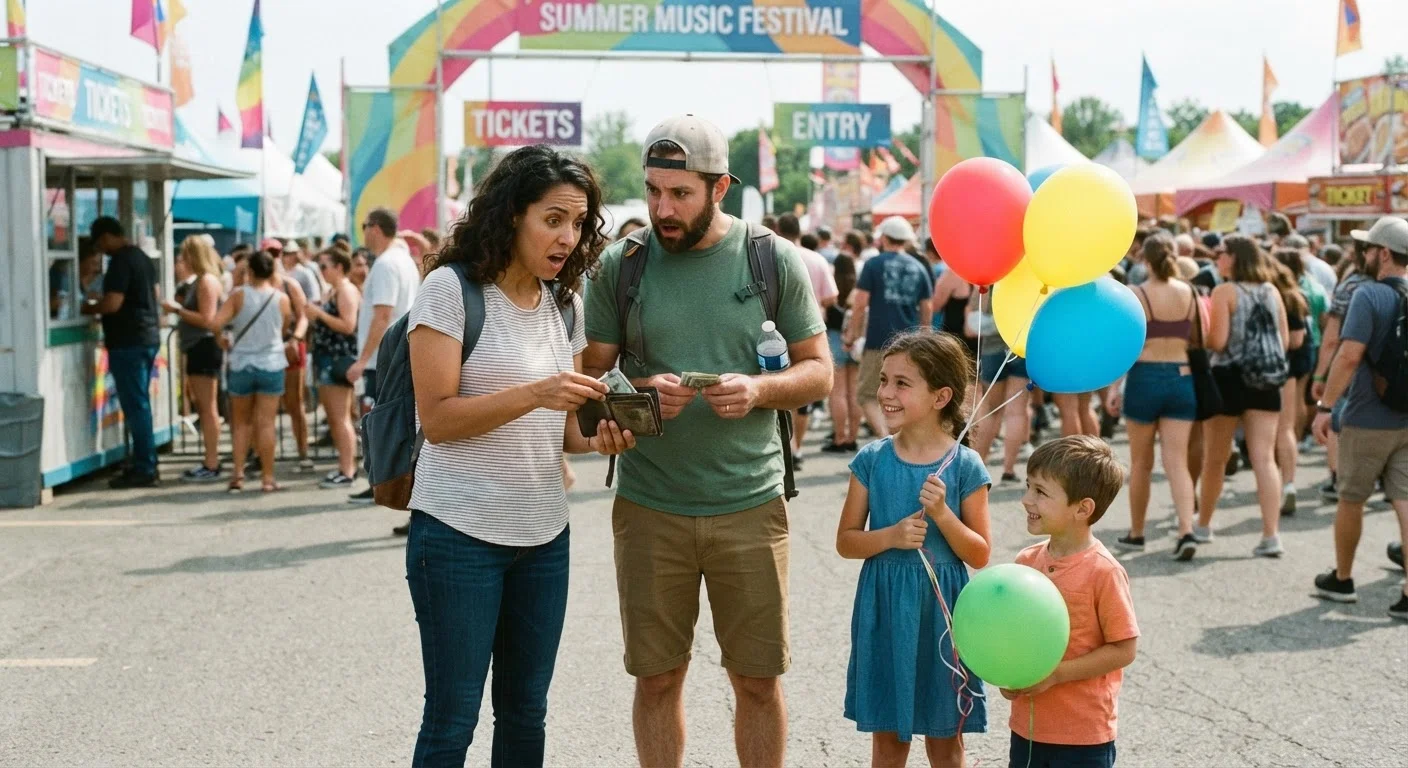
A free outing sounds like a straight financial win. No tickets to buy, no reservation fees, no admission line. Yet many families arrive home from a 'free' day at the park, festival, or nature center having spent $60 to $100 without a single moment where it felt like they were spending a lot. The costs arrive in small, forgivable increments: a parking meter here, two bottles of water there, a small stuffed animal at the exit. Each one feels reasonable in isolation.

This is not a willpower problem. Venues and events are designed so that spending feels natural once you are already there and having a good time. The fix is not to avoid free outings; it is to anticipate the predictable costs before you leave the house. See our look at how family budgets unravel for a broader picture of how these patterns repeat across trips of all sizes.

Free admission does not mean free day

A destination with no entry fee can still cost a family $80 or more once parking, food, and one or two small purchases are added up. Treating 'free' as a complete description of the day's cost is the most common reason families return home feeling the outing was more expensive than expected.

The mistakes that turn free into expensive

Most of the costs that surprise families on free outings are not random. They fall into a predictable set of categories: transportation, food, entertainment add-ons, and incidentals. Knowing which mistakes to watch for puts you in a much better position to keep the day actually affordable.

1

Ignoring parking and transportation costs before heading out.

Why it happens: Families focus on the destination's admission price, which is zero, and assume the rest of the day is free. Parking fees, tolls, or fuel costs for a longer drive rarely enter the initial calculation.
How to avoid: Look up parking options for the specific venue before leaving. Many parks and recreation areas have free lots a short walk from paid ones. Transit apps can show bus or train routes that cost a fraction of garage parking.
2

Arriving hungry and buying food on-site at full venue prices.

Why it happens: Meal timing is easy to misjudge, especially with kids. A 10 a.m. departure can put a family at a venue right at noon with no food and a row of overpriced concession stands nearby.
How to avoid: Pack a cooler or insulated bag with sandwiches, fruit, and water. Most outdoor venues and parks allow outside food. Eating before you leave or timing your arrival after lunch cuts on-site food spending to near zero.
3

Underestimating souvenir and impulse purchase pressure from children.

Why it happens: Gift shops and vendor carts are placed at high-traffic exits and entrances for a reason. Kids see an item they want and parents, already in a good mood, say yes more often than they plan to.
How to avoid: Give each child a small, fixed amount of spending money before leaving and tell them clearly that is their limit. When it is spent, it is spent. This shifts the decision to the child and removes the back-and-forth negotiation entirely.
4

Not checking whether the 'free' event has paid add-ons that children will want.

Why it happens: Many free community events, fairs, and festivals list admission as free but charge for carnival rides, games, face painting, or craft activities. Parents do not discover this until they are already there.
How to avoid: Read the event page or call ahead to ask exactly what is and is not included in free admission. A five-minute search can reveal which activities cost extra, so you can prepare kids with honest expectations.
5

Forgetting about incidental costs like sunscreen, water bottles, and basic supplies.

Why it happens: These items feel too small to budget for, so families skip them. Then they buy a $5 bottle of sunscreen from a park vendor or a $4 bottle of water because they forgot to pack one.
How to avoid: Keep a reusable 'day out' bag stocked with sunscreen, reusable water bottles, a small first-aid kit, and snacks. Restocking this bag costs a few dollars at home and saves multiples of that at venue prices.
6

Skipping free alternatives because paid options feel more reliable or exciting.

Why it happens: Free activities sometimes carry a stigma of being low-effort or boring. Families default to ticketed attractions without realizing what genuinely free options exist nearby.
How to avoid: Public libraries, community parks, nature trails, and local events offer real entertainment at no cost. Public libraries in particular often have passes to museums, science centers, and parks available for free checkout.

For families who want to explore what a genuinely zero-cost day looks like, screen-free weekend ideas and a backyard campout are two options where the spending ceiling is almost entirely within your control.

Building a simple outing budget that actually holds

A per-outing budget does not need to be complicated. Before the day, write down four categories: transportation (parking, fuel, transit), food, any paid activity you know is on the agenda, and a small buffer for incidentals. Assign a dollar amount to each. For most free outings, a family of four can stay under $30 if food is packed and parking is researched in advance.

Budget before you go, not after

The moment a family arrives somewhere exciting, spending decisions get emotional and fast. Writing down a per-person or per-family spending cap the night before the outing puts a concrete number in everyone's mind. Without that anchor, each small purchase feels too small to matter, and the total quietly climbs.

Seasonal outings carry their own cost variations worth knowing. A clear-eyed breakdown of what seasonal activities actually run can help you plan which months tend to cost more and where the free options cluster. For a broader look at where family spending goes across all leisure categories, the family budget tips hub has practical strategies worth bookmarking.

Family Fun For Less Editorial Team

efficientlifeguide.net

Family Fun for Less Editorial Team is the collective byline for our editorial team and contributor network. Articles published under this byline or an editorial pen name are researched, written, and reviewed according to our editorial standards for clarity, consistency, and independence before publication.

Family Fun for Less
View author profile

The content provided on our blog site traverses numerous categories, offering readers valuable and practical information. Readers can use the editorial team’s research and data to gain more insights into their topics of interest. However, they are requested not to treat the articles as conclusive. The website team cannot be held responsible for differences in data or inaccuracies found across other platforms. Please also note that the site might also miss out on various schemes and offers available that the readers may find more beneficial than the ones we cover.