
Why Family Travel Budgets Fall Apart (And the Patterns Behind It)

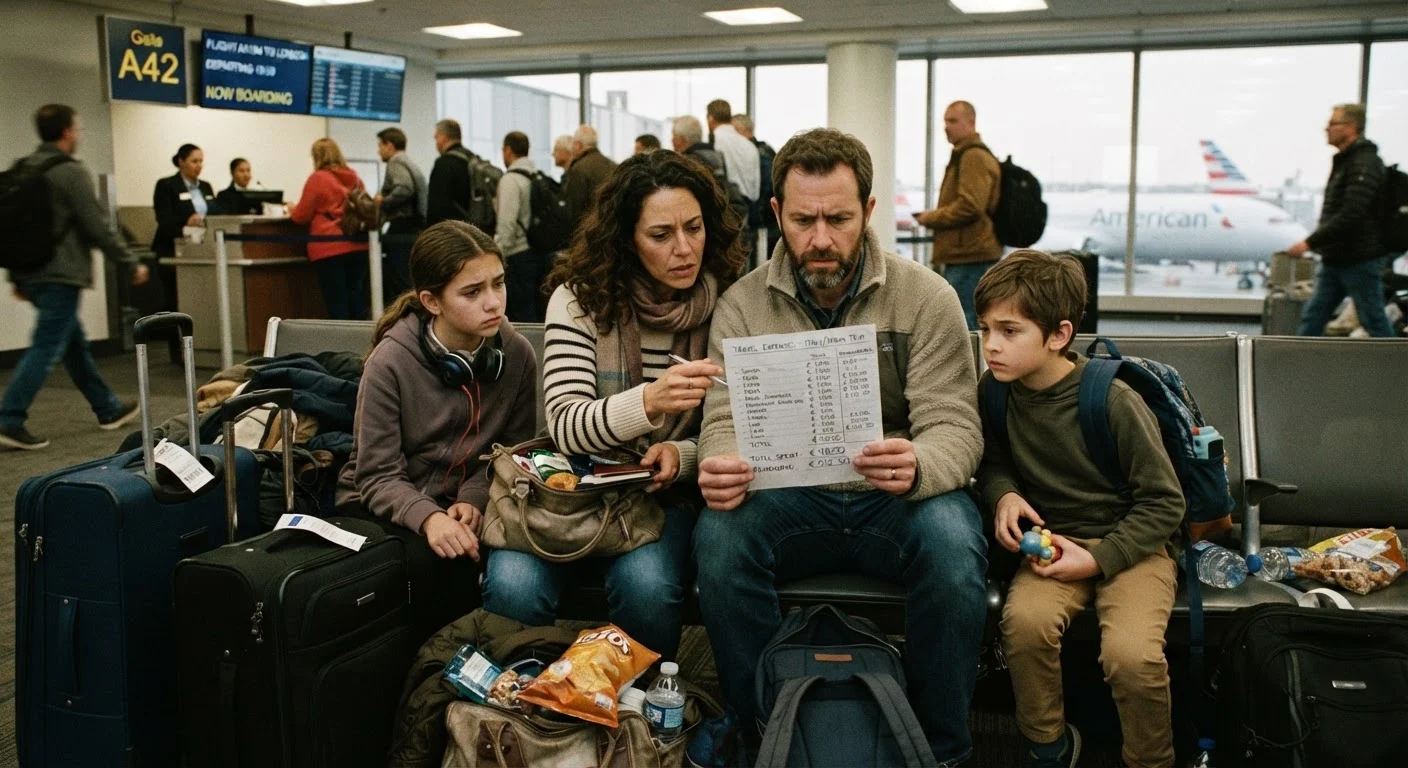
Photo: efficientlifeguide.net editorial
Key Takeaways
- Food costs for families routinely run two to three times what parents estimate before booking.
- Impulse upgrades at the airport and hotel desk are among the fastest ways to blow a travel budget.
- Leaving no buffer for unplanned expenses is the single most common structural flaw in family trip budgets.
- Booking flights and accommodation without accounting for baggage, resort fees, or parking can add hundreds to a trip.
- Planning activities without checking entry costs per child turns free-sounding days into expensive ones.
The gap between the budget you write and the trip you actually take
Most families do write a budget before a trip. The problem is that the budget reflects the trip they hope to take, not the one that actually happens. Costs get left out, categories get underestimated, and a few in-the-moment decisions finish off whatever cushion remained.
The pattern is consistent enough that it has identifiable causes. Understanding those causes is more useful than a generic reminder to "spend less." See the full breakdown of where family vacation money actually goes for the spending categories most likely to be underestimated at the planning stage.
Estimating food costs based on grocery prices rather than restaurant prices.
Forgetting per-person entry fees when pricing activities.
Treating baggage fees, resort fees, and parking charges as optional line items.
Agreeing to airport or hotel upgrade offers without calculating the total added cost.
Building a budget with no contingency line.
Underestimating transportation costs within the destination.
Why these mistakes are hard to catch in planning
Several of these errors are invisible at the spreadsheet stage because they involve decisions made under pressure, on tired feet, with hungry kids nearby. A budget built at a kitchen table three weeks before departure cannot fully account for the version of you standing at a hotel check-in desk at 10 p.m.
That reality is why structural fixes work better than willpower fixes. Setting category caps before you leave, putting a hard stop on airport spending, and building a genuine buffer are changes you can make in advance. The psychological barriers that make budgets hard to stick to apply just as much on vacation as they do at home.
~30%
Typical budget overrun on family trips
Consumer spending research consistently finds that travel budgets are underestimated by roughly 20 to 30 percent, with food and activity costs as the most common culprits.
$150+
Daily restaurant food spend for a family of four
Average daily food costs for a family of four eating at sit-down or fast-casual restaurants in the United States commonly exceed $150, before snacks and drinks.
3x
Multiplier effect of per-person pricing on activities
An activity priced at $25 per adult becomes $75 to $100 once children's rates and a second adult are added, a cost that many families fail to calculate at the planning stage.
Families traveling during peak periods face compounded pressure. Off-season travel with kids removes some of that pressure, though it comes with its own trade-offs worth understanding before you commit to dates.
The hidden costs of free family days out follow the same logic as the mistakes above: the sticker price looks fine, and the actual spend does not. Recognizing that pattern at home makes it easier to catch on the road.
This article is for general informational purposes only. Travel prices, fees, and availability vary by destination, season, and provider. Verify all costs directly with relevant providers before booking.
The content provided on our blog site traverses numerous categories, offering readers valuable and practical information. Readers can use the editorial team’s research and data to gain more insights into their topics of interest. However, they are requested not to treat the articles as conclusive. The website team cannot be held responsible for differences in data or inaccuracies found across other platforms. Please also note that the site might also miss out on various schemes and offers available that the readers may find more beneficial than the ones we cover.