
Backyard Campout: Turning One Night at Home Into a Real Adventure

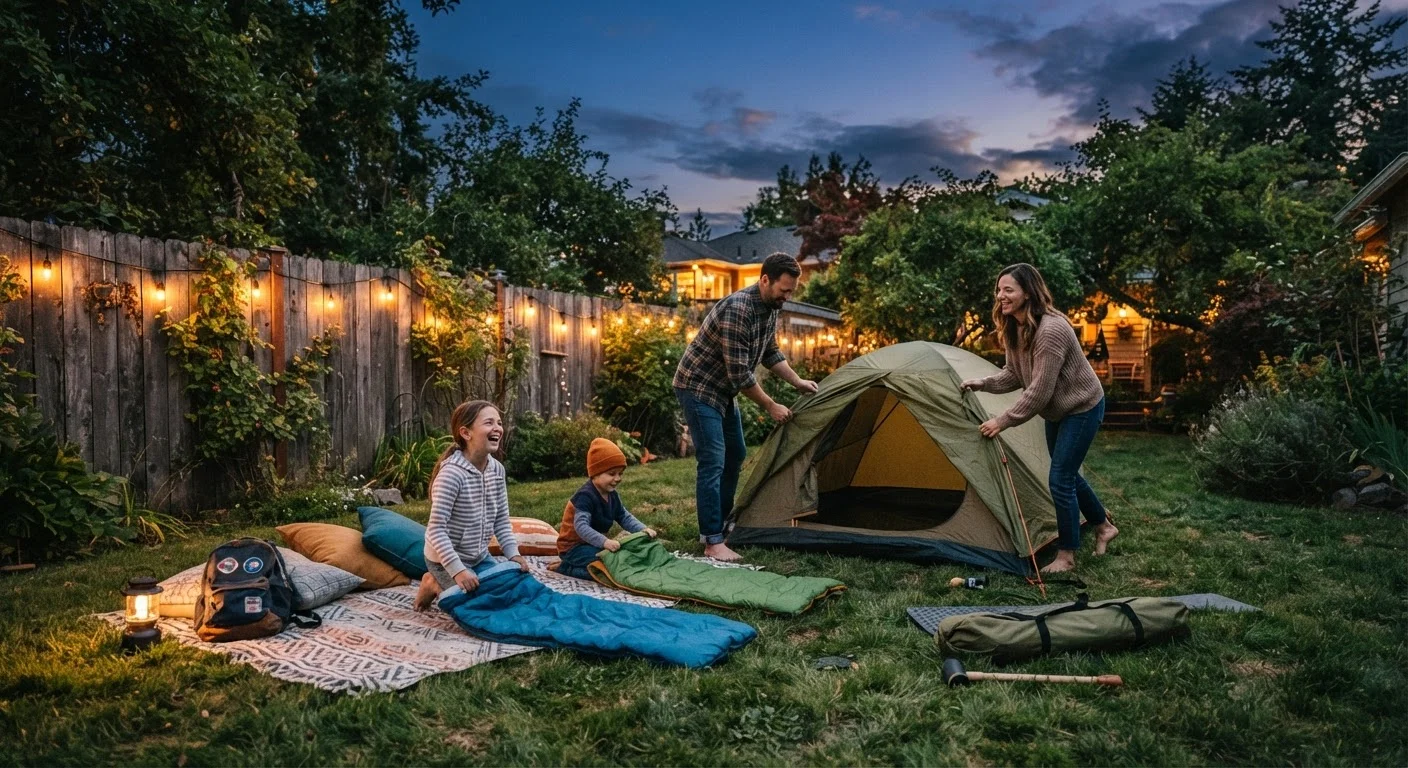
Photo: efficientlifeguide.net editorial
Key Takeaways
- A backyard campout can cost nothing if you already own a tent and basic bedding.
- Simple rituals like a campfire story and a scavenger hunt make the night feel genuinely special.
- Planning ahead for weather and comfort prevents the most common reasons families bail mid-night.
- Kids of almost any age can participate with minor adjustments to sleeping and activity plans.
- The experience builds outdoor confidence and screen-free family time without leaving your neighborhood.
Why a backyard campout works
A vacation does not need a plane ticket or a hotel reservation to feel like an escape. A backyard campout strips away the logistics that make family travel expensive and stressful while keeping the parts kids actually care about: sleeping somewhere unexpected, eating outside, and staying up a little past bedtime.
The appeal is not just about saving money, though it does that. It is about lowering the bar to adventure so that it happens more often. Families who wait for a "real" camping trip sometimes wait years. A backyard version can happen this weekend, with what you already own. If you want to compare the trade-offs between a day trip and an overnight experience, this breakdown of day trips vs. overnight stays covers when each approach actually pays off.
One underappreciated bonus: because you are at home, there is no admission fee, no parking charge, and no souvenir stand. Hidden spending traps that follow families to parks and events simply do not apply here.
What you need before you start
Check the gear you already own before buying anything. Most families have enough to get started.
What you will need
Tent
Provides shelter and creates the physical sense of camping that makes the night feel different from sleeping indoors.
Sleeping bags or extra blankets
Keeps everyone warm as overnight temperatures drop, which happens faster outside than families expect.
Battery-powered lantern
Lights the tent interior safely without the fire risk of candles.
Ground tarp or footprint
Placed under the tent to block moisture from rising through the tent floor.
Camping chairs or a blanket for sitting outside
Gives the family a comfortable place to sit for the meal and evening activities.
Portable cooler
Keeps drinks and snacks cold through the evening so no one has to run inside repeatedly.
Step-by-step: setting up and running the campout
Follow these steps the afternoon before the campout and again once the kids are outside. The sequence matters mostly for the setup phase; the evening activities can flex based on your kids' ages and energy.
Choose and prep your spot
Pick the flattest area of your yard. Clear it of sticks, toys, and anything that will be uncomfortable under a sleeping pad. If your yard is uneven, orient sleeping bags so heads are uphill. Give the area a quick mow if the grass is long.
Set up the tent together
Let the kids help assemble the tent even if it takes longer. Threading poles and clipping canopy sections is genuinely interesting to children who have never done it. Assign one kid to hold the pole, another to clip. Walk through what each part does as you go.
Arrange sleeping gear
Lay sleeping bags or blankets flat inside the tent, then add pillows from inside the house. Bring a small lantern or a battery-powered light for the interior. Place shoes just inside the tent door so no one has to search for them at night.
Plan a campfire-style meal
You do not need a fire pit. A charcoal grill or a simple outdoor portable stove works for hot dogs or veggie dogs on skewers. If neither is available, make the meal indoors and carry it outside on a tray. Eating outside at night, even without fire, feels different enough to register as an event for most kids.
S'mores can be made in a microwave and brought out on a plate. They are messier and less ceremonial than fire-toasted marshmallows, but children rarely complain.
Run a backyard scavenger hunt
Before full dark, give each child a short list of things to find: a smooth rock, a leaf with five points, something that makes a sound when shaken, a bug (observed, not collected). Keep the list to five or six items and use flashlights once the sun sets. This activity works for ages four through twelve with minor list adjustments.
Wind down with a story or stargazing
Once the scavenger hunt is done, settle on blankets or camp chairs. If the sky is clear, point out constellations you actually know rather than guessing. Orion and the Big Dipper are visible across most of the continental U.S. for much of the year. If the sky is overcast, read a chapter from a book aloud or tell a story with the kids adding plot details in turns.
Handle the morning routine
Pack a small bag the night before with morning essentials: toothbrushes, a change of clothes, and sunscreen if the campout runs into morning sun. Decide in advance whether breakfast happens outside or inside. Eating cereal in the tent counts as camping breakfast and requires zero extra planning.
Keeping it going if something goes wrong
Rain is the most common reason a backyard campout moves inside. If that happens, shift the tent to a garage or living room floor. The sleeping-in-a-tent feeling survives indoors, especially with the lights off and a flashlight in hand.
Cold nights catch families off guard more than anything else. Temperatures drop faster outdoors than inside, so add one extra blanket per person beyond what seems necessary. Young children lose heat quickly, so check on them within the first hour after lights-out.
If the kids are wired and will not settle, a short audio story or a quiet game of "I spy" in the dark usually works better than insisting on silence. Giving them a small task, like being in charge of the flashlight, redirects restless energy.
For families who want to turn this energy into a broader habit, screen-free weekend activities kids actually enjoy offers a full range of low-cost ideas that pair well with an outdoors-first mindset.
The content provided on our blog site traverses numerous categories, offering readers valuable and practical information. Readers can use the editorial team’s research and data to gain more insights into their topics of interest. However, they are requested not to treat the articles as conclusive. The website team cannot be held responsible for differences in data or inaccuracies found across other platforms. Please also note that the site might also miss out on various schemes and offers available that the readers may find more beneficial than the ones we cover.