
U.S. National Parks as a Family Travel Destination

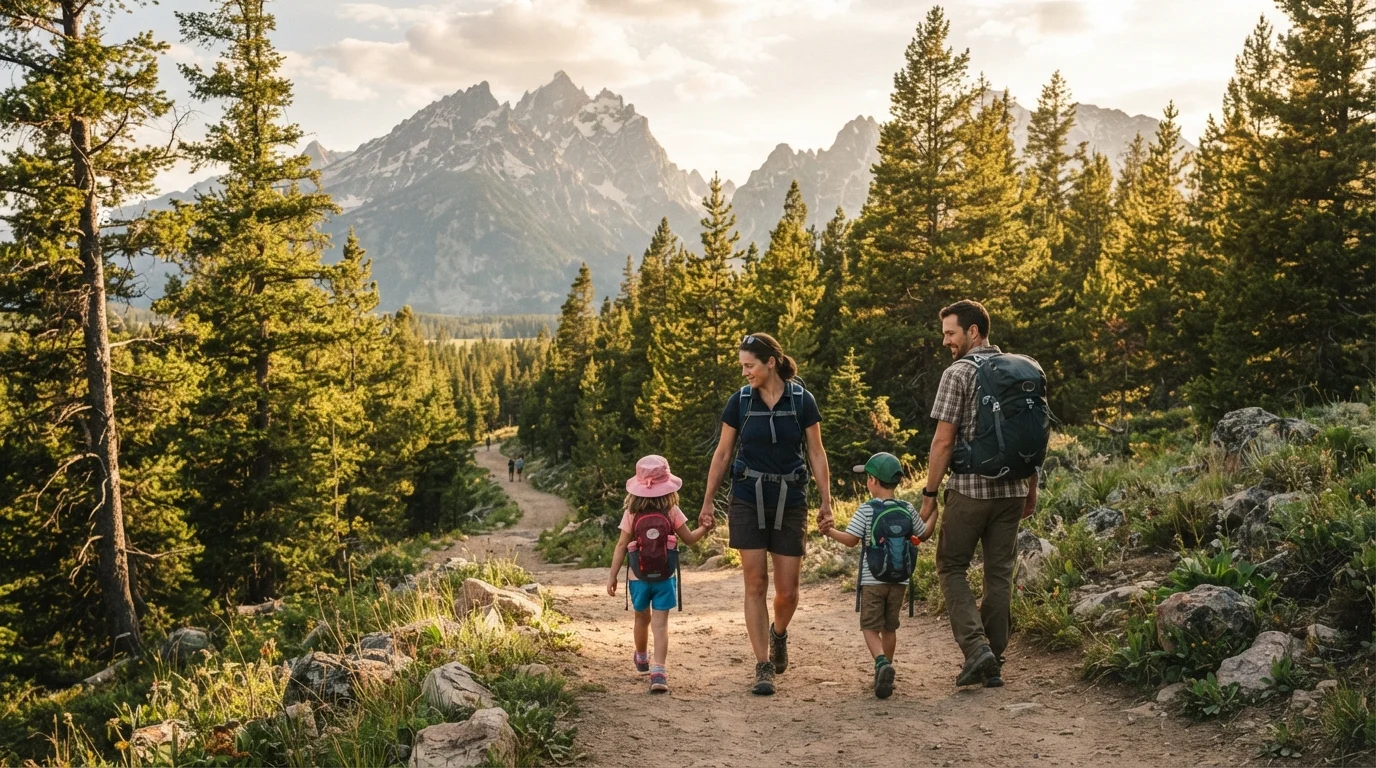
Photo: efficientlifeguide.net editorial
Key Takeaways
- The America the Beautiful annual pass covers entry at over 2,000 federal recreation sites for one flat fee.
- Fourth-grade students can get a free annual pass through the Every Kid Outdoors program.
- Children 15 and under enter all national parks for free, regardless of whether a pass is used.
- Camping inside park boundaries typically costs far less than nearby hotels and keeps families closer to trails.
- Shoulder seasons (spring and fall) generally mean lower campsite demand and more comfortable hiking conditions.
- Food and gear are often the largest variable costs; planning meals and borrowing equipment cuts spending significantly.
Why national parks work for family budgets
The U.S. national park system covers more than 85 million acres across all 50 states, and a large share of those sites charge no entry fee at all. For families watching their travel spending, that combination of scale and low cost is hard to match. Unlike theme parks or resort destinations, national parks do not bundle access to their main attractions behind tiered ticket packages. You pay once to enter and the trails, wildlife, ranger programs, and scenery are included.
The per-person math tends to favor larger families. A household of five paying a single vehicle entry fee at a park that charges $35 per car spends $7 per person, often for a full day of activities. Compare that to the per-person cost of most ticketed attractions, and the gap is substantial. For a broader look at where family travel budgets actually go, see our breakdown of real family vacation costs.
National parks also fit the realistic shape of family travel: driving trips with flexible itineraries, outdoor time that wears kids out productively, and lodging that can range from free dispersed camping to in-park lodges. That flexibility is what makes them a practical destination rather than an aspirational one.
Entry fees, passes, and fee waivers explained
Entry fees at individual parks vary. High-traffic parks such as Yellowstone or Grand Canyon currently charge $35 per vehicle. Many smaller or less-visited parks charge nothing. Children 15 and under are always admitted free.
The America the Beautiful Annual Pass costs $80 and covers the entry fee for one vehicle (up to four adults) at all fee-charging national parks and more than 2,000 other federal recreation sites for 12 months. A family that visits two or more fee-charging parks in a year will typically recover that cost. The pass is available at park entrances, online through the U.S. Geological Survey store, and at many federal recreation offices.
Print your campsite confirmation and the park map before leaving home. Cell service drops out within the first mile of most park entrances, and rangers cannot look up your reservation from their end if you have nothing to show.
When booking on Recreation.gov, set a notification for cancellations at sold-out campgrounds. Sites open up regularly as families change plans, and the alert system catches them within minutes of release.
Free entry days occur several times each year at most fee-charging parks. The National Park Service publishes the schedule on its website. These dates include federal holidays and National Public Lands Day. Visiting on a free day can save a family $35 in a single trip, though popular parks tend to see noticeably higher attendance on those dates.
The Every Kid Outdoors program gives fourth-grade students a free annual pass that also admits accompanying family members at no charge. Applications are processed through the program's official website and the pass is valid through the end of the school year. If you have a child in fourth grade, this pass is the most direct way to eliminate entry costs entirely for a full season. For a broader comparison of park systems and what each costs families, the state parks vs. national parks guide covers the trade-offs clearly.
Camping basics: costs, reservations, and what to expect
Camping inside park boundaries is almost always less expensive than lodging nearby. Developed campgrounds with restrooms and fire rings generally run $15 to $30 per night. Primitive sites with no hookups or facilities can cost $5 to $15, and dispersed camping in some parks is free with a backcountry permit.
Reservations at high-demand parks are essential from late spring through early fall. Recreation.gov handles reservations for most federal campgrounds. Many sites release bookings six months in advance, and the most popular spots fill within minutes of opening. Setting a calendar reminder for your target release date is not optional if you want Yosemite Valley or Rocky Mountain front-country camping in July.
Less-visited parks and off-peak timing give families much more flexibility. First-come, first-served sites exist at most parks, and they fill less predictably outside of peak weekends. Arriving Thursday or Sunday rather than Friday reduces competition significantly.
A few things families consistently underestimate: bears and other wildlife require food to be stored in provided bear boxes or bear canisters, not in vehicles or tents. Violating food storage rules can result in fines. Nighttime temperatures at elevation drop sharply even in summer, so sleeping gear rated for 20 to 30 degrees colder than expected daytime temperatures is a practical standard.
Kid-friendly trails and activities across the park system
The Junior Ranger program runs at more than 400 national park sites. Children complete an activity booklet, present it to a ranger, and receive a badge or patch. The program is free, available at visitor centers, and structured to match different age groups. It functions as both entertainment and an introduction to the park's ecology and history.
Trail selection matters more with children than most pre-trip planning acknowledges. A two-mile loop with 50 feet of elevation change and a waterfall at the end will hold a six-year-old's attention far better than a four-mile out-and-back with a viewpoint. The AllTrails platform and each park's official site both filter trails by difficulty and feature, which makes pre-trip research efficient.
Ranger-led programs, including campfire talks, guided walks, and constellation programs, are free at most parks and run on published schedules. These programs remove the burden of explaining everything yourself and give kids direct access to people whose job is to make the outdoors interesting. Check the park's schedule in the days before you arrive, since programs vary by season and staffing.
For families seeking destinations that deliver strong value beyond just entry costs, the destinations that stretch a family travel budget further article includes national parks alongside other low-cost options worth considering.
Packing smart for a national park trip
Food is one of the largest controllable costs on a park trip. Restaurants inside park boundaries are priced at a premium, and nearby gateway towns often charge more than urban equivalents. Packing a cooler with prepared meals, sandwich supplies, and snacks for the full trip can save a family of four $30 to $60 per day compared to buying three meals from concession stands.
Gear borrowing and renting cuts upfront costs for families who do not camp regularly. Many libraries now offer camping gear lending programs. State university outdoor recreation centers often rent tents, sleeping bags, and pads at low daily rates to the public. Buying gear at full retail for a single trip rarely makes financial sense. For a full pre-trip logistics review, the pre-departure planning checklist covers packing, booking, and budgeting in sequence.
What to bring that costs nothing but prevents problems: a physical copy of your reservation, a paper map of the park (free at entrance stations), a first aid kit, and a written list of campsite rules for children to review before arrival. Cell service is unreliable or absent in most parks, so downloading offline maps and the park's app content before you leave home is a practical step.
Timing your visit to avoid crowds and high prices
Peak season at most national parks runs from Memorial Day weekend through Labor Day. Campsite availability tightens, gateway town lodging prices rise, and trail congestion at popular routes increases. Shoulder seasons, roughly April through May and September through October, tend to offer lower campsite demand and more moderate temperatures for hiking.
Winter visits to parks in warmer climates, such as Big Bend, Saguaro, or Everglades, often coincide with those parks' best conditions and lowest crowding. Parks in the Mountain West may close certain roads or facilities in winter, so checking current conditions on the park's official site before booking is necessary.
Weekday visits consistently reduce congestion at trailheads and entrance gates. If your family has scheduling flexibility, arriving Tuesday through Thursday and departing Sunday reduces both campsite competition and the stop-and-go traffic that can define Friday afternoon arrivals at busy parks.
Comparing park options before committing to a destination also helps. The budget family travel myths article addresses the assumption that a well-known park is always the right choice, which is worth reading before locking in plans.
Hidden costs to plan for before you go
Entry fees and camping are the costs most families plan for. Several others consistently catch people off guard. Firewood sold inside parks typically costs $7 to $10 per bundle, and most parks prohibit bringing wood from outside the region to prevent invasive species spread. Budget for it or plan meals that do not require a campfire.
Parking fees at popular trailheads inside some parks are separate from entry fees. Yosemite's day-use reservation system and Glacier's vehicle reservation requirements are examples of additional access steps that require planning and, in some cases, additional fees. Always check the specific park's current access requirements, since these have changed frequently at high-demand sites.
Shuttle systems at several parks (Zion, Acadia, and others) are the primary way to reach certain trailheads during peak season. Shuttles are generally free, but they require arriving early enough to board without a long wait. Factor that into your daily schedule rather than assuming you can drive directly to a trailhead.
Travel insurance for camping trips is worth considering if you have non-refundable reservations and are traveling with young children whose health can change quickly. This is general information; consult a licensed insurance professional about what coverage fits your family's situation. For broader context on managing family travel spending across all cost categories, the family budget tips hub has practical strategies that apply before, during, and after a trip.
This article is for general informational purposes only. Prices, fees, program availability, and park access requirements change over time. Verify current details directly with the National Park Service and relevant agencies before making reservations or travel plans.
The content provided on our blog site traverses numerous categories, offering readers valuable and practical information. Readers can use the editorial team’s research and data to gain more insights into their topics of interest. However, they are requested not to treat the articles as conclusive. The website team cannot be held responsible for differences in data or inaccuracies found across other platforms. Please also note that the site might also miss out on various schemes and offers available that the readers may find more beneficial than the ones we cover.