
Destinations That Stretch a Family Travel Budget Further

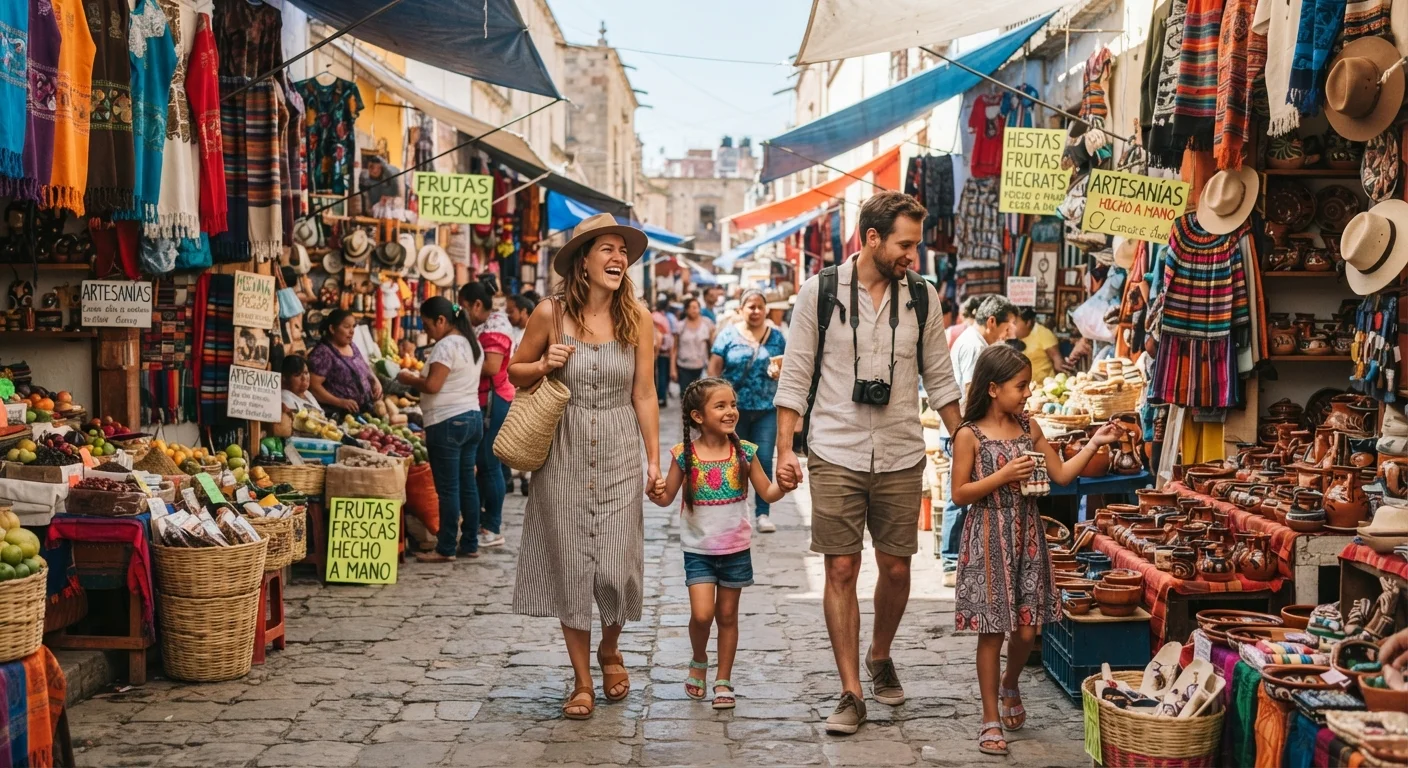
Photo: efficientlifeguide.net editorial
Key Takeaways
- Destination choice is the single biggest lever on total family trip cost.
- Several domestic U.S. destinations offer lower daily costs than popular tourist hotspots.
- International destinations in Central America and Southeast Asia can run significantly cheaper per day for families.
- Shoulder season timing at any destination reduces prices without eliminating the core experience.
- Accommodation with a kitchen cuts food costs, which are often a family trip's second-largest expense.
Why the destination itself determines so much of your budget
Most family travel budget conversations focus on finding deals: cheaper flights, discount hotel codes, loyalty points. Those tactics matter, but they work at the margins. The destination itself sets the baseline cost for lodging, food, attractions, and local transport. Choosing a structurally affordable place can do more for your bottom line than any booking hack applied to an expensive one.
A breakdown of where family travel budgets actually go shows that lodging and food together typically account for 60 to 70 percent of total trip spend. Both costs vary enormously by destination. A family of four can spend $300 a night on a modest hotel in a high-cost beach market or $120 for comparable space in a mid-tier domestic city. That gap compounds over a week.
The list below covers domestic and international options where families generally find lower day-to-day costs, along with what to watch for at each. Prices fluctuate and conditions change, so treat these as starting frameworks, not guarantees. Always verify current costs, entry requirements, and safety conditions through official sources before booking.
San Antonio, Texas
San Antonio consistently comes in below the national average for hotel rates and restaurant meals. The River Walk area draws tourists, but free and low-cost attractions are plentiful: the Spanish missions (a UNESCO World Heritage Site), Brackenridge Park, and the San Antonio Museum of Art, which admits children under 12 at no charge. The city's large number of extended-stay hotels and vacation rentals with kitchens makes self-catering practical. Driving distances are manageable for families with a car, and the airport serves most major hubs at competitive fares. Summer heat is a real factor, so March through May or October through November typically give better conditions.
Free and low-cost attractions are plentiful, and hotel rates run below the national average.
Asheville, North Carolina
Asheville sits inside the Blue Ridge Mountains and gives families access to the Blue Ridge Parkway (no entrance fee), dozens of free hiking trails, and the French Broad River for tubing. Lodging ranges from budget motels to cabin rentals that sleep six comfortably. The downtown farmers market and grocery stores make meal prep easy. The Biltmore Estate is a paid attraction worth knowing about in advance so families can budget for it or skip it. Shoulder season (April to early June and September to early November) tends to bring lower rates and thinner crowds on trails.
The Blue Ridge Parkway and surrounding trails carry no entrance fee, making outdoor days essentially free.
Albuquerque, New Mexico
Albuquerque's cost of living is low, and that carries over into travel costs. Food prices at local restaurants run noticeably below coastal city averages. The International Balloon Fiesta (held in October) draws crowds and raises prices during that window, but most of the year the city is uncongested. Free or low-cost options include Petroglyph National Monument, the BioPark Zoo (which offers resident discounts), and the Sandia Mountains accessible by cable tram. Road-trippers find Albuquerque a practical base for reaching Santa Fe and Taos without paying Santa Fe lodging prices every night.
Road-trippers can use Albuquerque as a lower-cost base for reaching Santa Fe without paying Santa Fe lodging rates.
Costa Rica (Guanacaste region)
Costa Rica is not a uniformly cheap destination, but Guanacaste on the Pacific coast offers a lower-cost entry point than the more touristed Arenal or Manuel Antonio areas. National parks charge modest entrance fees, and the beaches are public. Supermarkets stock affordable local food, and families who rent a house with a kitchen can control meal costs well. Direct flights from several U.S. hubs keep airfare competitive. Families should verify passport and entry requirements in advance through official government sources, and travel insurance with medical coverage is worth considering given that health care access varies by region.
Public beaches and affordable supermarkets make Guanacaste workable for families who plan meals around self-catering.
Vietnam (Da Nang and Hoi An)
For families willing to consider a longer-haul trip, central Vietnam around Da Nang and Hoi An offers some of the lowest day-to-day costs of any destination accessible to American travelers. Street food and local restaurants are inexpensive, accommodation rates are low outside peak season (December to February), and the historic town of Hoi An is walkable with no admission fee to most of its streets. Visa requirements for U.S. citizens have shifted in recent years, so families should confirm current entry rules through the official Vietnamese government portal and the U.S. Department of State before booking. Long flight times are a real constraint with young children; that factor is worth weighing honestly.
Day-to-day costs in central Vietnam are among the lowest accessible to American travelers, even accounting for airfare.
Tucson, Arizona
Tucson gets less attention than Phoenix or Scottsdale, which keeps its prices lower. Saguaro National Park (East and West districts) charges a per-vehicle fee but no additional per-person charges, and the Sonoran Desert landscape is unlike anything in the eastern U.S. The Arizona-Sonora Desert Museum combines a zoo, natural history museum, and botanical garden in one admission. Lodging rates outside spring break and major event weekends are generally moderate. Tucson's restaurant scene includes affordable Sonoran-style Mexican food that tends to be cheaper than comparable meals in larger metros. Heat in July and August is extreme and should factor into planning for families with young children.
Saguaro National Park charges a single per-vehicle fee, making it one of the more cost-efficient national park visits.
How to get more out of whichever destination you choose
Pack to avoid fees and unexpected costs
Destination choice sets the floor, but a few consistent habits keep spending close to that floor once you arrive. Accommodation with a kitchen is the most reliable one. Preparing breakfast and lunch in-unit and eating one restaurant meal per day can cut food costs roughly in half compared with three daily restaurant meals for a family of four. A comparison of hotels and vacation rentals for families walks through the full trade-off in detail.
Timing also matters at every destination on this list. Shoulder and off-peak travel with kids brings real price drops on flights and lodging, though it requires checking weather windows and school calendar constraints. The trade-off is manageable more often than parents assume.
Finally, several widespread myths about family travel costs push families toward more expensive choices than the trip actually requires. Reading past those assumptions before you book is worth the time.
The content provided on our blog site traverses numerous categories, offering readers valuable and practical information. Readers can use the editorial team’s research and data to gain more insights into their topics of interest. However, they are requested not to treat the articles as conclusive. The website team cannot be held responsible for differences in data or inaccuracies found across other platforms. Please also note that the site might also miss out on various schemes and offers available that the readers may find more beneficial than the ones we cover.