
Where Grocery Coupons Actually Come From (And How to Find Them Consistently)

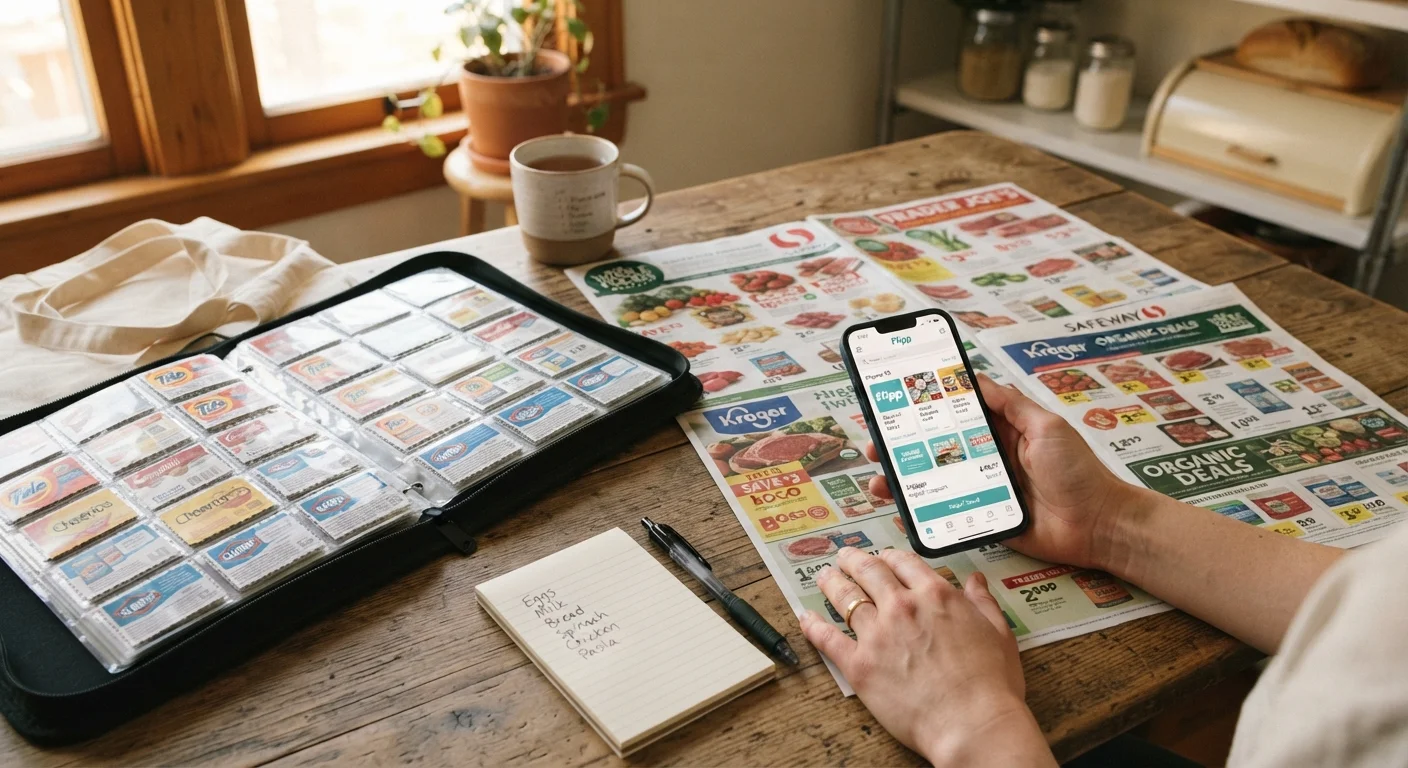
Photo: efficientlifeguide.net editorial
Key Takeaways
- Grocery coupons originate from two main sources: manufacturers and retailers, each with distinct distribution channels.
- Print inserts, store apps, and manufacturer websites remain the most reliable places to find coupons week after week.
- Stacking a manufacturer coupon with a store sale can multiply savings beyond what either discount offers alone.
- Digital coupons loaded to loyalty accounts often expire quickly, so clipping them early is worth the habit.
- Consistency in checking a small set of proven sources beats occasional deep searches across dozens of sites.
The two origins of every grocery coupon
Every grocery coupon traces back to one of two parties: the company that made the product (the manufacturer) or the store selling it (the retailer). This distinction matters because each type has different rules, distribution channels, and stacking potential.
Manufacturer coupons are funded by the brand. A cereal company, for example, pays to distribute a coupon because it wants to move inventory or introduce a product to new buyers. These coupons are generally accepted at any store that carries the item. Retailer coupons, by contrast, are store-specific discounts intended to drive foot traffic to a particular chain. They work only at the issuing retailer.
When a manufacturer coupon and a retailer coupon apply to the same item simultaneously, many stores allow you to use both. That combination, sometimes called stacking, is where the most meaningful savings occur. To understand the mechanics behind this more deeply, see how discounts, coupons, and sales actually work.
Where manufacturer coupons are distributed
Manufacturers push coupons through several channels, and each one has a distinct cadence worth knowing.
- Sunday newspaper inserts: Two major insert publishers distribute coupon books through Sunday newspapers nationwide. The inserts rotate on a predictable schedule, with heavier coupon loads around holidays and back-to-school periods.
- Manufacturer websites and email lists: Many brands publish printable coupons directly on their websites or send them to subscribers. Signing up for a brand's newsletter is a low-effort way to receive these without searching.
- Product packaging: Peel-off coupons on packages and tear pads near shelf displays are manufacturer-funded. These are often overlooked by shoppers who do not examine packaging carefully.
- Direct mail: Some manufacturers mail coupon booklets to households based on purchase history data shared by loyalty programs. These are not solicited; they arrive based on what a household has already bought.
For families new to tracking these sources, a beginner's guide to deal hunting covers how to build a simple routine around them.
Where retailer coupons are distributed
Grocery chains issue their own coupons through channels they control directly.
Weekly refresh timing matters
- Store loyalty apps: Most major grocery chains now embed digital coupons inside their loyalty apps. Offers are loaded to an account and deducted automatically at checkout when the loyalty card is scanned. New offers typically refresh weekly.
- Weekly print circulars: The paper flyer delivered to mailboxes or available at the store entrance contains both sale prices and store-issued coupons. Digital versions of these circulars are usually posted on retailer websites by Wednesday or Thursday for the following week.
- Checkout receipts: Catalina coupons, named after the company that powers the system, print at the register after purchase. These are triggered by what a shopper bought and are redeemable on a future visit.
- In-store kiosks: Some retailers operate coupon-printing kiosks near the entrance where shoppers can scan their loyalty card and receive targeted offers before shopping.
Digital coupons loaded to loyalty accounts have expiration dates that are easy to miss. Clipping available offers at the start of each week, even without a firm shopping plan, prevents them from expiring unused.
Third-party aggregators and rebate apps
A separate category of savings tools pulls coupons and cash-back offers from multiple sources into a single interface. These are neither manufacturer nor retailer coupons in the traditional sense; they are rebate-based or coupon-aggregation services.
Aggregator websites compile printable manufacturer coupons and make them searchable by item or category. Rebate apps work differently: a shopper buys an item at any participating retailer, submits a receipt photo through the app, and receives a cash-back credit after the purchase is verified. These are post-purchase rebates, not upfront price reductions. The differences between cashback portals and coupon sites are worth understanding before building these tools into a regular routine.
Rebate apps can complement store and manufacturer coupons because they operate independently of the point-of-sale system. That means a shopper can use a manufacturer coupon, a store loyalty discount, and a rebate app offer on the same item without conflict, though the terms of each offer should be checked individually.
For a realistic picture of which couponing approaches hold up over time and which do not, deal-finding habits that hold up over time is a practical next read. Families who want to avoid common missteps will also find common coupon misconceptions useful before investing time in any single channel.
How to build a consistent sourcing routine
The gap between families who save consistently with coupons and those who do not is almost always habit, not access. The sources described above are free and widely available. A simple weekly process captures most of the value without significant time investment.
Identify the stores you shop most
Limit your focus to two or three grocery retailers you visit regularly. Download each store's loyalty app and create an account if you have not already. This determines which retailer coupon channels are available to you specifically.
Clip digital coupons at the start of each week
Open each store's loyalty app on the same day each week, such as Sunday or Monday, and clip all available coupons that apply to items your household regularly buys. Many store apps also allow clipping offers even when you are not planning to shop immediately.
Check the weekly print circular
Review the store circular for the coming week, either through the app, the retailer's website, or the physical flyer. Note which items on your regular shopping list have store-issued discounts or are featured in a buy-one-get-one promotion.
Search for matching manufacturer coupons
For items already discounted by the store, check whether a manufacturer coupon also exists. Look on the brand's website, in any newspaper inserts you have on hand, or through a coupon aggregator site. A store sale paired with a manufacturer coupon on the same item compounds the savings.
Check applicable rebate apps before purchase
Before finalizing your shopping list, open any rebate apps you use and search for the items you plan to buy. Activate or bookmark relevant offers so you can submit your receipt immediately after checkout while the purchase is fresh.
This article is for informational purposes only and does not constitute financial or purchasing advice. Results vary by location, retailer policies, and individual shopping habits. Always verify offer terms directly with the issuer before making purchasing decisions.
The content provided on our blog site traverses numerous categories, offering readers valuable and practical information. Readers can use the editorial team’s research and data to gain more insights into their topics of interest. However, they are requested not to treat the articles as conclusive. The website team cannot be held responsible for differences in data or inaccuracies found across other platforms. Please also note that the site might also miss out on various schemes and offers available that the readers may find more beneficial than the ones we cover.