
DIY Home Repairs Worth Learning Versus Jobs Best Left to Professionals

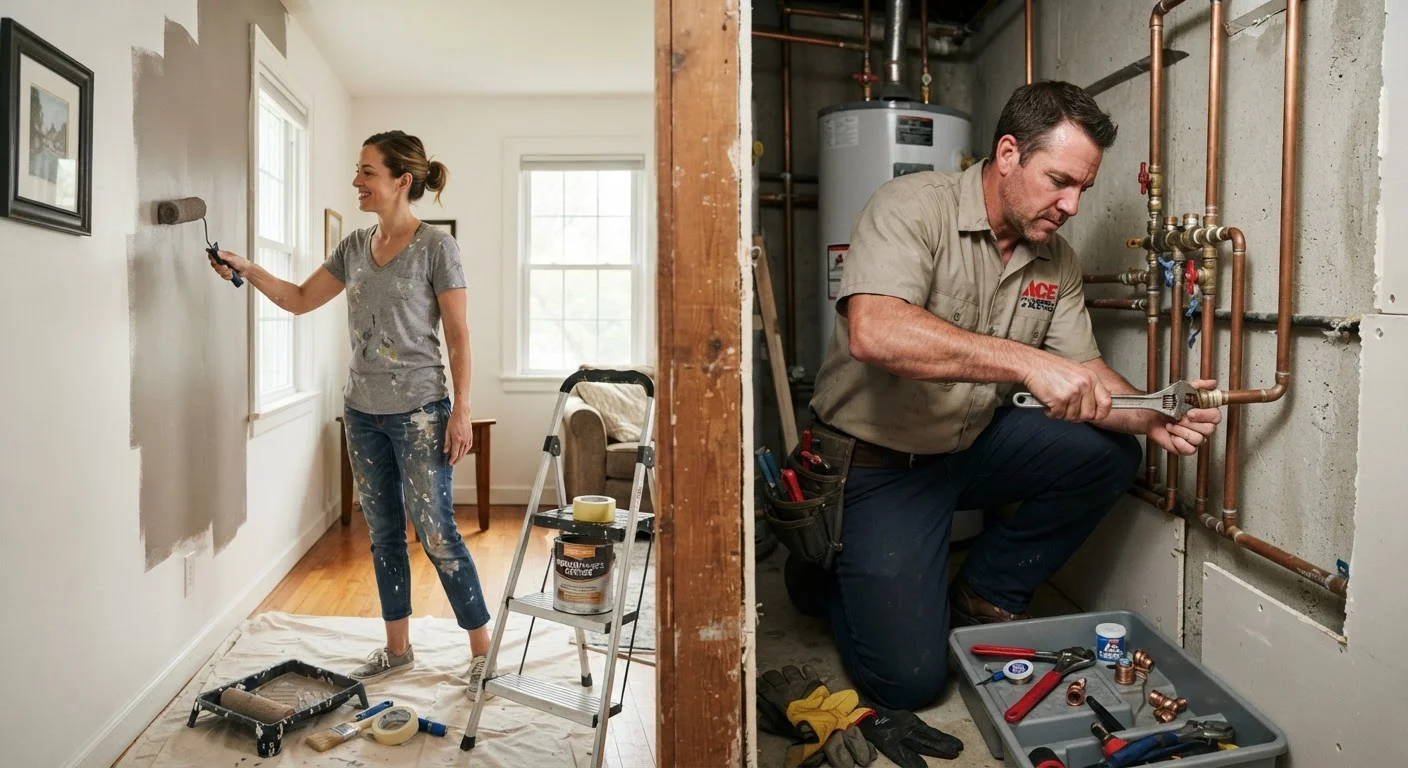
Photo: efficientlifeguide.net editorial
Key Takeaways
- Many cosmetic and minor repairs are safe and cost-effective to handle yourself with basic tools.
- Electrical, structural, and gas-related work carry real safety and legal risks that typically require a licensed contractor.
- A botched DIY repair can cost more to fix than the original professional quote would have.
- Permits and inspections exist for safety reasons; skipping them can affect home insurance and resale value.
- Honest assessment of your skill level matters as much as the task itself when deciding to DIY.
How to think about the DIY decision
Every homeowner faces the same question when something breaks: fix it yourself or call someone? The honest answer depends on three things: the safety risk if something goes wrong, whether the work requires a permit, and your actual skill level with the task at hand.
Cost is real, but it is not the only factor. A plumbing repair that seems straightforward can flood a subfloor if done incorrectly. An electrical fix that skips proper grounding creates a fire hazard that may not show up for months. The money-saving habits that actually backfire often involve underestimating these downstream risks.
A useful starting point: ask whether a mistake would be cosmetic, costly, or dangerous. Cosmetic mistakes are almost always recoverable. Costly or dangerous ones are not always so forgiving.
Repairs most homeowners can handle
The following tasks are widely considered low-risk DIY territory when basic instructions are followed and proper safety precautions are taken.
- Painting interior walls and trim
- Replacing light fixtures and outlets (with the circuit breaker off and a non-contact voltage tester confirming no live current)
- Fixing a running toilet by replacing the flapper or fill valve
- Patching small drywall holes
- Caulking around tubs, sinks, and windows
- Replacing door hardware, cabinet hinges, and weather stripping
- Unclogging drains using a plunger or hand snake
- Touch-up grout work in tile
These tasks have a low consequence for error, require inexpensive tools, and have well-documented how-to guidance available through manufacturer instructions and public resources like county extension programs. Staying on top of them is part of a home maintenance calendar that prevents small issues from growing.
| DIY approach | Licensed professional | |
|---|---|---|
| Typical cost | Materials only | Labor plus materials |
| Safety risk if done wrong | Low for cosmetic tasks | Managed by trained contractor |
| Permit requirements | Usually not required | Required for most structural/electrical/plumbing |
| Insurance implications | Minimal for minor repairs | Protects coverage for major work |
| Skill level needed | Basic to intermediate | Licensed and inspected |
| Time investment | Higher for the homeowner | Lower for the homeowner |
| Error consequence | Cosmetic or minor for low-risk tasks | Contractor liable for covered work |
Work that generally requires a licensed professional
Some repairs carry enough risk to health, safety, or legal standing that hiring a licensed contractor is the financially sound choice, not just the cautious one.
Electrical panel work. Adding circuits, upgrading a panel, or running new wiring in walls requires permits in nearly every U.S. jurisdiction. Unlicensed work can void homeowner's insurance and create liability issues at resale.
Gas line repairs or appliance connections. Gas leaks cause fires and carbon monoxide exposure. Even a small error in a fitting can have serious consequences. This is not a cost-benefit calculation worth making.
Structural repairs. Anything touching load-bearing walls, roof framing, or foundation elements needs professional assessment. Removing the wrong wall can compromise the structural integrity of an entire floor.
Major plumbing work. Replacing a water heater, moving drain lines, or working on supply lines inside walls typically requires permits and inspections. Improper work can lead to water damage that is expensive and sometimes not covered by insurance if the work was unpermitted.
These costs are real and worth budgeting for. The recurring home expenses many families overlook include a maintenance reserve, and professional repair fees should be part of that reserve plan.
The real cost of a failed DIY attempt
When a DIY repair goes wrong, the final bill is often higher than the original professional quote. A misapplied drain patch can cause water damage behind a wall. A poorly sealed window can lead to mold growth over a single winter. These are not hypothetical: they are the kinds of outcomes that show up in home inspection reports and insurance claims.
Before starting any repair, get at least one professional quote. That number tells you what you are working to save. If the quote is $200 and the materials alone cost $120, the labor savings may not justify the risk of an error on a task you have never done. If the quote is $800 and you have done similar work before, the math shifts considerably.
Understanding where repairs fit in your household budget by room helps you see which categories are worth developing DIY skills in over time.
This article is for general informational purposes only. Always consult a licensed contractor or local building authority before undertaking work that may require permits or involves electrical, gas, or structural systems in your home.
The content provided on our blog site traverses numerous categories, offering readers valuable and practical information. Readers can use the editorial team’s research and data to gain more insights into their topics of interest. However, they are requested not to treat the articles as conclusive. The website team cannot be held responsible for differences in data or inaccuracies found across other platforms. Please also note that the site might also miss out on various schemes and offers available that the readers may find more beneficial than the ones we cover.