
Flying vs. Driving with Kids: Which One Saves More Money?

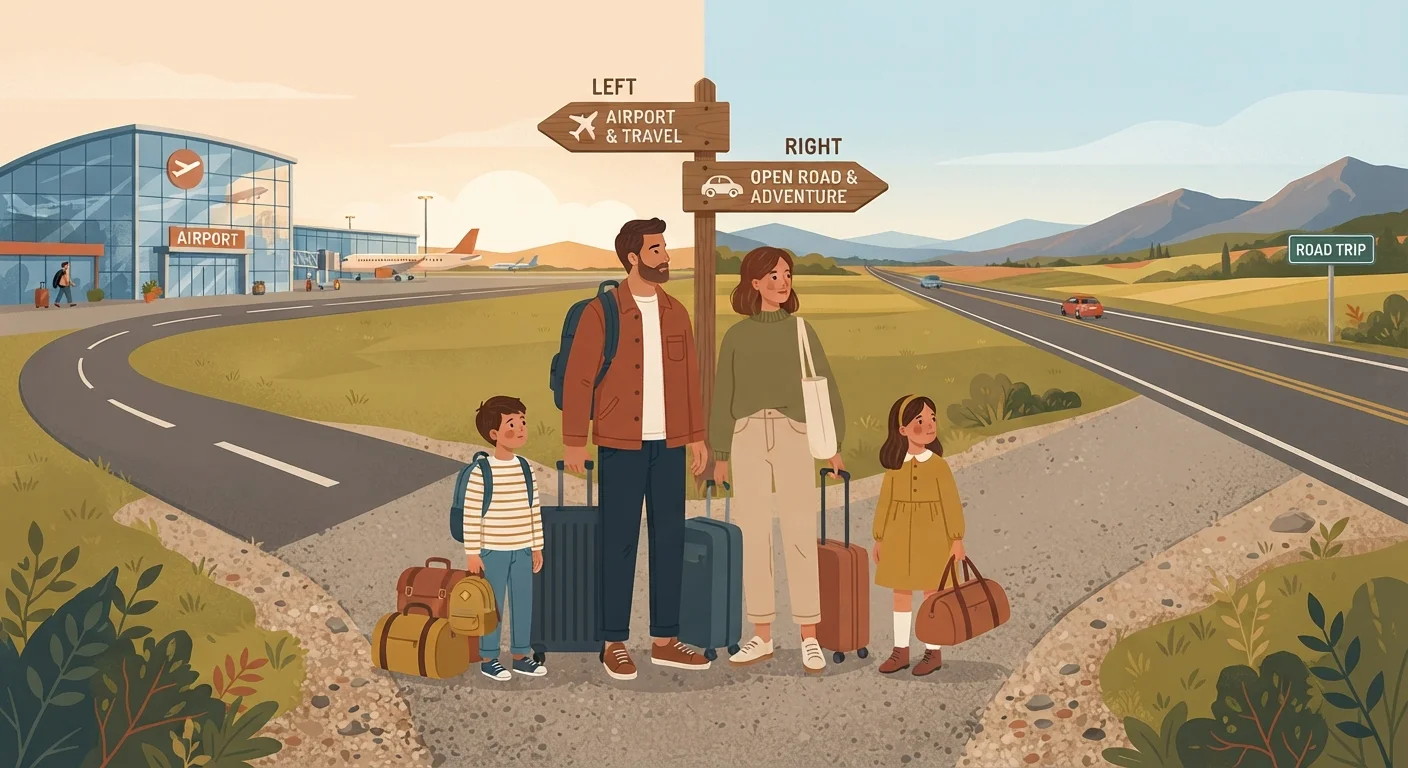
Photo: efficientlifeguide.net editorial
Key Takeaways
- Airfare for a family of four often costs $800 to $2,000 or more before baggage fees and airport transport.
- Driving costs include fuel, tolls, food stops, wear on the vehicle, and often at least one hotel night.
- The break-even distance for most families falls somewhere between 400 and 600 miles one way.
- Flying looks cheaper on a per-mile basis but driving gives families more flexibility over spending.
- Hidden costs on both sides, including parking, car rentals, and snacks, frequently shift the final tally.
The real cost of flying with kids
The sticker price on an airline ticket is rarely the final price a family pays. A round-trip economy fare for two adults and two children on a domestic route commonly runs $800 to $2,000 depending on the distance, the season, and how far in advance you book. That baseline does not include checked bags, which average $35 per bag each way on most U.S. carriers, seat selection fees (common when families want to sit together), or airport transport to and from home.
Once you arrive, many families need a rental car, which adds $50 to $120 per day before insurance. Airport parking at your origin, if you drive to the terminal, typically costs $15 to $35 per day in most mid-size U.S. cities. A five-day trip with a rental car and airport parking can add $300 to $500 that never appears in the original fare search.
Food at airports also erodes the budget quickly. A family of four buying lunch in a terminal can spend $60 to $80 on a single meal. Packing food through security is legal and substantially cheaper, but many families do not plan for it.
For a broader look at where family travel budgets go before and after booking, see the full breakdown of family vacation costs.
| Criterion | Flying with kids | Driving with kids |
|---|---|---|
| Base cost (family of four, 800-mile round trip) | $800 to $2,000+ airfare | $130 to $200 fuel |
| Baggage | $35+ per bag each way | No limit or fee |
| Local transport at destination | Rental car often needed ($50-$120/day) | Own vehicle available |
| Airport or parking costs | $15-$35/day airport parking | Not applicable |
| Food en route | $60-$80 per airport meal stop | $40-$60 per highway meal stop |
| Hotel nights required | None (for most routes) | 1-2 nights for trips over 600 miles |
| Travel time (800-mile example) | 2-4 hours gate to gate | 12-16 hours over 1-2 days |
| Flexibility during travel | Low (fixed schedule) | High (stop anytime) |
| Vehicle wear cost | None | Roughly $0.67/mile (IRS proxy) |
The real cost of driving with kids
Driving feels cheaper because the costs arrive gradually. Fuel is the most obvious line item: at current average U.S. prices, a 500-mile round trip in a mid-size SUV getting 25 miles per gallon costs roughly $60 to $80 in gas at $3.00 to $4.00 per gallon. Scale that to 1,000 miles round trip and fuel alone reaches $120 to $160.
The costs that catch families off guard are tolls (up to $50 or more on some Northeast and Midwest corridors), highway food stops, and vehicle depreciation. A fast-casual meal for four at a highway stop runs $40 to $60. Two meals per travel day adds $80 to $120 before you count snacks. A two-day drive each way means four days of road food, which can total $320 to $480 for the round trip.
When the drive requires an overnight hotel stay, add $100 to $200 per night in most markets. A single overnight each way adds $200 to $400 to a trip budget that might have looked free on the surface.
Vehicle wear is harder to quantify but real. The IRS standard mileage rate (used for business, but useful as a general cost proxy) reflects that operating a car costs well above the price of fuel alone. At roughly $0.67 per mile, a 1,000-mile round trip carries an implied operating cost of around $670, fuel included. That figure will not appear on any receipt, but it represents real money over time.
Several persistent myths about family travel costs make driving seem more automatic a win than it actually is. The math depends heavily on distance, vehicle type, and how many nights the drive adds to the trip.
Where the break-even point falls
For most families of four, the financial break-even between flying and driving sits somewhere between 400 and 600 miles one way. Below 400 miles, driving almost always saves money after accounting for the full cost of air travel. Above 600 miles, the multi-day drive adds enough in hotels and meals that economy airfare, booked at least three to four weeks in advance, frequently comes out ahead.
The calculation shifts based on a few variables. Families who already have a car at their destination (visiting relatives, for example) avoid the rental car cost entirely, which strengthens the case for flying even on medium-distance trips. Families traveling off-peak, where airfare drops considerably, also push the break-even point further in favor of flying. Traveling during shoulder seasons can change the flying math more than most parents realize.
A family driving from Chicago to Orlando (roughly 1,100 miles) would spend two full days driving each way, requiring at minimum two hotel nights round trip ($200 to $400), plus four days of road meals ($320 to $480), plus fuel ($175 to $220 for a 26 mpg vehicle). That driving total can reach $700 to $1,100 before accounting for wear, tolls, or time. Economy airfare for four on that same route, booked in advance during an off-peak period, can fall within a similar or lower range.
What the numbers miss
Cost is one input. Time and stress are real variables for families with young children, limited vacation days, or kids prone to car sickness. A parent using three vacation days to drive somewhere that a two-hour flight would reach in a morning is not saving money if those vacation days carry monetary value.
Flexibility runs the other direction. A family road trip lets you stop when a toddler melts down, pack everything you own, eat from a cooler stocked at home, and avoid the TSA line entirely. These are real advantages that do not show up in a cost comparison but matter in practice.
The destination itself sometimes decides the question. Some locations have no convenient airport nearby, making driving the only practical option. Others sit in cities where public transit eliminates the rental car cost, which substantially improves the economics of flying. For destinations where stretching the budget further is the goal, some destinations make both modes of travel work more affordably depending on where you are coming from.
This article provides general information about travel costs for educational purposes. Prices, fees, and travel conditions change frequently. Always verify current costs directly with airlines, rental companies, and fuel cost estimators before planning your trip. This is not personalized financial advice.
The content provided on our blog site traverses numerous categories, offering readers valuable and practical information. Readers can use the editorial team’s research and data to gain more insights into their topics of interest. However, they are requested not to treat the articles as conclusive. The website team cannot be held responsible for differences in data or inaccuracies found across other platforms. Please also note that the site might also miss out on various schemes and offers available that the readers may find more beneficial than the ones we cover.