
Packing Light as a Family: The Carry-On Challenge Explained

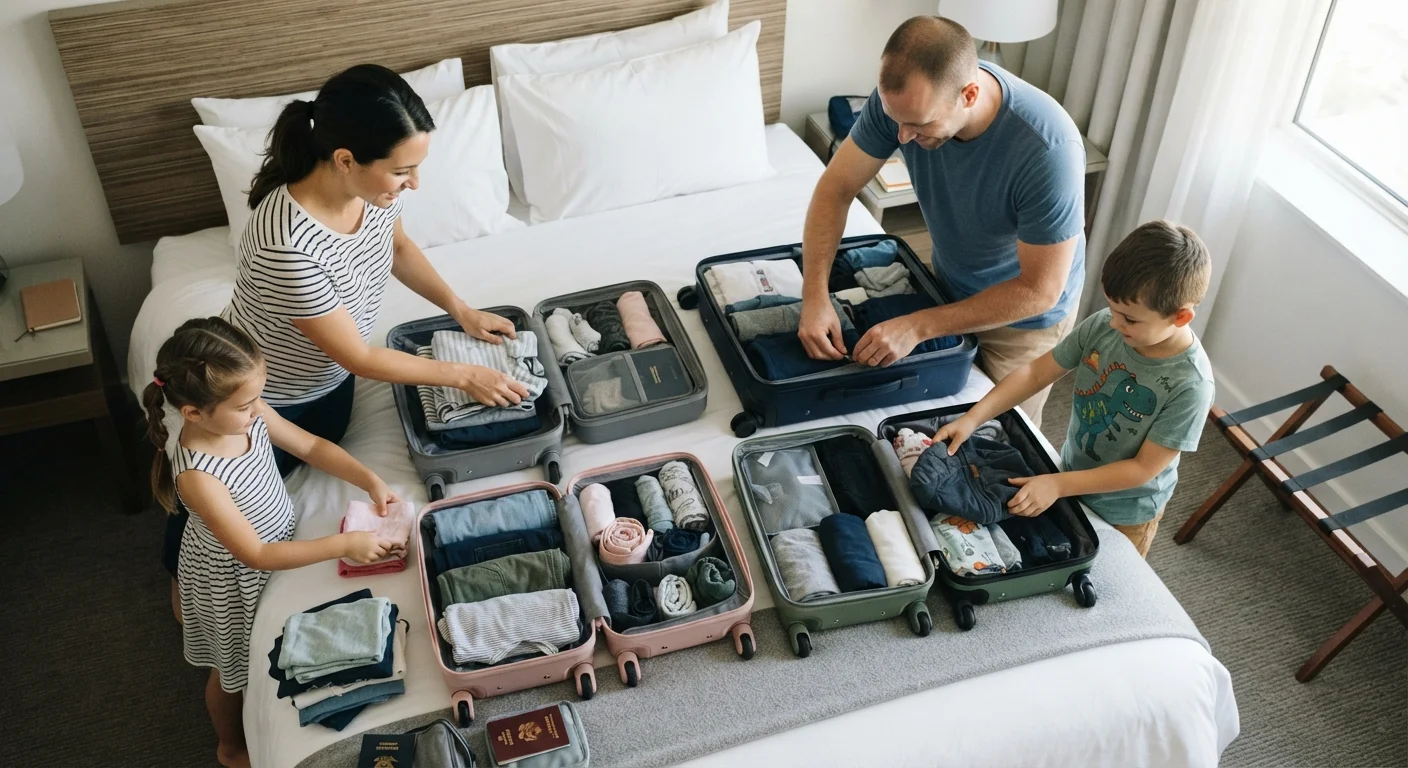
Photo: efficientlifeguide.net editorial
Key Takeaways
- Each airline sets its own carry-on size and weight limits, so verify before packing.
- Choosing versatile, quick-dry clothing cuts the total number of items every family member needs.
- Sharing one toiletry kit and one first-aid pouch across the whole family saves significant space.
- Packing cubes compress clothing and keep each person's items contained within a shared bag.
- Checked bag fees for a family of four can reach $200 or more per round trip on budget carriers.
- Children age two and older are typically allowed a personal item, expanding total carry-on capacity.
Why carry-on-only matters for family budgets
Checked bag fees add up fast when you multiply them across four or five travelers. On many domestic budget carriers, a single checked bag runs $35 to $45 each way. A family of four checking one bag each pays $280 to $360 on a round trip before anyone has eaten a meal or paid for a night's lodging. Cutting that cost entirely frees real money for activities, food, or a longer stay.
Beyond fees, traveling without checked bags removes two stress points that drain energy on trips with kids: the wait at baggage claim and the risk of a delayed or lost bag. For families trying to catch a connecting flight or reach a rental car counter before it closes, those minutes matter.
The common fear is that carry-on-only is simply not possible with children. That assumption is worth questioning. See our breakdown of family travel cost myths for more on the beliefs that push families toward unnecessary spending before they even leave home.
What you will need
Step-by-step: how to make carry-on-only work for your family
The process below works for a family of four on a trip of five to seven nights. Adjust quantities for shorter or longer trips, and verify your airline's exact size and weight restrictions before you pack, as policies vary and change.
Assign a bag to every traveler
Each adult gets one carry-on (typically up to 22 x 14 x 9 inches) and one personal item such as a backpack or tote. Children age two and older are entitled to the same allowance on most carriers. Use that full capacity deliberately: a child's personal item can hold their own snacks, a change of clothes, a small tablet or book, and their jacket. That frees the adult carry-ons for clothing and shared family items.
Build a capsule clothing list per person
The goal is five to seven days of outfits from roughly five or six clothing pieces per person. Write a list before touching a suitcase. For each adult: two or three bottoms, three or four tops, one light layer, one pair of shoes already on your feet, and underwear plus socks for each day. For children: the same structure, slightly fewer items because kids' clothing is smaller. Choose neutral colors that mix, and prioritize synthetic or merino wool fabrics that dry overnight after handwashing.
Consolidate toiletries into one shared kit
One quart-sized TSA liquids bag per person is the TSA rule for liquids in carry-ons. A family of four does not need four separate kits. Share one or two. Decant shampoo, conditioner, and body wash into reusable silicone containers sized under 3.4 ounces. Solid versions of shampoo, sunscreen, and deodorant bypass the liquids rule entirely and are worth considering for families. Pack a single combined kit and split it between two adults' personal items if volume is a concern.
Use packing cubes to organize and compress
Packing cubes do two things: they compress clothing to use space efficiently, and they keep each person's clothes contained so you are not rummaging through a shared bag. Assign one color or cube set per family member. Compression cubes (those with a secondary zip that squeezes air out) work well for bulkier items like fleeces. Roll clothing rather than fold it before placing it in cubes to reduce wrinkles and fit more per cube.
Pack a single family first-aid and medication pouch
One small pouch with children's pain reliever, adult pain reliever, antihistamine, bandages, antidiarrheal medication, and any prescription medications covers the family's medical basics. Prescription medications in original labeled bottles should travel in a personal item for easy access at security. This pouch fits inside a personal item and replaces four separate packs that most families instinctively start building.
Do a final weigh-and-measure check
Before leaving for the airport, weigh each bag on a bathroom scale and measure the dimensions. If your airline charges for overweight carry-ons (some international carriers do), catching this at home costs nothing. At the gate it can cost $50 to $100. Remove anything that did not make the official clothing list. Impulse additions, "just in case" items, and duplicate toiletries are where carry-on plans fail. This step connects directly to the broader pre-trip planning approach covered in our family trip pre-departure planning checklist.
What to do when space runs tight
Even with a solid system, some trips create real space pressure. Cold-weather destinations, beach trips with gear, or traveling with an infant all add bulk. A few adjustments help without requiring you to check a bag.
Wear your heaviest items on travel day: thick-soled shoes, a jacket, and heavier pants or jeans. Most airlines do not weigh what you wear. This tactic alone can free 2 to 3 pounds inside a bag.
Consider whether the destination has laundry access. Many apartment-style rentals and mid-range hotels include a washer, and coin laundries are common in most cities. One mid-trip wash cycle lets you pack half the clothing you would otherwise bring. Destinations that stretch a family travel budget often have affordable accommodation with in-unit laundry, which compounds the savings.
For trips with babies or toddlers, check whether the destination has a grocery store or pharmacy near your lodging. Diapers, wipes, formula, and baby food are available almost everywhere and weigh nothing in your carry-on when you buy them on arrival. Schlepping a full week's supply of diapers in a carry-on is rarely necessary.
If one family member genuinely cannot fit their share in a carry-on, consider whether the trip timing could shift. Traveling in the off-season often means lighter clothing needs and shorter lines, two factors that make carry-on-only easier in practice.
Track what you actually used after each trip
The content provided on our blog site traverses numerous categories, offering readers valuable and practical information. Readers can use the editorial team’s research and data to gain more insights into their topics of interest. However, they are requested not to treat the articles as conclusive. The website team cannot be held responsible for differences in data or inaccuracies found across other platforms. Please also note that the site might also miss out on various schemes and offers available that the readers may find more beneficial than the ones we cover.