
Price Tracking Tools: What They Do, How They Work, and Their Limits

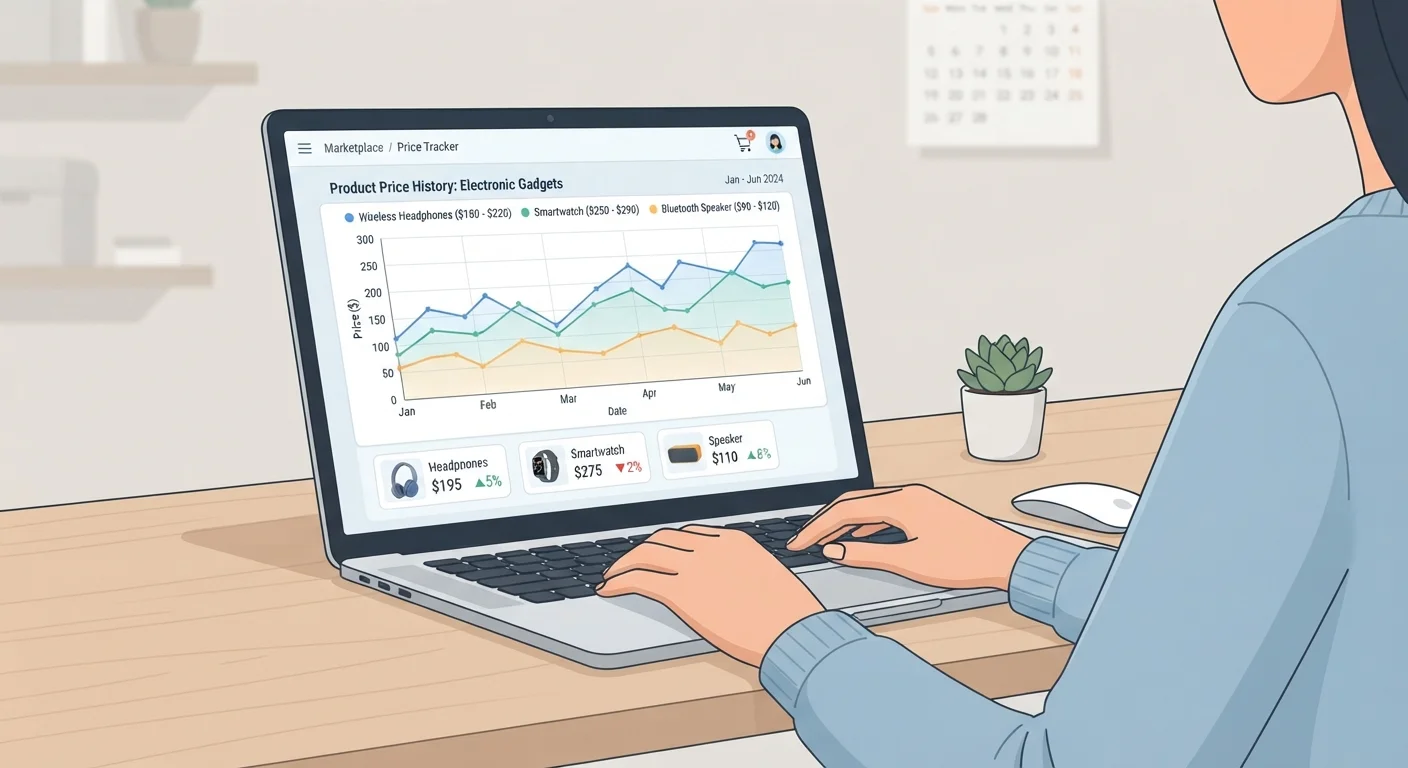
Photo: efficientlifeguide.net editorial
Key Takeaways
- Price trackers record historical price data so you can judge whether today's listed price is actually a good one.
- Most tools check prices on a schedule, so they can miss very short flash sales or rapid price swings.
- Trackers work best for mid-to-high-cost purchases where the savings justify the wait, such as appliances or electronics.
- Retailers sometimes inflate a reference price before discounting, which trackers can help expose.
- No tracker covers every retailer, and none accounts for in-store-only pricing or member-exclusive rates.
- Price history data is one input in a purchase decision, not a guarantee of future pricing.
How price trackers collect and display data
At its core, a price tracker visits a product page on a retailer's website at regular intervals, reads the listed price, and saves that number with a timestamp. Repeat that process over weeks or months and you get a price history chart: a visual record of how the cost has moved.
Most tools check prices somewhere between every few hours and once per day. That interval matters. A flash sale lasting two hours may disappear before the tracker's next scheduled check, so the tool will never record it. Families relying solely on tracker alerts could miss genuinely short-lived price drops while also receiving alerts for prices that look low on a chart but are actually average for that product.
The data displayed is almost always the public list price. Logged-in member prices, coupon codes applied at checkout, and location-based pricing are invisible to the tracker's scraper. This is one of the more practical limitations families should account for when reading a history chart.
Price history does not predict future prices
What price trackers are genuinely useful for
Price trackers work best when a product's price is stable enough to form a meaningful history. Mid-to-high-cost items in electronics, appliances, and home goods typically fit this profile. For these categories, a six-month price chart can reveal whether a "sale" price is actually lower than the product has ever been, or whether it touches that level every few weeks.
They also help families avoid a tactic some retailers use: raising the reference price shortly before a discount event, so the percentage-off figure looks larger than it is. A tracker's history chart makes that pattern visible. If a product spent most of the past year at a price that is now being called a "sale" from a higher starting point, the chart will show it.
For families working on consistent deal-finding habits, price trackers fit well into a broader routine rather than replacing other research. Setting an alert for a specific product and then waiting is a low-effort approach that can pay off on purchases where the dollar difference is material.
1 in 3
Online shoppers who have used a price alert tool
A 2023 survey by the National Retail Federation found roughly one-third of U.S. online shoppers reported using some form of price alert or tracking feature before a major purchase.
Every 4-24 hrs
Typical price check interval for most trackers
Most consumer-grade price tracking tools refresh price data somewhere between every four and twenty-four hours, meaning very short promotions may not appear in the recorded history.
Where price trackers fall short
Coverage is uneven. Most trackers focus on a small number of large online retailers and do not capture pricing from regional chains, warehouse clubs, or in-store-only offers. A product might be cheaper at a physical store without that ever appearing in the tracker's data.
Tracker data also goes stale when a product is discontinued, replaced by a newer model, or relisted under a new product identifier. In those cases, the history chart may combine prices from two effectively different products, making the historical low look more relevant than it is.
Travel pricing is a separate case entirely. Flights and hotels use dynamic pricing that can change many times per day based on demand, remaining inventory, and other signals. General product trackers are not built for this. Families planning trips should use fare alert services built specifically for travel, and should verify all pricing directly with the provider before booking. The affordable family travel hub has more context on timing and tools suited to that category.
Finally, a price tracker cannot account for total cost of ownership. A lower list price on an appliance may come with higher operating costs, a shorter warranty, or fewer service options. Price history is one data point, not a complete picture of value.
Fitting price trackers into a broader budget approach
Price trackers are a useful tool in a larger system. Families who already review their household budget regularly are better positioned to know which purchases are worth tracking and which are small enough that waiting does not make practical sense.
For recurring household costs, tracking individual product prices is less relevant than understanding spending patterns overall. If your family is losing money to subscription creep, for example, optimizing the price of a single appliance purchase has less impact than reviewing what auto-renews each month.
Pairing a price tracker with a seasonal discount calendar can sharpen timing further. Many product categories follow predictable markdown cycles, and knowing that large appliances tend to drop in price around certain times of year gives the tracker's alert more context.
For families new to this kind of structured approach, the beginner's guide to deal hunting covers the foundational tools and routines that support consistent savings without requiring constant attention.
This article is for general informational purposes only. Pricing data, tool availability, and retailer practices change over time. Verify current pricing and tool terms directly with the relevant sources before making purchasing decisions.
Frequently Asked Questions
The content provided on our blog site traverses numerous categories, offering readers valuable and practical information. Readers can use the editorial team’s research and data to gain more insights into their topics of interest. However, they are requested not to treat the articles as conclusive. The website team cannot be held responsible for differences in data or inaccuracies found across other platforms. Please also note that the site might also miss out on various schemes and offers available that the readers may find more beneficial than the ones we cover.