
Sinking Funds Explained: Planning for Big Expenses Before They Arrive

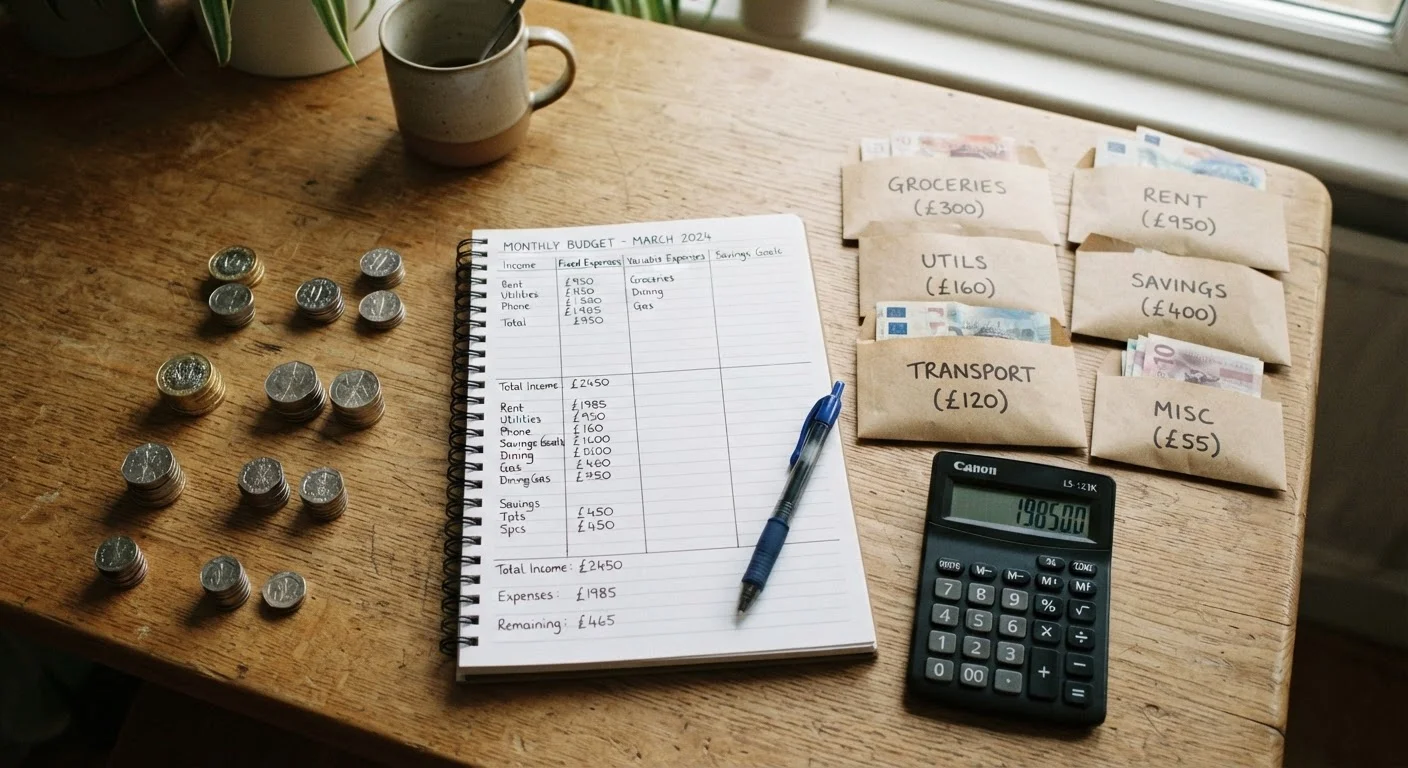
Photo: efficientlifeguide.net editorial
Key Takeaways
- A sinking fund saves for a specific, anticipated expense rather than financial emergencies.
- Sinking funds differ from emergency funds, which cover unexpected costs without a known price tag.
- Families can run multiple sinking funds at the same time by splitting them across budget categories.
- The monthly contribution is simple to calculate: divide the total cost by the months until you need it.
- Using sinking funds reduces the chance of going into debt for predictable large expenses.
What a sinking fund actually does
Most household budgets handle monthly bills reasonably well. The problem comes with irregular costs that appear on a schedule but get treated as surprises: a car registration due every December, a school field-trip fee in March, holiday gifts in November. Those costs are not emergencies. They are predictable. A sinking fund converts that predictability into a monthly line item you can plan for.
The mechanics are straightforward. Identify an upcoming expense, set a target amount, count the months between now and the due date, and divide. A $600 car registration due in 10 months requires $60 a month. Once you have the monthly number, it behaves like any other fixed budget line. If you are new to structuring budget lines this way, the guide to fixed vs. variable expenses explains how to categorize different costs in a working household budget.
The fund is not a pool of money you draw from freely. It is reserved. When the expense arrives, you transfer or spend from that category and the fund resets to zero, ready for the next cycle.
How sinking funds differ from emergency funds
These two tools get confused often, but they solve different problems. An emergency fund covers costs that are unplanned and carry an unknown price tag: a medical bill, a job loss, a broken water heater. A sinking fund covers costs that are planned and carry a known, or at least estimable, price tag.
Keeping them separate matters because mixing them erodes both. If you dip into your emergency fund for a car registration, you have less protection when a true emergency hits. If your emergency fund doubles as a vacation fund, you are likely to underfund both. The emergency funds for families guide covers how to size and build an emergency fund alongside other savings goals.
Separate your sinking funds from your emergency fund
A useful mental check: if you knew the expense was coming, it belongs in a sinking fund. If it genuinely caught you off guard, it belongs in the emergency fund.
Common sinking fund categories for families
The right categories depend on your household's specific calendar of costs. A few that appear across many family budgets:
- Car maintenance and registration (tires, oil changes, annual fees)
- Home repairs (appliance replacement, roof upkeep, seasonal maintenance)
- Back-to-school supplies and school fees
- Holiday gifts and seasonal spending
- Family travel (see the affordable family travel hub for planning strategies)
- Annual insurance premiums paid in lump sums
- Medical co-pays and out-of-pocket dental costs
The goal is to look backward at the past 12 months of spending, identify every non-monthly cost that caused budget stress, and create a fund for each one. Subscription renewals are easy to miss here; the guide to subscription creep is worth reviewing before you finalize your list.
A family knows their two cars need new tires every two years. One set costs roughly $500. They open a 'tires' sinking fund and contribute $21 a month.
Parents estimate $400 in back-to-school spending every August. Starting in January, they set aside $57 a month in a dedicated back-to-school fund.
A family plans a road trip budgeted at $1,200 and wants to leave in 12 months. They start a vacation sinking fund at $100 a month.
A homeowner estimates $800 a year in routine maintenance costs. They contribute $67 a month to a home repair sinking fund.
Setting up and managing sinking funds on a tight budget
Starting with a full monthly contribution to every category at once is rarely realistic. A practical approach: rank your upcoming expenses by date and fund the nearest ones first. Once those are covered, redirect the freed-up contributions to the next category on the list.
Where you hold the money matters less than tracking it accurately. Some families open separate savings sub-accounts for each fund. Others maintain one savings account and use a spreadsheet to divide the balance by category. Either method works. The risk with a single account is spending from the wrong category without noticing, so clear labeling or a simple tracking sheet is worth the few minutes it takes.
If your budget is tight enough that you cannot fund every category, look for spending to trim first. The beginner's guide to building a family budget walks through finding room in a budget that feels fully committed. Frugal adjustments in daily spending can also free up dollars for sinking funds; the frugal home living hub has practical, low-effort ideas.
This article is for general informational purposes only and does not constitute personalized financial advice. Consult a qualified financial professional for guidance specific to your household situation.
Frequently Asked Questions
The content provided on our blog site traverses numerous categories, offering readers valuable and practical information. Readers can use the editorial team’s research and data to gain more insights into their topics of interest. However, they are requested not to treat the articles as conclusive. The website team cannot be held responsible for differences in data or inaccuracies found across other platforms. Please also note that the site might also miss out on various schemes and offers available that the readers may find more beneficial than the ones we cover.